





The Price You See, The Costs You Don't
When you fill up your car, the price you pay per litre is a composite of several distinct costs. The price of crude oil is just the starting point. Several factors determine the final retail price, including the cost to refine crude into usable petrol
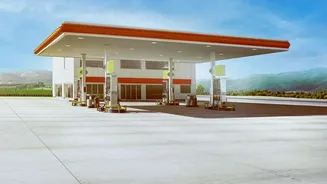
or diesel, the margin for the oil marketing companies (OMCs), the margin for the oil marketing companies (OMCs), the commission paid to the petrol pump dealer, and, most significantly, central and state taxes. Since June 2017, India has followed a dynamic pricing model, where rates are adjusted daily at 6 a.m. to reflect changes in global markets and currency exchange rates. This means that even small shifts in any of these components can influence the final price you pay each morning.
Decoding a Litre of Petrol
Let's break down what you’re paying for. The base price of the fuel is determined by the cost of crude oil on the international market, which is then processed by refiners. To this, freight charges are added. Next, the central government levies its excise duty. After that, the petrol pump dealers add their commission. Finally, the state government imposes its Value Added Tax (VAT) on top of the entire amount (base price plus excise duty and dealer commission). This cascading tax structure means that taxes are a substantial portion of the final price, often accounting for nearly half the total cost. For example, as of early August 2026, petrol prices in major cities like Mumbai and Delhi hover well above ₹100 per litre.
The Unseen Hand of Refining Margins
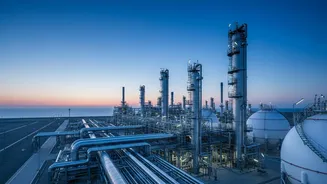
Even when crude oil is abundant and prices are low, the cost of turning it into petrol, diesel, or jet fuel can remain high or even increase. This is where Gross Refining Margins (GRMs) come into play. GRM is the difference between the total value of petroleum products produced by a refinery and the price of the crude oil it processed. These margins are not fixed; they depend on the demand for specific refined products, the type of crude oil used, and the operational efficiency of the refinery. A high demand for diesel in Europe, for example, could increase GRMs for Indian refiners who export it. Therefore, even with a surplus of crude, strong demand for finished products allows refiners to maintain healthy margins, which contributes to the final retail price. Industry data from FY26 shows that Indian OMCs maintain net margins of around 3-4%, which is considered normal for sustaining large-scale operations and capital expenditure.
Taxes: The Largest and Most Visible Layer
The most significant reason retail fuel prices remain high is taxation. Both the central and state governments rely heavily on fuel taxes as a major source of revenue. These taxes are a fixed component that doesn't decrease when the base price of crude falls. In fact, because state VAT is often levied as a percentage of the price (which includes central taxes), the total tax amount can be substantial. This tax structure provides a stable revenue stream for governments but also means that consumers don't see the full benefit of lower global oil prices. The final retail selling price can sometimes be nearly double the base price of the fuel before taxes and duties are added. State taxes in particular create large price differences between cities.
Global Supply Is Only Part of the Equation
Recent market analyses from mid-2026 suggest a growing global oil surplus, with production from OPEC+, the US, and other nations expected to outpace demand. While this exerts downward pressure on crude prices, its effect on the consumer is dampened by the other cost layers. OMCs must balance international prices with domestic costs, and government policies can also play a role. For instance, the government periodically adjusts a windfall tax on the export of fuels like petrol and diesel to ensure sufficient domestic supply, which can influence how refiners price their products for the local market. Ultimately, the price at the pump is a delicate balancing act between global commodity markets, domestic refining capacity, corporate profitability, and national fiscal policy.