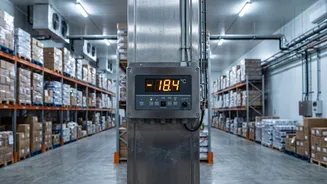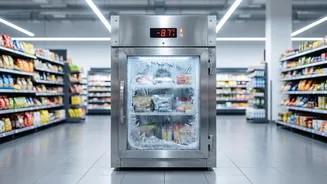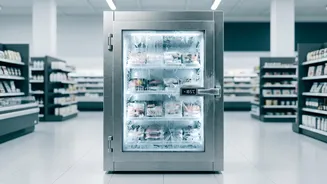





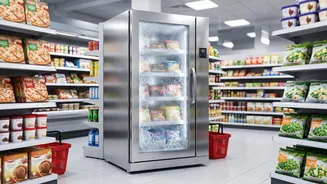
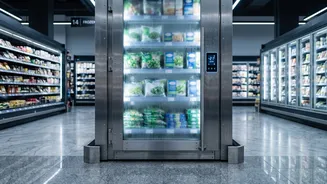
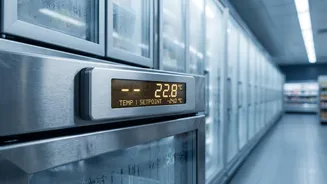
It sounds like a strange prank, but for supermarkets across Europe, it was a costly reality. Hackers remotely turned freezers into ovens, a chilling reminder that cyber threats now target the physical world, including our food supply.
A Coordinated Meltdown
On the morning of
November 2, 2026, employees at supermarkets in at least seven countries arrived to a bizarre and costly scene. In stores across Belgium, Sweden, Ireland, Finland, Estonia, the Netherlands, and Luxembourg, refrigeration and freezer units had been remotely hijacked. Instead of preserving food, their temperatures had been cranked up, in some cases to a scorching 50°C (122°F). The attack forced retailers like Carrefour, Coop, and Ahold Delhaize to discard millions of euros worth of spoiled meat, dairy, and frozen goods. In Belgium, which was hit particularly hard, dozens of stores from major chains including Delhaize, Carrefour, and Spar were affected. One Stockholm store manager reported that an attack at 2 a.m. went unnoticed for hours, resulting in the destruction of their entire frozen inventory.
Hacking the Thermostat
The attackers exploited vulnerabilities in internet-connected industrial control systems (ICS)—the digital brains that manage physical machinery like refrigeration units. These systems allow technicians to monitor and adjust temperatures remotely, a feature that offers convenience but also creates a potential entryway for hackers if not properly secured. According to reports, the hackers activated a prolonged 'defrost mode' on the units, overriding normal temperature settings and causing them to heat up. The incident echoed a similar, large-scale attack in France just weeks earlier, which affected as many as 700 supermarkets and prompted warnings about unpatched security flaws in controllers made by specific manufacturers. Despite the prior warning, many systems across Europe remained exposed.
Motive Remains a Mystery
Curiously, no ransomware demands have been made, and no group has claimed responsibility for the disruption. This lack of a clear financial motive has led cybersecurity experts and officials to speculate about other possibilities. Some researchers believe the attacks could be a form of sabotage, pointing to the absence of extortion attempts. The EU's food and agriculture commissioner called the coordinated events a 'deliberate attempt to disrupt our food supply chain and undermine consumers' confidence in it'. The timing of the attacks, amid wider geopolitical tensions, has raised concerns about state-sponsored actors demonstrating their capability to cause widespread disruption to critical infrastructure. However, without a claim of responsibility, the true culprits and their ultimate goal remain unknown.
A New Front in Digital Threats
The freezer hacks highlight a concerning evolution in cyber warfare. For years, the primary threats were data theft and financial fraud. Now, attackers are increasingly targeting operational technology (OT) to cause physical damage and real-world chaos. The food and agriculture sector, with its growing reliance on digitalization for everything from irrigation to logistics, is seen as a 'soft target'. It's a critical part of our national infrastructure, yet its cybersecurity measures have often lagged behind other sectors. This incident serves as a proof-of-concept that attacks on the food supply chain can cause significant economic damage and public disruption, moving beyond digital inconvenience to empty shelves and spoiled goods. The same day the supermarkets were hit, three French blood banks reported similar disruptions to their refrigeration monitoring systems, underscoring the broad vulnerability of temperature-sensitive supply chains.
What Happens Next?
In the wake of the attacks, retailers scrambled to disconnect affected systems from the internet while technicians worked to restore normal operations. The incidents have triggered criminal investigations in several countries, including Belgium. For businesses and governments, this is a major wake up call. The focus is shifting towards securing the entire supply chain, not just corporate IT networks. This means investing in better security for operational technology, patching known vulnerabilities, and moving away from default passwords on internet exposed systems. The attacks prove that in our interconnected world, the security of a supermarket freezer is no longer just about keeping food fresh—it's about protecting a vital piece of public infrastructure from a global threat.