



The Instruments Behind the Discoveries
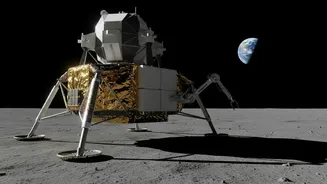
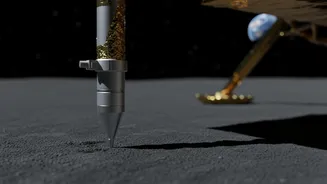
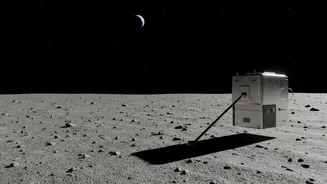
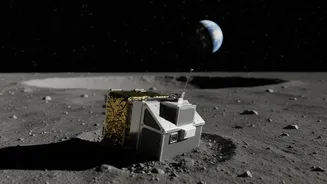
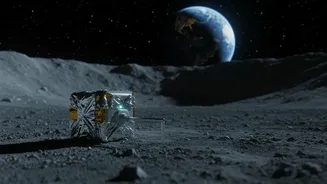
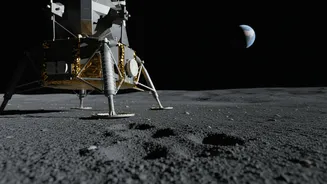
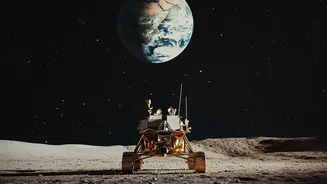
The Vikram lander and Pragyan rover weren't just passengers; they were mobile laboratories packed with advanced instruments designed to conduct in-situ experiments on the lunar surface. Key among them were the ChaSTE (Chandra’s Surface Thermophysical
Experiment) payload on the lander, and the APXS (Alpha Particle X-ray Spectrometer) and LIBS (Laser-Induced Breakdown Spectroscope) on the rover. ChaSTE was designed to probe the temperature and thermal properties of the top 10 centimetres of the lunar regolith—the layer of loose dust and rock covering the Moon. The rover's spectrometers were tasked with analysing the elemental composition of the soil, effectively tasting the surface to see what it's made of. Another critical instrument, ILSA (Instrument for Lunar Seismic Activity), was deployed to listen for 'moonquakes' and other vibrations.
A Surprising Thermal Blanket
One of the most startling findings came from the ChaSTE payload. Scientists expected the surface temperature at the lunar south pole to be quite cool, perhaps around 20-30°C during the day. Instead, ChaSTE recorded surface temperatures reaching as high as 70°C. Even more surprising was the steep temperature gradient just below the surface. At a depth of only 8-10 centimetres, the temperature plummeted to a frigid -10°C. This sharp drop of over 60°C reveals that the Moon's topsoil is an incredibly effective thermal insulator, acting like a blanket. This high porosity and low thermal conductivity mean the surface doesn't transfer heat downwards efficiently, a crucial piece of information for designing future lunar habitats and equipment that will need to withstand these extreme temperature swings.
Rewriting the Moon's Elemental Recipe
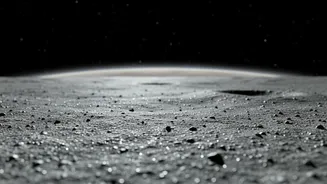
The Pragyan rover’s analysis of the soil's chemical makeup also delivered surprises. While it confirmed the presence of expected elements like iron, aluminium, and calcium, it definitively identified sulphur, which scientists had previously thought existed only in very low concentrations. Furthermore, analysis from the APXS instrument suggests the soil at the landing site contains primitive material excavated from the Moon's mantle billions of years ago, likely from the massive South Pole-Aitken basin impact. This finding is significant because it means Chandrayaan-3 may have landed on a site that gives access to the Moon's early evolutionary materials, something previously lacking in lunar samples collected by other missions. This data helps refine our models of the Moon's origin and geological history.
Listening to a Living Moon
For a long time, the Moon was considered geologically dead. ISRO's Instrument for Lunar Seismic Activity (ILSA) has provided new data to challenge that idea. The sensitive instrument, the first of its kind based on MEMS technology to operate on the Moon, recorded vibrations from the Pragyan rover's movements. More importantly, on August 26, 2023, it recorded an event that appeared to be a natural moonquake. While the source is still under investigation, these first-ever seismic recordings from the lunar south pole provide a vital baseline for understanding the Moon's internal structure and current level of geologic activity. Understanding this seismicity is crucial for determining the stability of any future long-term human presence.
Why This New Knowledge Is Crucial
This new, high-fidelity data from ISRO's payloads is more than just academic. Understanding the soil's thermal properties is essential for building future lunar habitats that can maintain stable temperatures. Knowing the soil's true elemental composition, including the unexpected abundance of sulphur, could be key to 'living off the land' through in-situ resource utilization (ISRU), potentially for creating building materials or even rocket fuel components. The discovery of the soil's layered, fluffy-then-dense structure, revealed by the lander's 'hop' experiment, provides critical engineering data for designing future rovers and landing systems. Each finding grounds our understanding of the lunar environment in real-world data, moving from theory to practical knowledge that will underpin the next wave of global lunar exploration.