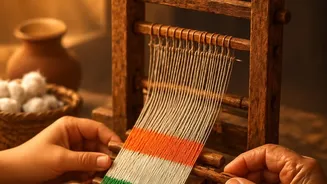

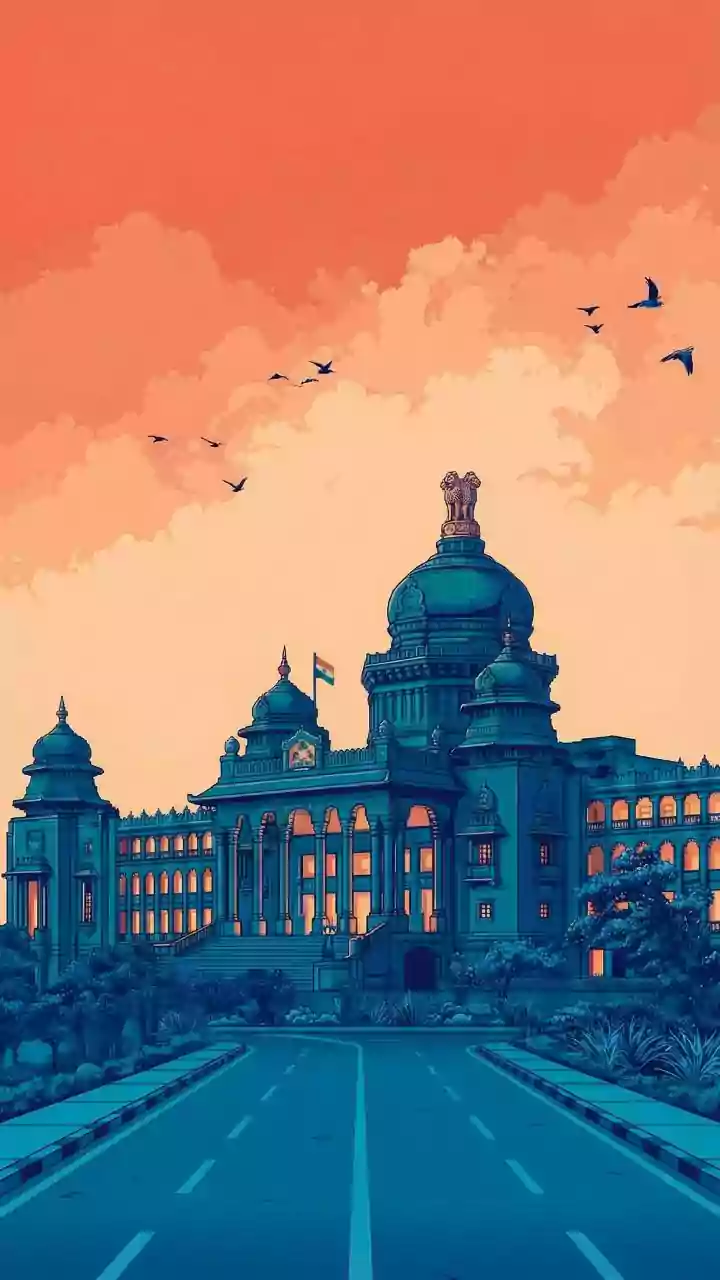


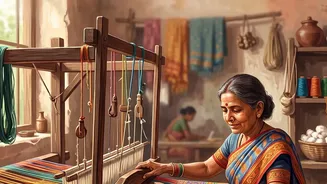


Imagine a journey that travels not just across landscapes, but through layers of time. A tour through Odisha offers more than magnificent temples; it is an invitation into the living, breathing workshops of artisans carrying on a thousand-year-old legacy.
The Spiritual Foundation: Odisha's Golden Triangle
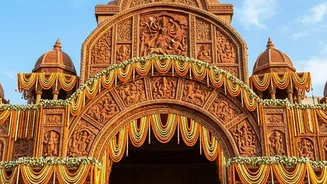
Any deep dive into Odisha's culture begins with its famed 'Golden Triangle'—the cities of Bhubaneswar, Puri, and Konark. This well-trodden path forms the backbone of the state's spiritual identity. A five-day tour often starts in Bhubaneswar, the 'Temple City of India', home to masterpieces of Kalinga architecture like the Lingaraj and Mukteshwar temples. From there, the journey moves to the coastal town of Puri, anchored by the monumental Jagannath Temple, one of India's Char Dham pilgrimage sites. The circuit is completed by a visit to Konark, home to the UNESCO World Heritage Site of the Sun Temple, a colossal 13th-century chariot dedicated to the sun god. While these architectural marvels are awe-inspiring, a truly immersive tour uses them as a gateway to understanding the artistic traditions they inspired.
Raghurajpur: A Village Where Art is Life
Just 14 kilometres from Puri lies Raghurajpur, a village unlike any other. Recognised as a heritage crafts village, it is the heart of Odisha's artistic traditions. Here, nearly every home doubles as an art studio, and the walls of houses are adorned with colourful murals depicting mythological scenes. This is not a museum; it is a living community where artistic skills are passed down through generations. Established over 500 years ago under royal patronage to serve the Jagannath Temple, Raghurajpur is the cradle of Pattachitra painting. A visit here means stepping away from the crowds and into the quiet courtyards of the 'Chitrakars' (painters), who have been preserving their ancestral craft for centuries.
Pattachitra: Storytelling on a Scroll
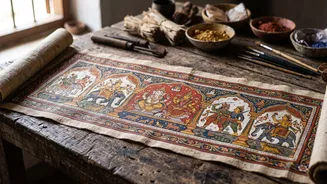
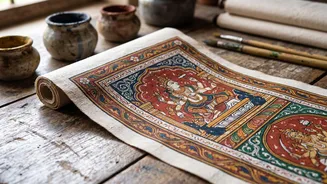
Pattachitra, which translates from Sanskrit as 'cloth-picture' (patta for cloth, chitra for picture), is Odisha's most famous art form. These intricate and vibrant scroll paintings are traditionally made on a canvas prepared by coating cloth with a mixture of chalk and tamarind seed paste. The colours are entirely natural, derived from minerals, ground-up seashells, and plant extracts. The themes are deeply rooted in mythology, with a focus on Lord Jagannath, stories from the Ramayana and Mahabharata, and the divine plays of Lord Krishna. The art form has a distinct style, with bold outlines, rich decorative borders, and expressive figures that convey complex narratives without the use of perspective. Its origins are directly linked to the Jagannath Temple, where these paintings were used for rituals when the main deities were not available for worship.
An Intimate Encounter with Artisans
What makes a craft-focused tour special is the direct interaction with the artisans. In Raghurajpur, visitors can sit with a master painter and watch as they meticulously apply fine strokes with brushes often made from mouse hair for detailed work. They explain the stories behind each painting and the painstaking process of preparing the canvas and natural pigments. Many artisans also practice Tala Pattachitra, an even more delicate art of engraving stories onto interconnected palm leaves. This is a chance to not only buy authentic art directly from its creator but also to understand the devotion, discipline, and generational knowledge embedded in each piece. The experience is often complemented by demonstrations of Gotipua, a traditional dance form performed by young boys and considered the precursor to Odissi.
Beyond Painting: A Spectrum of Crafts
While Pattachitra is the main draw, Raghurajpur and the surrounding areas of Puri are a treasure trove of other traditional crafts. Artisans in the village also create beautiful wooden toys, masks made from papier-mâché, and detailed stone and wood carvings. The skills for stone carving, for instance, have been passed down by the descendants of the very artisans who built the region's great temples. Nearby, the town of Pipili is famous for its colourful appliqué work, where brightly coloured fabrics are stitched together to create everything from temple canopies to decorative wall hangings. A comprehensive tour offers glimpses into these diverse art forms, showcasing the incredible breadth of Odisha's creative heritage that has been sustained for centuries through its deep connection to faith and community.