






A Hidden Gatekeeper Revealed
For years, scientists knew that neurons, like all cells, have a cytoskeleton to provide shape and support. But recent research, primarily from scientists at Penn State, has revealed a far more intricate and important structure than previously understood.
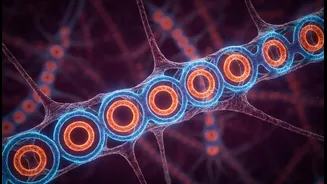
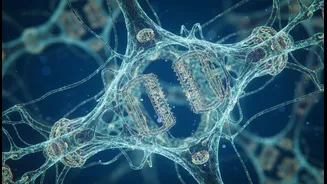
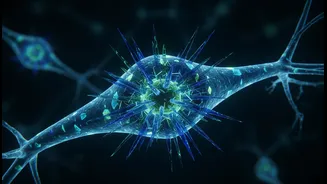
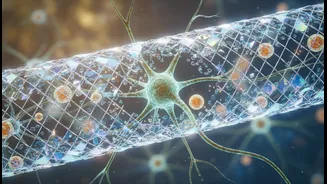
This structure is called the membrane-associated periodic skeleton, or MPS. It’s not just passive scaffolding; it's a dynamic, lattice-like framework of proteins located just beneath the neuron's surface. While its existence was known, its true function was a mystery until now. Using advanced super-resolution imaging, researchers discovered that the MPS acts as an active gatekeeper, regulating the constant flow of materials into and out of the brain cell—a process called endocytosis. This process is essential for everything from nutrient uptake to learning and memory.
Redefining the Role of the Cytoskeleton
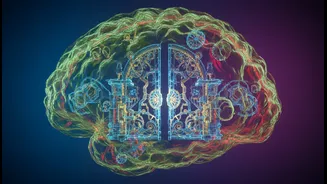
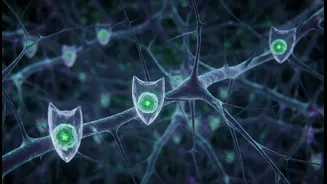
The old view was that the neuronal cytoskeleton was primarily structural, like the frame of a house. This new discovery turns that idea on its head. The MPS isn't static; it's a dynamic barrier that controls what gets in. Think of it as a bouncer at a club, deciding who gets past the velvet rope. Researchers found that this skeleton can actively regulate the uptake of nutrients and proteins by acting as a physical barrier. This finding is a breakthrough because it assigns a much more active and critical role to the cell's internal skeleton in moment-to-moment brain function. The structure can even contribute to its own breakdown through a feedback loop, where increased uptake of materials can trigger signals that tell proteins to chop up parts of the skeleton, opening the gate even wider.
The Crucial Link to Alzheimer's Disease
This is where the discovery becomes critically important for human health. Neurodegenerative diseases like Alzheimer's are characterized by the buildup of toxic proteins, such as amyloid-beta, in the brain. The new research provides a potential mechanism for how this happens. Scientists found that when the MPS is weakened or disrupted, the neuron's gatekeeping function fails. This allows harmful proteins, like the amyloid precursor protein (APP), to be absorbed much more rapidly. Once inside, APP is converted into the toxic amyloid-beta fragments strongly associated with Alzheimer's, leading to increased stress and eventual cell death. This suggests that a breakdown in this cellular skeleton could be an early, hidden trigger in the progression of the disease.
A Vicious Cycle of Damage
The research also points to a devastating feedback loop. The MPS is known to naturally deteriorate during the aging process and in neurodegenerative conditions. As it weakens, more toxic proteins can enter the neuron, which in turn causes more stress and further damages the MPS. This creates a vicious cycle of accelerating damage that may happen long before any clinical symptoms of Alzheimer's appear. In experiments, neurons with a disrupted MPS not only accumulated higher levels of harmful molecules but also showed increased signs of cell death. Understanding this cycle is a major step forward, as it identifies a specific physical structure that can be a target for future interventions.
A New Hope for Future Therapies
The major breakthrough isn't just in understanding the problem, but in identifying a potential solution. By pinpointing the MPS as a critical gatekeeper, scientists have opened a new door for therapeutic strategies. Instead of only focusing on clearing out toxic proteins after they have already accumulated, future treatments could aim to preserve and stabilize the MPS itself. Researchers believe that finding a way to strengthen this internal skeleton could help slow down the cellular changes that lead to Alzheimer's and other neurodegenerative diseases. While still in its early stages, this discovery provides a novel target for drug development, offering hope for therapies that could intervene at a much earlier stage of disease, potentially preserving brain health before irreversible damage occurs.