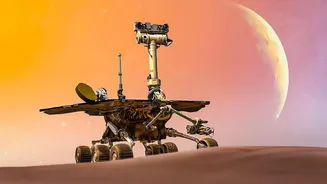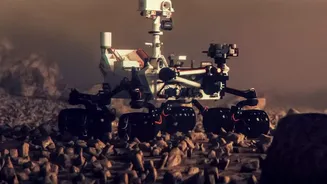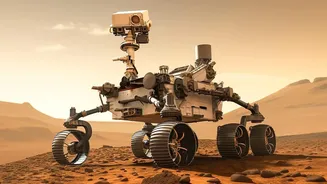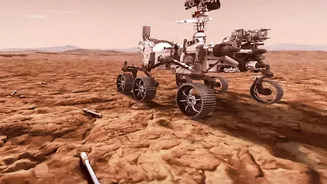





For decades, scientists have dreamed of studying pristine Martian rocks on Earth. Now, NASA has announced a new initiative to make that a reality, dubbed the Perseverance Sample Retrieval Architecture, or PSRA.
A Fresh Start for a Historic Mission
NASA is officially rebooting its approach
to one of the most ambitious projects in the history of space exploration: bringing pieces of Mars back to Earth. Announced on November 9, 2026, the Perseverance Sample Retrieval Architecture (PSRA) is not a fully-formed mission plan, but a strategic initiative to design one. A dedicated team will begin work in January 2027 to develop an updated, feasible, and impartial strategy for retrieving the precious samples currently being collected by the Perseverance rover. This comes after years of reviews and concerns that the original Mars Sample Return (MSR) concept had become too expensive and the timeline too long. The PSRA's final report, expected in the winter of 2027-2028, will outline a new path forward for this monumental undertaking.
Why the Change of Plans?
The original Mars Sample Return program, a collaboration with the European Space Agency (ESA), faced significant headwinds. Independent reviews highlighted major challenges, with cost estimates ballooning to as much as $11 billion and the return date slipping towards 2040. NASA leadership deemed this unacceptable, stating the price was too high and the wait too long. The complexity of the original multi-spacecraft plan contributed to these issues. The PSRA was created to address these 'sticker shock' findings head-on, tasking a new team to re-evaluate everything, from mission requirements to current technologies, and find a more efficient and affordable path. Adding to the pressure is a new space race of sorts: China is moving forward with its own Tianwen-3 sample return mission, aiming to bring Martian soil to Earth as early as 2031.
The Ultimate Interplanetary Heist
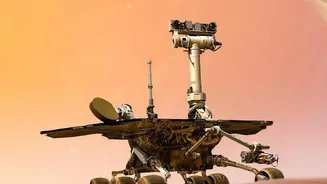
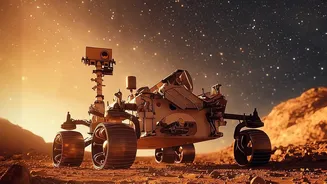
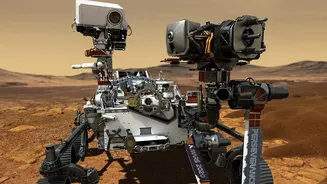
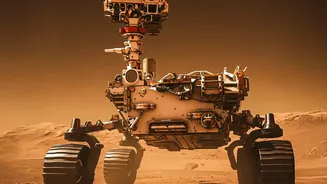
No matter the final design, bringing Mars to Earth is an incredibly complex operation. The Perseverance rover has been drilling rock cores and sealing them in ultra-clean titanium tubes since it landed in Jezero Crater in 2021. It is creating a depot of these sample tubes on the Martian surface, as well as keeping a collection on board. Any retrieval mission will involve sending a lander to this precise location. It would then need to deploy a system—perhaps a small 'fetch rover'—to collect the tubes, load them into a container, and place that container into a Mars Ascent Vehicle (MAV). The MAV would then perform the first-ever rocket launch from the surface of another planet, sending the samples into Mars orbit. Finally, an orbiter would need to autonomously rendezvous with and capture the orbiting container before beginning its long journey back to Earth.
A Scientific Treasure Trove
The reason for undertaking such a difficult mission is simple: the scientific prize is immeasurable. While rovers like Perseverance and Curiosity have incredible onboard labs, they are limited by size and power. The most powerful scientific instruments will always be on Earth. Bringing back carefully selected samples of Martian rock, soil, and atmosphere will allow scientists worldwide to analyze them with stateofate equipment for decades to come. These samples hold the potential to answer some of humanity's biggest questions. They could contain signs of ancient life, or biosignatures, preserved in minerals. They will allow us to precisely date geologic events on Mars, revolutionizing our understanding of its climate history and when it might have been habitable. This knowledge is crucial not only for understanding the evolution of our solar system but also for planning future human exploration of the Red Planet.