



The Desk Becomes a Destination
Let's be honest: a bedroom desk can easily become a forgotten corner piled with work, books, and clutter. But what if it could be a small sanctuary? A touch of greenery can transform a sterile workspace into a calming, more inspiring environment. The
presence of indoor plants has been linked to reduced stress and increased focus, making them a perfect companion for study or work-from-home setups. The problem for many is the fear of failure. We’ve all heard stories, or have our own, of well-intentioned plant purchases that ended with crispy brown leaves. The secret isn't some magical gardening skill; it's choosing plants that are built to survive and even thrive on a little bit of neglect. This is where two champions of the plant world enter: the Pothos and the Snake Plant.
Meet the Pothos: The Great Forgiver
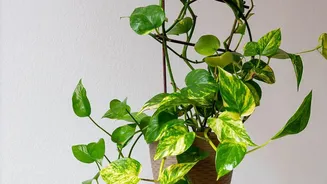
Often called 'devil's ivy' for its near-indestructible nature, the Pothos (Epipremnum aureum) is a vining plant with lovely heart-shaped leaves. It's the friend who doesn't get mad if you forget to text back. Varieties like the classic Golden Pothos, with its green and yellow variegation, or the striking Marble Queen and vibrant Neon Pothos, offer plenty of aesthetic choices. Its trailing vines are perfect for a desk setup; they can cascade elegantly off the side or from a shelf above, adding vertical interest without taking up precious surface area. For a beginner, its resilience is its main selling point. It communicates its needs clearly—drooping leaves mean it's thirsty, and yellowing leaves often signal you've been a little too generous with water.
Pothos Care Made Simple
Caring for a Pothos is refreshingly straightforward. It is incredibly adaptable when it comes to light, thriving in bright, indirect sunlight but also tolerating lower-light conditions common in bedrooms or office cubicles. Direct, intense sun can scorch its leaves, so keep it out of harsh rays. For watering, the golden rule is to let the top inch or two of soil dry out completely between waterings. This usually means watering every one to two weeks, but you should always check the soil first. Overwatering is the most common mistake, so it's always better to err on the side of being too dry rather than too wet. Standard room temperatures and humidity are perfectly fine for this hardy plant.
Meet the Snake Plant: The Ultimate Survivor
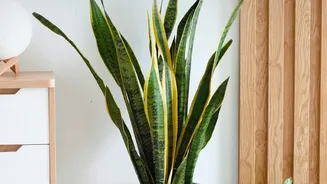
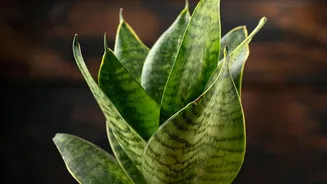
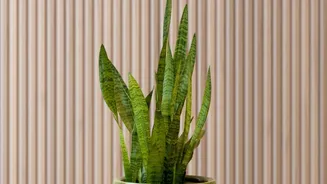
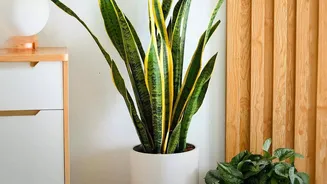
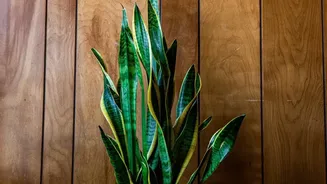
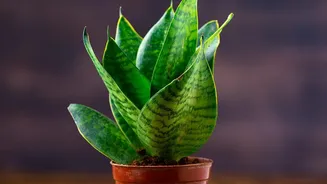
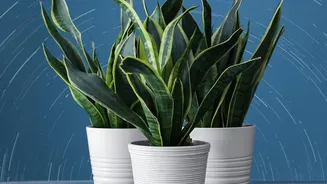
If the Pothos is forgiving, the Snake Plant (Dracaena trifasciata) is the stoic survivor. Also known by the less-flattering name 'mother-in-law's tongue', this plant is famed for its stiff, upright leaves that give it a modern, architectural look. Its vertical growth habit makes it an excellent choice for a desk, as it takes up very little horizontal space. Snake Plants are succulents, meaning they store water in their leaves, which is why they are so incredibly drought-tolerant. They are champions of low-light environments, though they do appreciate bright, indirect light if they can get it. They practically thrive on neglect, making them the absolute perfect choice for frequent travellers, busy students, or anyone who simply wants a plant that won't judge their forgetfulness.
Snake Plant Care Made Simple
The number one rule of Snake Plant care is to not overwater it. This is the fastest way to kill this otherwise resilient plant. Allow the soil to dry out completely between waterings; for many indoor environments, this could mean watering as little as once a month. When you do water, do it thoroughly until water runs out of the drainage hole, but don't let the pot sit in a saucer of water. They prefer a well-draining soil mix, like one designed for cacti or succulents. Snake Plants are happy in a wide range of temperatures, generally between 18°C and 32°C, but should be protected from cold drafts.
A Breath of Fresh Air?
You'll often hear that Pothos and Snake Plants are great for purifying the air, a claim that stems from a 1989 NASA study. While the study did show these plants could remove volatile organic compounds (VOCs) from a sealed chamber, the real-world impact is often overstated. In a typical home or office with natural ventilation, you would need a massive number of plants to significantly impact air quality. So, while they might offer a tiny boost, their primary benefits for your desk are aesthetic and psychological. Think of them as living art that helps create a more peaceful and productive atmosphere, with any air cleaning as a minor bonus.
A Quick Word of Caution
It is important for pet owners and parents of young children to know that both Pothos and Snake Plants are toxic if ingested. Chewing on Pothos leaves can release calcium oxalate crystals, causing oral irritation, pain, and vomiting in cats and dogs. Snake Plants contain saponins, which can lead to nausea and vomiting. While poisonings are rarely fatal, they can cause significant discomfort. The best practice is to place these plants on a high shelf or in a location where curious pets and children cannot reach them.