





The Alien Atmosphere Problem
Mars presents an environment that is profoundly hostile to human life. The first and most immediate challenge is its atmosphere. It is incredibly thin—less than 1% of Earth's atmospheric density—and composed of about 96% carbon dioxide, a gas lethal to humans
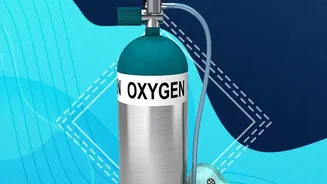
in high concentrations. There is virtually no free oxygen to breathe. Any future astronauts would need a constant and reliable supply of breathable air, and shipping massive tanks of oxygen from Earth is an unsustainable and prohibitively expensive solution for a long-term presence. This has long been considered one of the primary barriers to establishing a foothold on our planetary neighbor.
A Machine That Breathes CO2
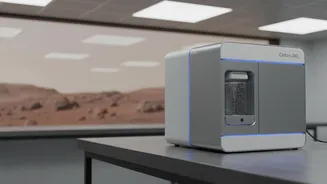
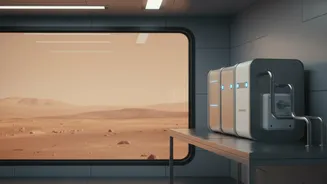
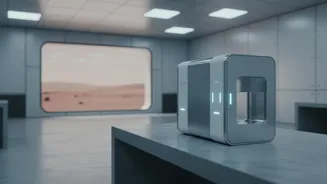
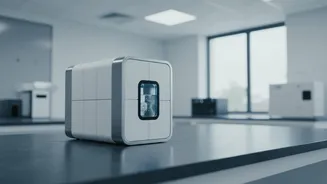
Enter CO2 electrolysis. The concept, known more broadly as in-situ resource utilization (ISRU), is simple in principle: use what's already there. A CO2 electrolysis reactor is a device that does exactly what its name suggests: it uses electricity to split carbon dioxide molecules. By heating the Martian air to around 800°C and passing it through an electrochemical cell, the machine breaks the CO2 down into two vital components: pure oxygen (O2) and carbon monoxide (CO). The oxygen can be stored for life support, creating breathable air inside habitats and spacesuits. The carbon monoxide, often seen as a waste product, holds its own potential as a component for creating rocket fuel.
MOXIE: The Proof of Concept
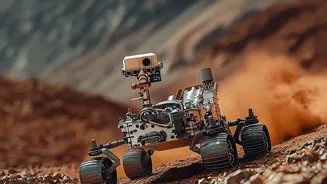
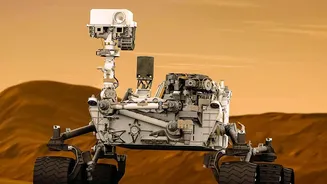
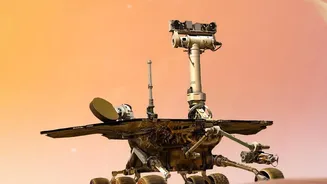
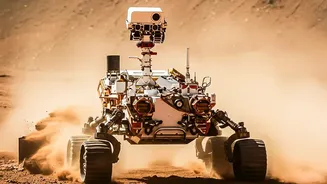
This isn't just a theoretical concept; it has been tested on Mars. NASA's Perseverance rover carried a small, microwave-sized experiment called the Mars Oxygen In-Situ Resource Utilization Experiment, or MOXIE. On April 20, 2021, MOXIE made history by successfully producing oxygen from the Martian atmosphere for the first time. Over the course of its mission, which concluded in 2023, MOXIE ran 16 times, proving its effectiveness across different seasons and times of day on Mars. It exceeded its production goals, generating a total of 122 grams of oxygen at a purity of 98% or better. While that's only enough to keep a small dog alive for about 10 hours, MOXIE was never meant to support a mission. Its job was to prove that the technology works, and it passed with flying colors.
The Challenge of Scaling Up
MOXIE's success was the crucial first step, but it is a miniature version of what is truly needed. It is estimated to be a 0.5% scale model of the kind of system required for a human mission. Future astronauts won't just need oxygen to breathe; they will need massive quantities of it to serve as a propellant oxidizer for the Mars Ascent Vehicle (MAV) to get back home. Estimates suggest a crewed ascent vehicle would require around 30 metric tons of oxygen. To produce that amount over a 14-month period before the astronauts even arrive, a full-scale system would need to generate about 3 kilograms of oxygen per hour, continuously. This is the essence of the scaling challenge: turning MOXIE's toaster-sized demonstration into an industrial-scale, ultra-reliable chemical plant.
From Prototype to Powerhouse
Scaling up involves several significant engineering hurdles. A much larger system will require substantially more power, likely from a dedicated fission power source, as solar panels would be insufficient for continuous, high-rate production. The system must be designed for extreme reliability and autonomy, able to operate flawlessly for over a year with minimal human intervention. Engineers are already working on the next generation of CO2 electrolyzers. Designs exist for stacks that are over 30 times larger than the one used in MOXIE. A system composed of six of these new, mission-scale stacks could theoretically produce the 30 tons of oxygen needed for a return journey. Building in redundancy—using eight or more stacks—would provide a critical safety margin millions of miles from Earth.