








The Humidity and Hair Connection
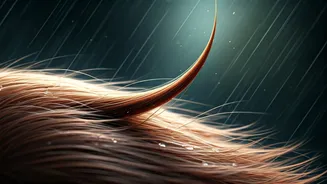
The primary culprit behind monsoon hair fall is the dramatic increase in humidity. Your hair is porous, meaning it absorbs moisture from the air. When the air is excessively humid, hair shafts swell up with excess moisture. This process weakens the hydrogen
bonds within the hair structure, making each strand more fragile, prone to breakage, and less elastic. This swelling also lifts the hair cuticles, leading to that dreaded monsoon frizz. But more importantly, the added weight and structural weakness put extra stress on the hair follicles, contributing to increased shedding from the root.
An Unhappy Scalp Environment
A healthy scalp is the foundation of healthy hair, and the monsoon creates the perfect storm for scalp problems. The constant dampness, combined with sweat, creates a warm, moist environment—an ideal breeding ground for fungi and bacteria. This can lead to issues like dandruff, itchiness, and fungal infections such as tinea capitis. An inflamed or infected scalp compromises the health of hair follicles, disrupting the natural hair growth cycle and pushing more hair into the telogen (shedding) phase. The scalp’s natural oil (sebum) production can also go into overdrive, leading to clogged pores and further weakening of the hair roots.
The Impact of Acid Rain
While we love the relief that rain brings, rainwater itself isn't always pure. Especially in urban areas, rainwater can be acidic and carry pollutants absorbed from the atmosphere. When your hair gets wet in the rain, these chemicals and pollutants can settle on your scalp and hair shafts. This can strip away the natural protective oils, leaving your hair dry, brittle, and your scalp irritated. If you don't wash your hair soon after getting drenched, this residue can accumulate, contributing to scalp infections and hair fall.
Your Monsoon Hair Care Rescue Plan
Fighting back against monsoon hair fall doesn't require a complex arsenal, just a few smart adjustments to your routine. First, keep your scalp clean. Don't be afraid to wash your hair more frequently (perhaps every other day) with a gentle, sulphate-free shampoo to prevent fungal buildup. Always use a conditioner, but apply it only from the mid-lengths to the ends to avoid weighing down the roots. Secondly, avoid tying up wet hair. This is a cardinal sin during the monsoon, as it traps moisture and creates a perfect habitat for infections. Let your hair air-dry as much as possible or use a blow-dryer on a cool setting.
Diet and Hydration Matter More Than Ever
What you eat plays a crucial role in hair health year-round, but it's especially important during this high-shedding season. Ensure your diet is rich in protein (the building block of hair), iron, zinc, and biotin. Include foods like eggs, spinach, nuts, seeds, and lentils. Dehydration can also lead to dry, brittle hair, so even though the weather is cool, keep up your water intake. A good diet strengthens the hair from within, making it more resilient to the external challenges posed by the monsoon humidity.
Simple Habits to Adopt and Avoid
Small changes can make a big difference. Use a wide-tooth comb instead of a brush, especially on wet hair, to minimise breakage. Avoid tight hairstyles like high ponytails or buns that pull on the hair follicles. A weekly deep-conditioning mask or a gentle oil massage (using coconut or almond oil) can help nourish the scalp and hair, but be sure to wash it off thoroughly. Finally, try to limit the use of heat styling tools, as your hair is already in a fragile state.