




The Daily Toll of Desk Life
Spending eight hours a day in a chair might seem harmless, but it places significant strain on your body. This prolonged sitting often leads to a predictable pattern of muscle imbalance and discomfort. Your hip flexors, the muscles at the front of your hips,
become short and tight. Your glutes can become inactive or weakened, your hamstrings shorten, and your upper back tends to round forward as you lean toward your screen. Over time, this static posture can contribute to poor spinal alignment, reduced flexibility, and chronic aches in the neck, shoulders, and lower back. Research has linked excessive sitting to a slower metabolism and an increased risk of various health issues, making it crucial to find ways to counteract these effects.
What is Active Recovery Foam Rolling?
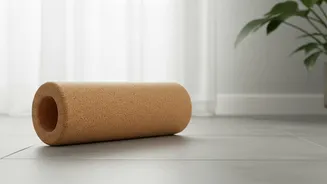
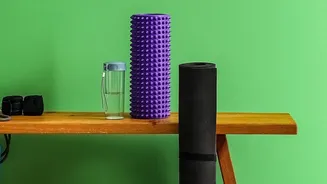
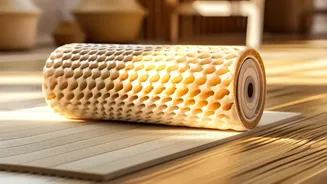
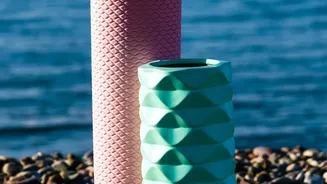
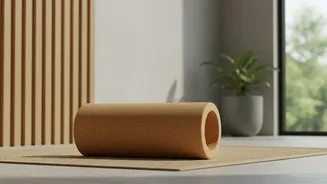
Foam rolling is a form of self-myofascial release (SMR), which is essentially a self-massage technique used to relieve tension in your fascia—the connective tissue that surrounds your muscles. When you stay in one position for too long, like sitting, this fascia can develop adhesions or 'knots', leading to stiffness and pain. By applying sustained pressure with a foam roller, you can help break up these adhesions, improve blood flow, and release muscle tightness. This process can increase your range of motion, reduce soreness, and enhance your body's awareness of its own posture and alignment. It's an active way to help your muscles recover from the stress of inactivity.
Target One: Unlocking the Hips
Your hip flexors are a primary victim of desk culture, becoming shortened and tight from the constant seated position. To address this, lie face down and place the foam roller under one hip. Support your upper body with your forearms. Slowly roll from the top of your thigh up to your hip bone, pausing on any particularly tender spots for about 30 seconds to allow the muscle to release. Avoid rolling directly over the hip bone itself. This simple move helps restore length to these crucial muscles, which can alleviate strain on your lower back and improve your overall posture.
Target Two: Releasing the Glutes
While sitting, your gluteal muscles are often inactive and compressed, which can lead to weakness and tightness in a related muscle, the piriformis. To target this area, sit on the foam roller with it positioned under one glute, and cross that same leg over the opposite knee in a figure-four position. Gently lean into the side you are stretching and roll back and forth. You are looking for tender spots in the muscle. Releasing tension here can help wake up these underused muscles and relieve sciatic-like pain that can sometimes result from a tight piriformis.
Target Three: Opening the Upper Back
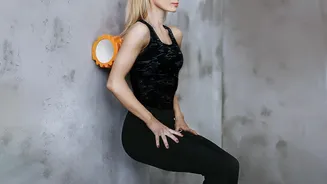
Slouching over a keyboard leads to a rounded upper and mid-back, known as the thoracic spine. To counteract this, lie on your back with the foam roller positioned horizontally across your shoulder blades. Support your head with your hands, lift your hips off the floor, and use your feet to gently roll up and down your mid-to-upper back. Avoid rolling onto your neck or lower back. This movement helps to extend the thoracic spine, stretch tight chest muscles, and open up your posture, providing relief from neck and shoulder tension.
Integrating Rolling Into Your Routine
Consistency is more important than intensity. You don't need to spend an hour on the roller to feel the benefits. A dedicated five to ten-minute session a few times a week can make a significant difference. You can perform this routine in the evening after work to undo the day's tension or even in the morning to prepare your body for the day ahead. When rolling, remember to move slowly and breathe deeply. The goal is to apply gentle, sustained pressure to allow the fascia to release, not to cause intense pain. If a spot is too sensitive, work on the surrounding areas first before gradually moving closer.