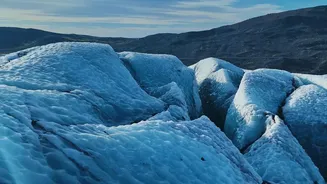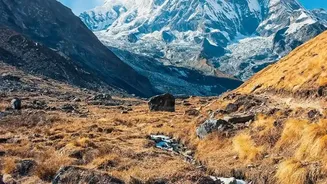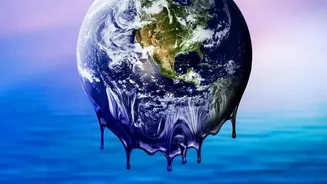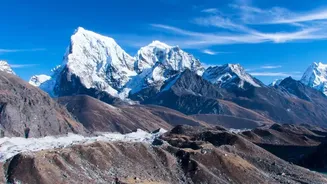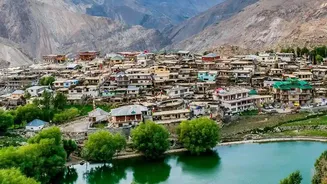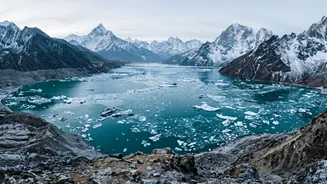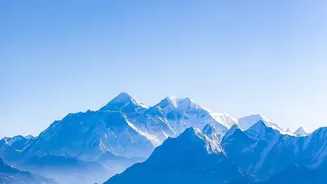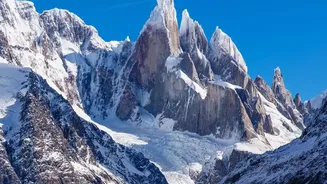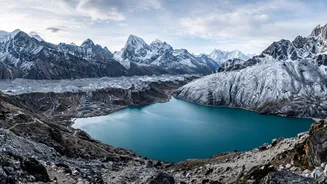






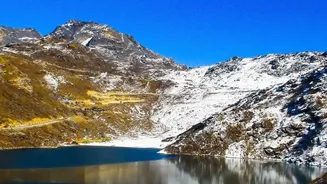
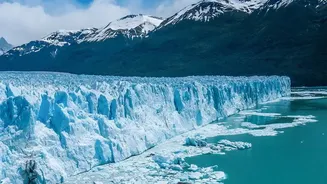
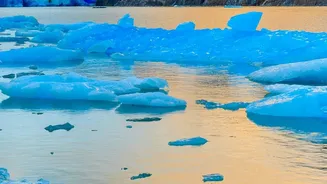
The majestic Himalayas, often called the 'Third Pole', are facing a critical threat. Recent United Nations reports sound the alarm on rapidly melting glaciers, which are creating unstable lakes that could burst and cause catastrophic floods.
Understanding the 'Ticking Time Bombs'
A Glacial
Lake Outburst Flood, or GLOF, is a sudden and violent flood that occurs when the natural dam containing a glacial lake fails. As glaciers retreat due to rising temperatures, they leave behind vast depressions that fill with meltwater, forming these lakes. The dams are often just unstable walls of ice and moraine—a loose mixture of rock and sediment. When this fragile barrier is breached, by an avalanche, an earthquake, or simply the pressure of the growing body of water, it can release millions of cubic metres of water and debris in an instant. These torrents surge down mountain valleys at immense speeds, capable of destroying everything in their path, including villages, roads, bridges, and critical infrastructure like hydropower plants.
The UN's Sobering Assessment
A series of recent reports from the UN and associated organisations paint a grim picture. Studies released ahead of the COP31 climate conference confirm that the Hindu Kush Himalaya region is warming much faster than the global average. This accelerated warming has doubled the rate of glacier ice loss since the year 2000. One UN-led study highlighted that GLOF events have become almost five times more frequent per decade compared to the pre-1950 period, with climate change being the primary driver. Following devastating floods in Nepal in 2026, UN officials warned that the growing risk threatens millions of people living downstream and could render entire riverbank areas uninhabitable. The reports stress that technology and mitigation efforts are not keeping pace with the escalating danger.
Why the Himalayas Are So Vulnerable
The Hindu Kush Himalayan ranges are the source of at least ten major Asian river systems, including the Indus, Ganga, and Brahmaputra, which support the water, food, and energy needs of nearly two billion people. However, these 'Water Towers of Asia' are exceptionally vulnerable. Recent assessments have identified hundreds of potentially dangerous glacial lakes across the region. A 2024 report estimated that over 21% of India's GDP is dependent in some way on the stability of the Himalayas. The problem is compounded by black carbon deposits from industrial and agricultural burning in the plains, which settle on glaciers, darken the ice, and increase the absorption of solar radiation, further speeding up the melting process.
A Clear and Present Danger for India
This is not a distant threat. India has the tragic distinction of recording the highest number of deaths from GLOFs among eight Himalayan countries, with over 6,100 fatalities documented between 1835 and 2025, according to a UN-led study. The 2013 Kedarnath disaster, triggered in part by a GLOF from Chorabari Lake, and the 2023 Sikkim floods that destroyed the Teesta III dam are stark reminders of the country's vulnerability. A recent GLOF in Bhutan on October 29, 2026, triggered alerts and evacuations in downstream areas of West Bengal and Assam, demonstrating the transboundary nature of the risk. With a report identifying 189 high-risk glacial lakes in India, 56 of which are classified as 'very high risk', downstream communities and vital infrastructure remain perilously exposed.
Can This Catastrophe Be Averted?
While the situation is urgent, it is not without hope. The UN warnings serve as a critical call to action. Experts advocate for a multi_pronged approach focused on mitigation and adaptation. This includes establishing robust, people_centred early warning systems that can provide timely alerts to downstream communities. Monitoring efforts using satellite imagery and on_the_ground sensors are crucial to track the growth and stability of these dangerous lakes. In some cases, engineering solutions like controlled drainage to lower lake levels can reduce the immediate risk. However, reports emphasize that the most critical long_term solution is aggressive global action to cut greenhouse gas emissions and limit global warming, which is the root cause of the accelerating glacial melt.