





Khichuri & Ilish Bhaja: Bengal's Soul Food
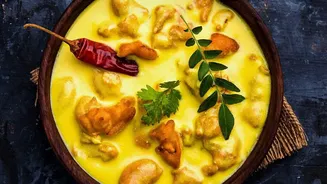
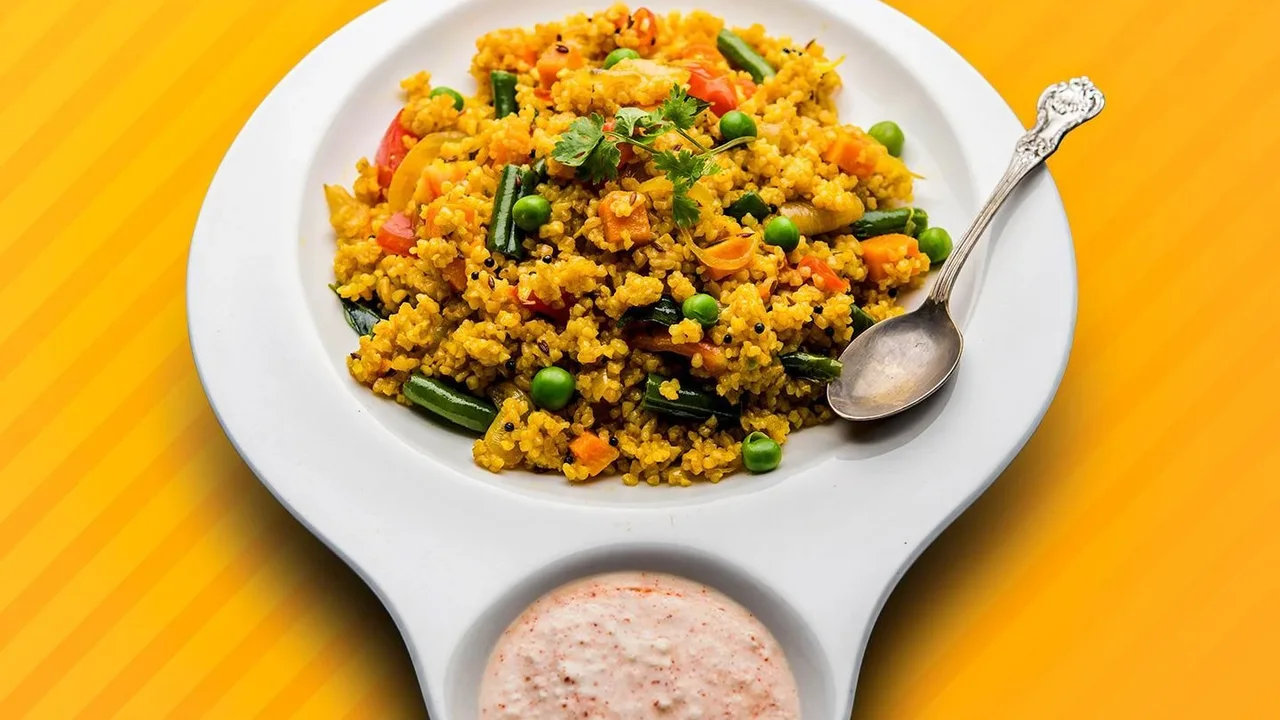
In West Bengal, the arrival of monsoon is synonymous with a plate of hot, soft-cooked khichuri. This isn't just a simple mix of rice and lentils; it's a flavourful, aromatic dish often cooked with Gobindobhog rice, roasted moong dal, and a medley of vegetables
and spices. The ultimate accompaniment is a piece of Ilish Maach Bhaja (fried Hilsa fish). The monsoon coincides with the peak season for Hilsa, a fish prized for its rich flavour and delicate texture. The crisp, salty fish served alongside the comforting, ghee-laden khichuri is more than a meal—it's a cherished cultural experience, a flavour combination that Bengalis eagerly await all year.
Bhutte ka Kees: Indore's Creamy Corn Delight
Forget simple roasted corn on the cob. In Indore, Madhya Pradesh, the monsoon hero is Bhutte ka Kees. The name literally translates to 'grated corn', and that's exactly what it is. Fresh, tender corn is grated and then slow-cooked with milk, green chillies, ginger, and spices like cumin and mustard seeds until it reaches a creamy, porridge-like consistency. It’s a popular street food, often garnished with fresh coriander, grated coconut, and a squeeze of lime juice. This dish perfectly balances the natural sweetness of corn with a mild, comforting spice, making it a beloved rainy-day breakfast or evening snack.
Mirchi Vada: Jodhpur's Spicy Monsoon Kick
When the skies darken over Rajasthan, the demand for Jodhpur's famous Mirchi Vada skyrockets. This isn't just any chilli fritter. It involves large, less spicy Bhavnagri chillies, which are slit open, deseeded, and filled with a spicy and tangy mashed potato stuffing. The stuffed chilli is then dipped in a gram flour (besan) batter and deep-fried to a perfect golden brown. The result is a substantial snack that’s crispy on the outside with a soft, flavourful interior. Served hot, often with tamarind or mint chutney, it delivers a satisfying warmth that cuts right through the monsoon chill.
Patrode: Coastal Karnataka's Leafy Wonder
A unique monsoon delicacy from coastal Karnataka, particularly the Udupi-Mangalore region, is Patrode. It is made using colocasia (arbi) leaves, which grow abundantly during the rainy season. The leaves are carefully cleaned and then smeared with a thick, spicy, and tangy paste made from rice flour, lentils, grated coconut, jaggery, and tamarind. The coated leaves are rolled up tightly and steamed. Once cooked, these rolls can be sliced and eaten as is, often with a drizzle of coconut oil, or they can be shallow-fried for a crispy texture. Patrode is a masterful blend of earthy, spicy, sweet, and sour flavours.
Kanda Bhaji: Maharashtra's Quintessential Crunch
No monsoon food trail through Maharashtra is complete without stopping for Kanda Bhaji. These are crispy onion fritters, a staple street food snack especially popular during the rains. Unlike other pakoras, the Maharashtrian style often uses thinly sliced onions mixed with gram flour, spices, and very little or no water. The moisture from the onions themselves helps form the batter, resulting in an exceptionally crispy texture when fried. Paired with a cup of hot masala chai, these crunchy, flavourful fritters, sometimes served with fried green chillies, are the very definition of monsoon indulgence.
Pazham Pori: Kerala's Sweet Welcome to the Rains
In Kerala, the arrival of rain is often celebrated with a plate of sweet, golden Pazham Pori. Also known as Ethakka Appam, these are banana fritters made from a specific variety of ripe plantains called Nendram Pazham. The plantains are sliced, dipped in a simple batter of all-purpose flour (maida), a bit of rice flour for crispiness, sugar, and a pinch of turmeric for colour, and then deep-fried. The outside becomes crisp while the inside remains soft and sweet, with the banana turning almost molten. It’s a beloved 4 PM tea-time snack (naalu mani palaharam) that offers instant comfort on a dreary, rainy day.