




The Power of Three Compound Moves
The secret to an effective hostel workout isn't about complexity; it's about efficiency. Squats, push-ups, and planks are all 'compound' exercises. This means each movement engages multiple muscle groups across your body simultaneously. Instead of isolating
one small muscle, you're activating large chains of them, from your legs and glutes to your core, chest, and shoulders. This comprehensive approach is what allows you to achieve a full-body workout in a fraction of the time, making it ideal for a small dorm room or rooftop terrace. Research has repeatedly shown that bodyweight training is highly effective for building strength, endurance, and boosting your metabolism—all without needing a single piece of gym equipment.
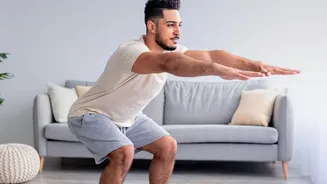
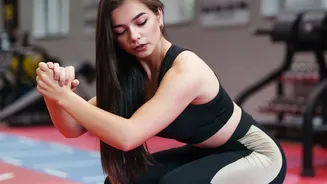
Squats: The Lower Body Foundation
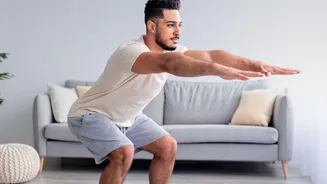
Think of the squat as the powerhouse of your routine. It primarily targets the largest muscles in your body: the quadriceps, hamstrings, and glutes. For a traveller, the functional benefits are immense. Strong legs and glutes provide the power needed for long days of walking through new cities, hiking up scenic viewpoints, and carrying a heavy backpack without strain. Performing squats also strengthens your lower back and core as they work to stabilise your body throughout the movement. This built-in stability work is crucial for preventing the kind of back pain that can ruin a trip.
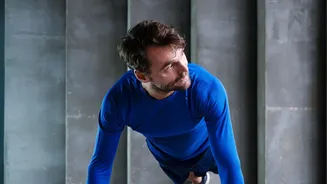
Push-Ups: Ultimate Upper Body Strength
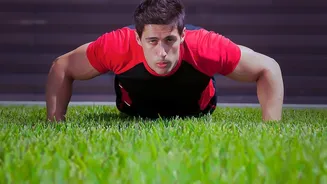
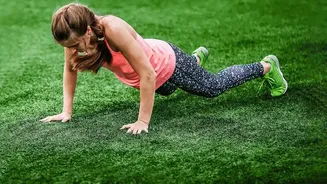
The push-up is a classic for a reason: it's one of the most effective ways to build upper body and core strength using only your body weight. A proper push-up works your pectoral (chest) muscles, deltoids (shoulders), and triceps (the back of your arms). At the same time, your core muscles must remain braced to keep your body in a straight line, delivering a bonus abdominal workout. This makes it a perfect counterpart to the squat. While squats handle the lower body, push-ups ensure your upper body stays strong for lifting your luggage into overhead bins or pulling yourself out of a hostel pool. If a standard push-up is too challenging, you can easily modify it by placing your hands on a bed or chair, or by performing them on your knees to build strength progressively.
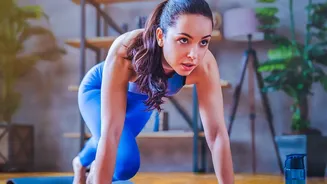
Planks: The Core of Your Stability
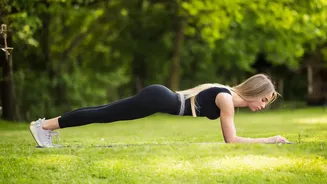
The plank is the glue that holds your fitness together. While it might look static, this exercise is an intense isometric hold that strengthens your entire core, including the deep transverse abdominis, rectus abdominis ('six-pack' muscles), and obliques. A strong core is about much more than aesthetics; it's the foundation for good posture and a stable spine. For travellers who spend hours sitting on buses, trains, or planes, a strong core can be the difference between arriving energised and arriving with a stiff, aching back. The plank requires no movement, making it the ultimate small-space exercise that can be done almost anywhere.
Your 20-Minute Hostel Workout Plan
Putting it all together is simple. The goal is to keep moving and minimise rest to keep your heart rate up, which provides cardiovascular benefits. A great way to structure this is using a circuit format. Try this routine: 1. Warm-up (2 Minutes): Start with light movements like jumping jacks or high knees to get your blood flowing. 2. The Circuit (15 Minutes): Set a timer and perform the following sequence as many times as you can in 15 minutes (this is often called an AMRAP, or 'As Many Rounds As Possible'). 10 Bodyweight Squats 10 Push-Ups (modify as needed) * 30-Second Plank Hold Rest for 30-60 seconds after completing all three exercises, then repeat the circuit. 3. Cool-down (3 Minutes): Finish with some light stretching for your legs, chest, and back. This structure is efficient, raises your metabolism, and can be easily adjusted. As you get fitter, you can try to complete more rounds within the 15 minutes or increase the duration of your plank.