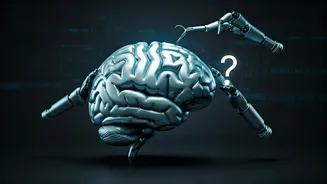








The Promise of a Smarter Newsroom
It’s easy to see the appeal of AI in journalism. The technology offers to automate tedious tasks, freeing up reporters to focus on in-depth work. AI can transcribe interviews in minutes, analyze vast datasets to uncover hidden trends, and even draft summaries
or social media posts. For an industry facing economic pressure, these efficiencies are not just helpful; they feel essential. By early 2026, many news organizations had already embedded AI into their daily workflows, using it to streamline everything from copy editing to content optimization. The goal, as many see it, is to create a human-AI partnership where technology handles the grunt work, allowing journalists to dedicate their time to enterprise reporting, source building, and storytelling. This vision is not about replacing reporters but augmenting their abilities, making them faster and more capable.
The Ghost in the Machine
However, for all its sophistication, generative AI has a critical flaw: it hallucinates. An AI hallucination is when the model generates false or misleading information but presents it with complete confidence. Because these systems are designed to predict the next most likely word based on statistical patterns, they have no concept of truth or reality. They can invent facts, create fake sources, and confidently state inaccuracies. This has already led to real-world consequences, from a chatbot for Air Canada inventing a bereavement fare policy to AI-generated content with historical inaccuracies being published by media outlets. For journalists, treating any output from a generative AI as unvetted source material is a new, non-negotiable rule. The Associated Press, for example, explicitly states that AI-generated content must be treated as unvetted and thoroughly checked.
More Than Just Checking Facts
The role of an editor goes far beyond catching typos and factual errors. It involves nuanced judgment about context, tone, fairness, and ethical implications—qualities that AI cannot replicate. An editor understands the community a story serves, weighs the potential harm of a particular framing, and ensures that a piece is not just accurate but also responsible. AI tools can't determine newsworthiness, identify gaps in sourcing, or restructure a narrative to make it more compelling and clear. They can reinforce societal biases present in their training data, inadvertently producing content that is skewed or even harmful. Many news organizations have established policies banning the use of AI to replace staff, instead emphasizing its role as a supportive tool that remains under strict human oversight. This human-in-the-loop requirement is the bedrock of ethical AI implementation in journalism.
Trust Is the Only Currency That Matters
Ultimately, the business of journalism runs on trust. In an era of rampant misinformation, the credibility of a news organization is its most valuable asset. While audiences are cautiously open to newsrooms using AI, their trust is conditional. Surveys consistently show that the public expects transparency and, most importantly, human oversight. Nearly 99% of local news consumers surveyed in one study said it was important for humans to review content before publication. Another study found that while audiences are comfortable with AI being used for backend tasks, they are wary of it encroaching on areas requiring editorial judgment. Rushing to publish unvetted AI content risks catastrophic damage to a news brand’s reputation. Disclosing when and how AI is used, and demonstrating a commitment to human accountability, is not just good ethics—it's a crucial business strategy for survival.