







The Classic Monsoon Withdrawal
Typically, the southwest monsoon begins its withdrawal from the northwestern parts of India around early to mid-September. This process is a slow, staggered retreat, not an abrupt stop. It is governed by a weakening of the pressure systems that pull moisture-laden
winds onto the subcontinent. As the land begins to cool faster than the ocean, these winds lose their momentum, and the rains gradually cease, moving from northwest to southeast over several weeks. The India Meteorological Department (IMD) officially declares withdrawal for a region only after specific criteria are met, including a continuous five-day period with no significant rainfall and a change in atmospheric wind patterns.
A Shift Towards 'Break-Monsoon' Spells
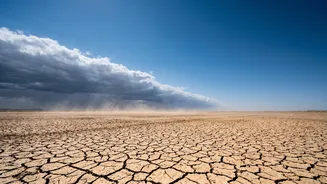
In recent years, climate patterns have introduced more variability. Instead of a steady, tapering rain, we are seeing more frequent 'break-monsoon' conditions, where there are longer dry spells punctuated by short, intense bursts of rain. Current forecasts for September 2026, influenced by prevailing El Niño conditions, suggest a drier and hotter month than usual for much of the country, with rainfall likely to be below normal. This pattern of sporadic, heavy rain followed by clear skies is a key factor in the build-up of uncomfortable heat. While overall rainfall might be deficient, the moisture it leaves behind does not disappear instantly.
The Sun and Cloud Equation
During active monsoon phases, persistent cloud cover acts like a natural sunshade, blocking a significant portion of incoming solar radiation and keeping daytime temperatures moderate. However, as the monsoon withdraws and rainfall becomes intermittent, we get more clear, sunny days. When the sun emerges after a spell of rain, it shines down with full intensity. With less cloud cover to offer protection, the ground and the air heat up much more rapidly. This is a primary reason why a 'break' in the monsoon doesn't immediately feel like a relief from the heat; in fact, it often feels the opposite.
The Humidity Factor: It’s Not the Heat, It’s the Humidity
This is where the real discomfort begins. The ground, saturated from recent rains, holds a vast amount of moisture. When the strong September sun heats the wet ground, this moisture evaporates, pumping large amounts of water vapour into the atmosphere. This dramatically increases the relative humidity. High humidity makes it harder for our bodies to cool down through sweating, because the surrounding air is already laden with moisture and can't absorb our sweat effectively. This is why the 'feels-like' temperature, or heat index, can be significantly higher than the actual air temperature. A 32°C day can feel like 38°C or higher, creating oppressive and sticky conditions.
What It Means for Daily Life
This phenomenon, often called 'September heat', is a direct consequence of the transition out of the monsoon. The combination of intense solar radiation on clear days and high humidity from lingering ground moisture creates a potent recipe for uncomfortable heatwaves. This is not just a matter of discomfort; it has tangible impacts. The increased perceived heat can lead to health issues, reduce productivity, and drive up energy consumption as people rely more heavily on air conditioning. As rainfall patterns become more erratic—with longer dry spells and less light rain to provide consistent evaporative cooling—these periods of intense post-monsoon heat could become more frequent and pronounced.