
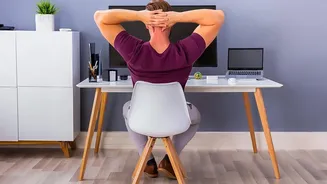


1. Neck Rolls and Tilts for Tension Release
One of the first places stress appears is in the neck and shoulders. Staring at a screen causes muscles to tighten, leading to headaches and stiffness. To counter this, sit tall and gently lower your chin to your chest. Slowly roll your head toward your right
shoulder, hold for 15 seconds, and then repeat on the left side. This simple motion releases tension in the trapezius muscles. Physically, it eases stiffness that can travel down your spine. Mentally, taking a moment to focus on your body and breath acts as a reset button, interrupting the flow of work stress and clearing your head for the next task.
2. Shoulder Blade Squeezes for Posture
Poor posture is a major cause of desk-related pain, as slouching puts strain on your back and neck. Shoulder blade squeezes, or scapular squeezes, directly combat this. While sitting or standing, imagine holding a pencil between your shoulder blades and squeeze them together for 5-10 seconds, then release. Repeat this 10 times. This exercise activates the muscles in your upper back that support a healthy, upright posture. Physically, it prevents your shoulders from rounding forward. Mentally, improved posture has been linked to better mood and confidence, providing a subtle but significant psychological lift during a long day.
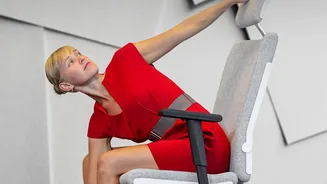
3. Seated Spinal Twists for Mobility
Sitting in a fixed position for hours can make your spine feel rigid and sore. A seated spinal twist helps restore mobility and release lower-back tension. Sit upright with your feet flat on the floor. Gently twist your torso to the right, placing your left hand on your right knee for a mild stretch. Hold for 20-30 seconds, breathing deeply, and then switch sides. This movement improves flexibility in your mid-back and can alleviate the achiness that builds up from being stationary. The twisting motion also stimulates circulation, which helps deliver more oxygen to your brain and can provide a small burst of energy and focus when you're feeling sluggish.
4. Wrist and Finger Stretches to Prevent Strain
Constant typing and mouse use can lead to repetitive strain injuries in the hands and wrists. To prevent this, extend one arm in front of you with the palm facing up. With your other hand, gently bend your wrist down, holding for 15 seconds. Then, bend it up and hold again. Finally, make a tight fist and then spread your fingers wide. These movements stretch the forearm muscles and improve blood flow. Physically, this reduces the risk of conditions like carpal tunnel syndrome. Mentally, it provides a necessary 'micro-break' that allows you to pause, disconnect from the screen, and return with refreshed focus.
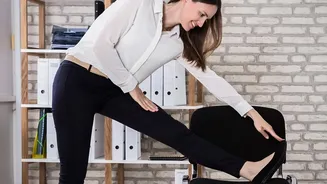
5. Seated Leg Lifts for Circulation
Your upper body isn't the only part that suffers from sitting all day. Prolonged sitting can slow blood circulation in your legs, leading to stiffness and fatigue. Seated leg lifts are an easy way to get the blood flowing. While seated, extend one leg straight out in front of you and hold for 5-10 seconds before lowering it. Repeat 10-15 times on each leg. This simple exercise engages your quadriceps and improves circulation, which can reduce swelling and discomfort. By boosting blood flow, you're also helping to combat the overall feeling of lethargy that comes from being sedentary, keeping your body and mind more alert.
6. Mindful Breathing for Instant Calm
While not a physical stretch, mindful breathing is a powerful tool to manage mental stress at your desk. When you feel overwhelmed, take a minute to close your eyes and focus on your breath. Inhale slowly through your nose for a count of four, and exhale even more slowly through your mouth for a count of six. Physically, this technique helps relax tense muscles and can lower your heart rate. Mentally, it shifts your focus away from work pressures and into the present moment, providing an immediate sense of calm and clarity. Research shows that even short breaks for intentional breathing can significantly improve focus and reduce stress.