







Why Content Creators Need a Loan
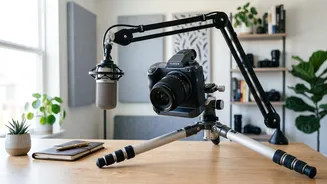
Digital content creation is a business, and businesses require investment. Whether you're a YouTuber, podcaster, or social media influencer, you might need funds to elevate your work. Common reasons include upgrading equipment like cameras and microphones,
investing in editing software, setting up a professional studio space, or funding marketing campaigns to expand your audience. A loan can bridge the financial gap, allowing you to produce higher-quality content and diversify your revenue streams through projects like merchandise or online courses. The key is to have a clear plan for how the funds will generate growth and returns.
Navigating Your Loan Options
Several types of loans are available, each with its own pros and cons for a creator. A Personal Loan is the most common and flexible option, as it is unsecured (requires no collateral) and can be used for various purposes. A Business Loan is more formal and suitable if you have registered your content creation work as a business entity. These often come with higher borrowing limits. Some creators might also consider a Gold Loan or a loan against property if they require a larger sum and have assets to pledge. For smaller, urgent needs, a line of credit or overdraft facility can also be an option.
The Challenge: Proving Irregular Income
The biggest hurdle for freelancers and creators is demonstrating a stable income to lenders. Unlike salaried professionals with monthly pay slips, a creator's income from brand deals, ad revenue, and affiliate marketing can be inconsistent. Traditional banks often struggle with this variability. However, the lending landscape is changing. Many Non-Banking Financial Companies (NBFCs) and modern fintech lenders now specialize in loans for the gig economy. They use alternative methods to assess your repayment capacity, such as analyzing your bank statements, GST returns, and even income reports from platforms like YouTube or Upwork.
Essential Documents for Your Application
Preparation is key to a successful loan application. While requirements vary between lenders, you will almost always need a standard set of documents. These include KYC (Know Your Customer) documents like your PAN and Aadhaar card for identity and address proof. The most crucial part for a creator is income proof. Be ready to provide bank account statements for the last 6 to 12 months, which show consistent credits. You will also need your Income Tax Returns (ITRs) for the last two to three years. If you have a registered business, you'll need proof of that, such as a GST registration certificate or Udyam registration.
Government Schemes and Support
Don't overlook government initiatives designed to support small businesses, which can include content creators. The Pradhan Mantri MUDRA Yojana (PMMY) is a flagship scheme offering collateral-free loans up to ₹10 lakh through banks and NBFCs. These loans are categorized as Shishu (up to ₹50,000), Kishore (up to ₹5 lakh), and Tarun (up to ₹10 lakh) and can be used for equipment and working capital. Registering your creative work as a Micro, Small, or Medium Enterprise (MSME) on the Udyam portal is free and can make you eligible for priority sector lending from banks.
Boosting Your Approval Chances
You can significantly improve your chances of loan approval with a few strategic steps. First, maintain a healthy credit score (ideally 750 or higher) by paying all existing dues and credit card bills on time. Second, file your ITRs consistently every year, even if your income is below the taxable limit; this creates an official record of your earnings. Third, present a clear and professional loan application. If possible, include a simple business plan that outlines what you do, your audience metrics, your revenue streams, and exactly how you plan to use the loan amount to grow your digital content business. Finally, apply for a realistic amount that you can comfortably repay.