


What is a Stellar Nursery?
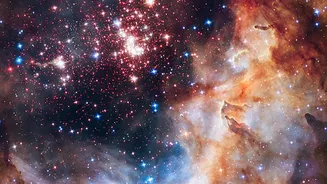
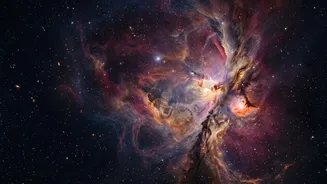
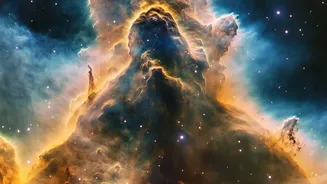
Think of a stellar nursery as a cosmic maternity ward. These are vast, cold, and dense clouds of interstellar gas and dust, primarily made of molecular hydrogen. Stretching across light-years, these giant molecular clouds are where the magic of star formation
begins. Over immense timescales, gravity pulls clumps of this material together. As a clump gets denser, its core heats up, eventually becoming so hot and pressurized that it ignites nuclear fusion. At that moment, a new star is born, lighting up its cosmic cradle. Many stars, if not most, are born in these clustered environments, not in isolation. These nurseries are the factories that have built the billions of stars in our galaxy and beyond.
A New Look at the Serpens Nebula
One of the latest subjects of Webb's gaze is the Serpens Nebula, a star-forming region located about 1,300 light-years from Earth. While beautiful, the real scientific breakthrough in these new images is the level of detail. For the first time, astronomers have observed a group of protostellar outflows—jets of gas spewing from newborn stars—all aligned in the same direction. In Webb's images, these jets appear as bright red streaks, which are shockwaves created as the ejected material collides with the surrounding gas and dust at incredible speeds. Scientists have long assumed that as a parent cloud collapses, the stars born from it would tend to spin in a similar direction. These aligned jets provide the first direct, historical record of this process, confirming a fundamental aspect of how stars come into being.
The Power of Seeing in Infrared
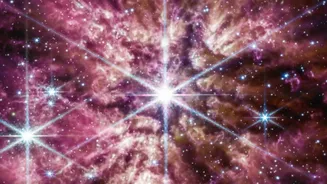
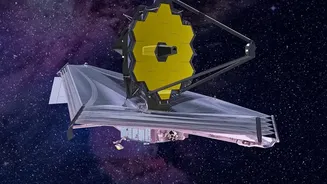
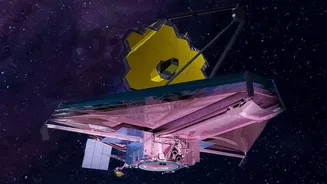
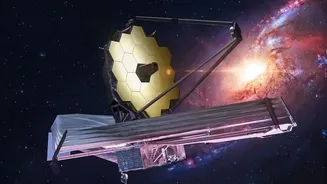
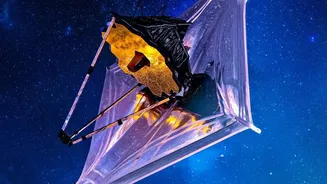
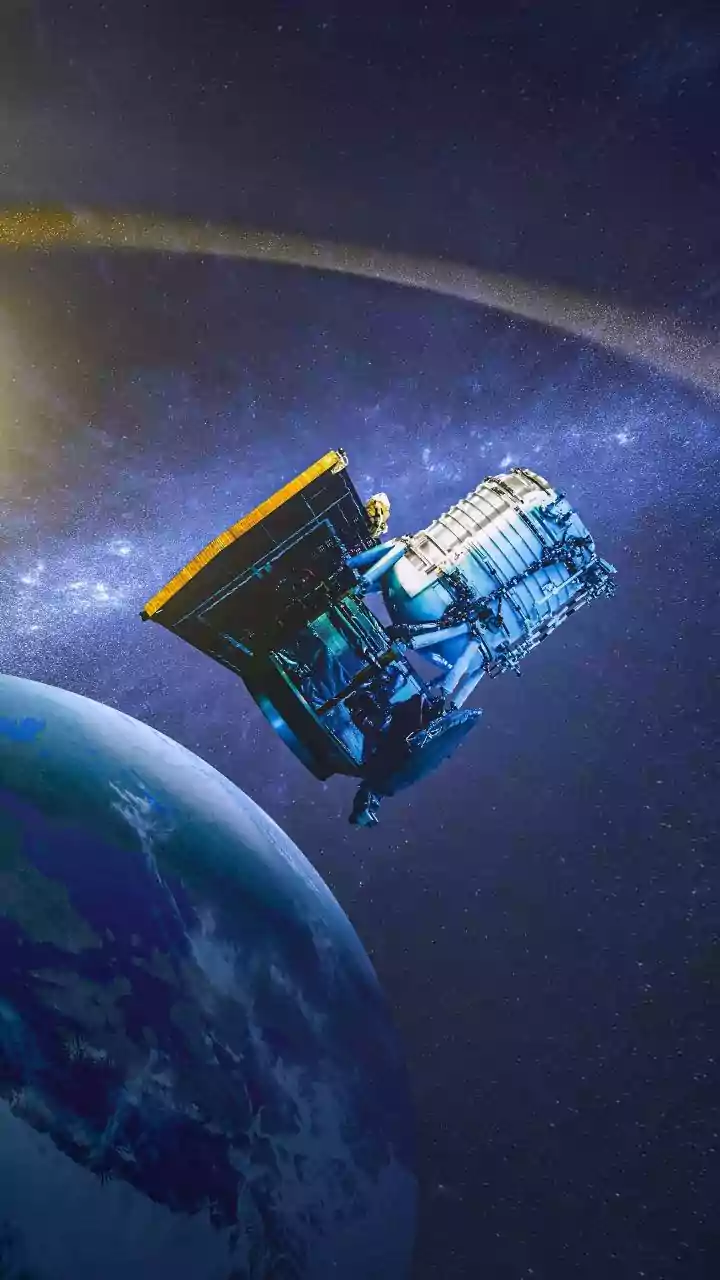
So, what makes these images 'unprecedented'? The answer lies in Webb's ability to see the universe in infrared light. Stellar nurseries are shrouded in thick clouds of cosmic dust that block visible light, the kind our eyes and telescopes like Hubble primarily see. This dust makes it impossible to observe the earliest, most chaotic phases of star formation. However, infrared light has a longer wavelength that can penetrate these obscuring dust clouds, much like how a thermal camera can see through smoke. This allows JWST to peer into the heart of these nurseries and capture the protostars and their planet-forming disks that were previously hidden. It’s like finally being able to see the 'babies' in the nursery, instead of just seeing the building they are in. Webb’s different instruments, like the Near-Infrared Camera (NIRCam) and Mid-Infrared Instrument (MIRI), capture different wavelengths, revealing different features of the nursery, from the stars themselves to the glowing dust they heat up.
Unlocking the Secrets of Star Formation
These new, detailed observations are more than just pretty pictures; they are a goldmine of data for astronomers. By studying regions like the Serpens Nebula or the hyper-productive Sagittarius B2 cloud near our galaxy's center, scientists hope to answer key questions. Why do some clouds produce stars far more efficiently than others? How do the building blocks of life, like water and carbon monoxide, survive the violent process of star birth and get incorporated into new planets? The telescope's ability to perform spectroscopy—analyzing the composition of light—can even help identify the chemical makeup of these regions. Each new image provides crucial evidence to refine our models of how not only stars, but also planetary systems like our own, come to be. In some cases, the dust is so dense that even Webb cannot see through it, pointing to the location of the next generation of stars still waiting to be born.