





Nature's Tiny Time Capsules
To understand Earth’s climate before humans kept records, scientists rely on 'proxy data'—natural recorders that preserve physical and chemical signatures of their environment. These can include the chemical composition of ice cores drilled from glaciers,
the width of tree rings, or the skeletal layers of coral reefs. Each provides a snapshot of the conditions in which it formed. One of the most revealing proxies is also one of the most unassuming: fossilised pollen. Buried in layers of sediment at the bottom of lakes and oceans, these microscopic grains act as biological time capsules, allowing researchers to reconstruct entire ecosystems from the distant past.
How Pollen Tells a Climate Story
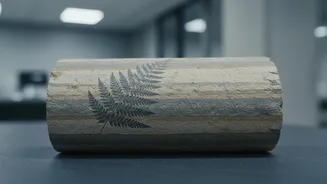
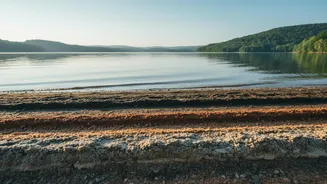
Every flowering plant produces pollen with a unique shape, and its tough outer wall allows it to survive for millennia. When these grains settle in lakebeds, they create a layered record of the local vegetation. By taking a sediment core—a long tube of mud—scientists can travel back in time. Deeper layers contain older pollen. Since different plants thrive in specific climate conditions, identifying the types of pollen reveals what the climate was like. A layer rich in pollen from moisture-loving forest plants points to a period of heavy rainfall, while a shift to pollen from grasses and shrubs suggests a drier phase. This science, known as palynology, effectively allows researchers to read the history of a region’s climate and vegetation.
A New Window into India's Monsoon
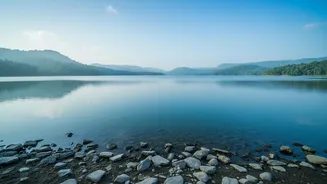
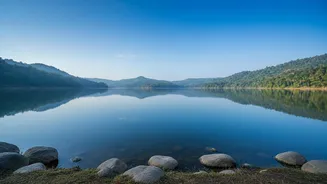
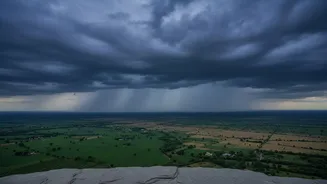
A recent study from the Birbal Sahni Institute of Palaeosciences (BSIP) has opened a fascinating new window into the history of the Indian Summer Monsoon. Researchers analysed a sediment core from Raja Rani Lake in Chhattisgarh's Korba district, an area squarely within India's Core Monsoon Zone (CMZ), which is highly sensitive to monsoon fluctuations. The pollen preserved in the lake's sediment, dating back about 2,500 years, told a surprising story. During a period known as the Medieval Climate Anomaly (roughly between 1060 and 1725 CE), the evidence showed a clear dominance of pollen from moist tropical deciduous forest species. This indicates that the monsoon during that time was significantly stronger and more sustained than previously thought, creating a warm, humid climate that supported dense forests.
Sharpening the Climate Question
This discovery doesn't just fill a gap in our historical knowledge; it sharpens critical questions about the natural variability of our climate. The finding of a much stronger monsoon phase, driven by natural factors like La Niña-like conditions and increased solar activity, provides a new baseline for understanding the monsoon's behaviour. It challenges previous assumptions and forces scientists to reconsider the range of natural climate swings. If the monsoon system was capable of such intensity in the past without human influence, what does that mean for its future in a world now being rapidly warmed by carbon emissions? This historical data becomes a crucial benchmark against which to measure current and future changes, helping to distinguish natural cycles from human-driven ones.
From Ancient Dust to Future Forecasts
Understanding these ancient climate patterns is vital for our present and future. The Indian Summer Monsoon is the lifeblood for agriculture and water security for a vast population. The ability to accurately model its future behaviour is of paramount importance. By providing a high-resolution picture of past monsoon intensity, the Chhattisgarh pollen study helps refine the complex computer models used for future climate projections. Knowing how the system responded to past warm periods gives us essential clues about how it might respond to the unprecedented warming happening today. These tiny grains of pollen, preserved for centuries in lake mud, are offering insights that are essential for navigating the profound climate challenges that lie ahead.