





Decoding 'Healthy' Buzzwords
Walk down any supermarket aisle and you're bombarded with reassuring words: “multigrain,” “baked, not fried,” “natural,” and “no added sugar.” These labels create a “health halo,” making us feel good about our choices. However, these terms are often misleading.
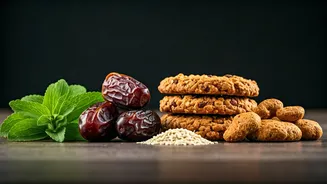
A “multigrain” biscuit might still be made mostly of refined flour (maida), with only a tiny percentage of other grains. A “baked” snack can still be high in fat and sodium. The term “natural” is not tightly regulated, and can be used on products with added flavours and minimal processing. Even “no added sugar” can be tricky; a product might use fruit juice concentrate, which is essentially a form of sugar.
The Real Story is on the Back
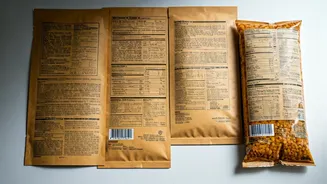
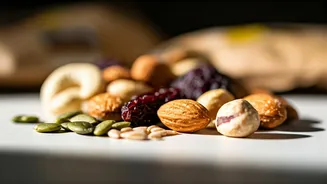
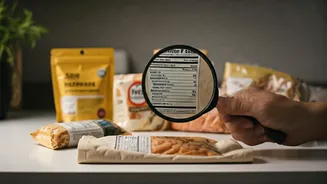
The key to making an informed choice is to ignore the front-of-pack marketing and turn the packet over. The FSSAI (Food Safety and Standards Authority of India) mandates that all packaged foods display a list of ingredients and a nutrition information panel. This is where the truth lies. Ingredients are listed in descending order by weight. This means the first three ingredients make up the bulk of the product. If sugar (or one of its many aliases), refined flour, or palm oil are at the top of the list, the product is not as healthy as it claims. A short list of recognisable ingredients like whole grains, nuts, and seeds is a much better sign.
Five Hidden Ingredients to Watch For
Food manufacturers have become experts at hiding unhealthy components. Here are five to look out for: 1. Hidden Sugars: Sugar isn't always listed as 'sugar'. It hides under names like high-fructose corn syrup, maltodextrin, dextrose, invert syrup, and liquid glucose. If a product lists several of these, the total sugar content is likely high. 2. Palm Oil: This cheap, shelf-stable oil is high in saturated fat. It is often disguised as 'vegetable oil' on ingredient lists. 3. Refined Grains (Maida): Many “healthy” biscuits and snacks use refined wheat flour as their primary ingredient, which offers little fibre or nutritional value. 4. High Sodium: Salt is a cheap preservative and flavour enhancer. Packaged soups, noodles, and savoury snacks can contain a surprisingly large amount of your daily sodium limit. 5. Artificial Additives: Look out for long lists of INS numbers, emulsifiers, artificial colours, and flavour enhancers like Monosodium Glutamate (MSG). While many are FSSAI-approved, a long list often indicates a highly processed product.
Your 10-Second Label Check
You don't need a nutrition degree to make better choices. Here's a quick framework for reading the nutrition panel, which is usually presented per 100g. Check the serving size first, as it's often unrealistically small. Then, scan for these red flags: Sugar: More than 10-12g per 100g is significant. Sodium: Above 600mg per 100g is considered high. * Ingredients: Are the first three ingredients whole foods or a combination of refined flour, sugar, and oil? This quick check will tell you more than any claim on the front of the box. An independent audit found that over a third of food labelling claims in India may be non-compliant or misleading, so consumer vigilance is key.