







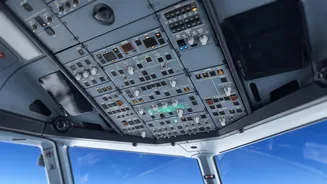

The First Moment: Identifying the Emergency
A cockpit emergency isn't always a dramatic event. It can range from a technical malfunction like engine trouble or loss of cabin pressure, to a severe medical issue affecting a passenger or, in rare cases, one of the pilots. In the case of the Flydubai
flight from Dubai to Tel Aviv, the emergency was an alleged physical altercation between the pilots, leading to the incapacitation of the captain. Whatever the cause, the first step is recognition. Pilots are trained to continuously monitor their instruments and their partner. An unusual engine reading, a warning light, or a pilot becoming non-responsive triggers the start of a well-defined process. The core principle is to handle the most critical task first, guided by the mantra: Aviate, Navigate, Communicate.
Aviate, Navigate, Communicate
This three-step priority list is drilled into every pilot from their first day of training. First, 'Aviate' means maintaining control of the aircraft above all else. Nothing is more important than flying the plane. Once the aircraft is stable, the next step is to 'Navigate'. This involves determining the plane's position and identifying the best and nearest suitable airport for a potential landing. Only after these two critical tasks are managed does the pilot's focus turn to 'Communicate'. This involves informing Air Traffic Control (ATC) and the cabin crew about the situation. This sequence ensures that the primary job of keeping the aircraft safely in the air is never compromised.
Declaring an Emergency: 'Mayday' and Squawk 7700
To communicate the crisis to the ground, pilots have two primary tools. The first is a voice call. The phrase “Mayday, Mayday, Mayday” is the universal signal for a life-threatening emergency, immediately alerting ATC that the flight is in distress and requires priority assistance. The second tool is the transponder, a device that broadcasts the aircraft's identity and altitude to radar screens on the ground. By entering the code '7700', pilots can send a silent, digital alert that flags their aircraft on every controller's screen. This code signals a general emergency, telling ATC that the flight needs immediate attention, even if the pilots are too busy to speak. In the Flydubai incident, the aircraft reportedly squawked both 7700 for a general emergency and 7500, the code for unlawful interference or hijacking.
The View from the Ground: Air Traffic Control Responds
Once an emergency is declared, a chain of events is set in motion on the ground. The flight that squawked 7700 immediately becomes the top priority. Air traffic controllers will clear the airspace around the aircraft, vectoring other planes out of the way to give the emergency flight a direct path to the chosen airport. They become a vital resource for the pilots, providing information on weather, runway conditions, and the status of emergency services at potential diversion airports. Ground staff at the destination airport are alerted, with fire trucks, ambulances, and other emergency personnel placed on standby near the designated runway to respond the moment the plane lands.
Managing the Unthinkable: Pilot Incapacitation
Commercial airliners are always flown by at least two pilots precisely for this kind of rare but critical scenario. If one pilot becomes incapacitated, whether due to a medical issue or, as alleged in the Flydubai case, an attack, the other pilot is fully trained to fly and land the aircraft alone. Their first action is to take firm control of the aircraft. The cabin crew may be called upon to assist, primarily to secure the incapacitated pilot so they do not interfere with the flight controls. In the recent incident, two off-duty pilots who were passengers reportedly entered the cockpit to take control and land the plane safely, an extraordinary turn of events that highlights the multiple layers of safety in aviation.