






The Old System: Paper, Payments, and Problems
For years, obtaining a PUC certificate involved a physical test and a printed slip of paper. While straightforward, this manual system was plagued with issues. Paper certificates were easy to forge or manipulate, allowing non-compliant vehicles to remain
on the roads. Enforcement was challenging for traffic authorities, as verifying the authenticity of a paper slip during a roadside check was difficult and time-consuming. There was no centralized, real-time database to track which vehicles were compliant, creating significant gaps in monitoring and enforcement. This made it harder to tackle the growing issue of vehicular pollution effectively, as the system relied heavily on manual checks and physical documentation that could be easily circumvented.
Enter Vahan: The Digital Backbone of Vehicle Data
The game-changer in this process is the Vahan portal, a national digital registry managed by the Ministry of Road Transport and Highways (MoRTH). Vahan serves as a comprehensive, centralized database for all vehicle-related information in India. This includes registration details, ownership history, insurance validity, and fitness certificates. By creating a single source of truth for every vehicle registered in the country, Vahan lays the groundwork for a transparent and interconnected transport ecosystem. Its integration with other services, like e-challans and PUC checks, is pivotal to modernizing vehicle regulation and compliance nationwide.
How Digital PUC Checks Work
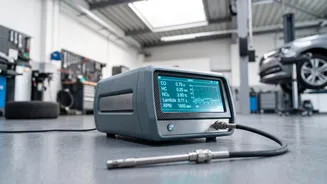
Under the new rules, the process is now seamless and data-driven. When you take your vehicle to an authorized emission testing centre, the testing equipment is directly linked to the Vahan portal. As the test is conducted, the emission readings are captured and automatically uploaded to the national database in real-time. If your vehicle passes, a digital PUC certificate is generated and linked to your vehicle's registration number on Vahan. This eliminates the physical paper slip as the primary proof. In some regions, centres are even required to video-record the test and upload it to the portal to ensure complete transparency. This direct, automated data entry makes the system robust and tamper-proof.
The Key Advantages of the Vahan-Linked System
This digital transformation offers significant improvements. Firstly, it drastically reduces fraud by making it nearly impossible to generate fake or backdated certificates. Secondly, it empowers enforcement agencies. Traffic police can now verify a vehicle's PUC status instantly using handheld devices connected to the Vahan database, making roadside checks faster and more accurate. For vehicle owners, convenience is a major benefit. You can access and download your digital PUC certificate anytime from the Parivahan portal or through apps like mParivahan and DigiLocker. This digital copy is legally valid, so you no longer need to worry about losing or damaging a physical document.
What This Means For You as a Vehicle Owner
For your next PUC check, the process will feel similar, but the backend is entirely different. You will still visit an authorized testing centre, but your certificate will be digitally logged. It is crucial to ensure your mobile number is updated in the Vahan records to receive alerts and easily access your documents. Compliance is more critical than ever, as an expired PUC is now instantly visible to authorities across the country. Driving without a valid PUC can lead to a fine of ₹10,000, imprisonment, or even suspension of your driving licence. The integration ensures that rules are applied uniformly, and a single valid PUC is recognized nationwide.