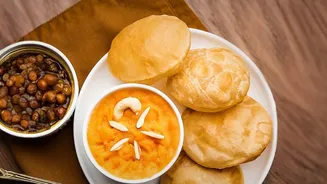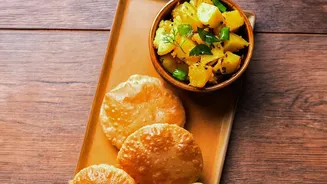


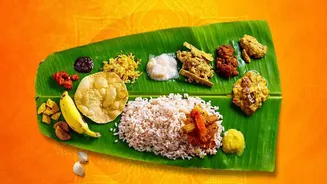
Long before the city fully wakes, a familiar symphony begins on countless street corners across India. The sizzle of dough hitting hot oil, the fragrant steam of spiced potatoes—this is the morning call of the puri sabzi stall.
The Dawn-Breaker's Breakfast
For millions, the day doesn't
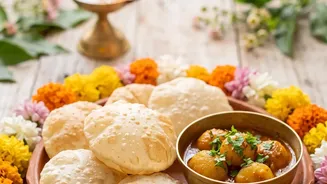
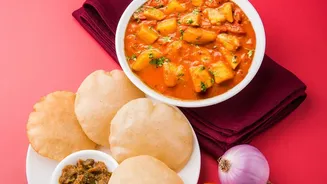
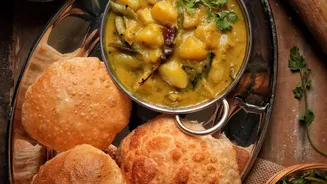
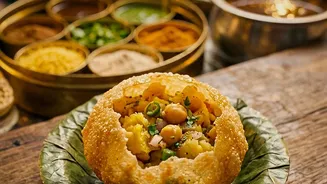
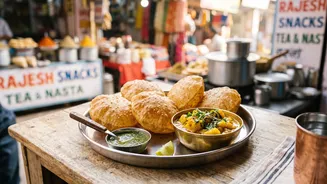
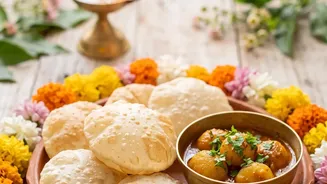
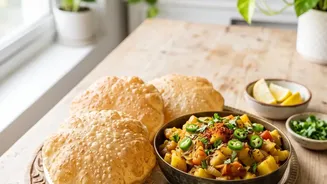
truly start without it. As early as 4 or 5 AM, vendors begin their ritual, setting up massive kadhais and prepping mounds of dough and buckets of aromatic sabzi. These stalls are beacons for the early risers: students rushing to class, office workers bracing for a long commute, and labourers seeking a hearty meal to fuel a day of hard work. The air is thick with anticipation and the comforting smell of freshly cooked food. It’s a scene of organised chaos—a rapid-fire exchange of money for plates piled high with puffy, golden-brown puris and a generous ladle of spicy potato curry, often served on a simple leaf plate or in a small steel bowl.
Anatomy of a Perfect Plate
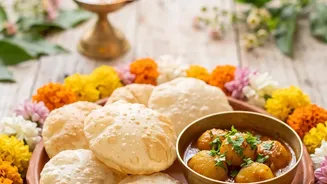
What makes this simple meal so irresistible? It's a masterclass in texture and flavour. The puris, made from wheat flour, are deep-fried to perfection, resulting in a bread that is simultaneously crisp, airy, and chewy. They serve as the ideal vessel for the sabzi, which is typically a flavourful potato curry. While recipes vary by region and even by vendor, the sabzi is generally a tangy, spicy concoction of boiled potatoes, tomatoes, and a blend of spices like turmeric, cumin, and coriander. Some stalls might add peas or other vegetables, while others offer accompaniments like a wedge of lime, picked chillies, or a small onion salad to cut through the richness.
The Great Social Equaliser
One of the most beautiful aspects of the puri sabzi stall is its ability to unite people from all walks of life. At any given stall, you'll find a corporate executive in a crisp shirt standing next to a student on a tight budget, both enjoying the same delicious, affordable meal. It's a culinary experience that transcends social and economic barriers. In the shared space of a bustling street corner, titles and status melt away, replaced by a common appreciation for a hot, satisfying breakfast. This simple plate of food fosters a sense of community, creating a daily ritual where people from diverse backgrounds can share a moment of simple joy.
The Engine of the Informal Economy
These humble stalls are more than just places to eat; they are vital components of India's vast informal economy. Street vending provides a livelihood for millions of people, many of whom have inherited their recipes and businesses through generations. It's an entrepreneurial endeavour that requires minimal investment but immense dedication, with vendors often working long hours in challenging conditions. The business model is built on high volume and low margins, making it a precarious but essential source of income for many families. These vendors are not just cooks; they are small business owners who contribute significantly to the urban economy, one plate of puri sabzi at a time.
A Taste of Tradition and Nostalgia
Beyond its convenience and taste, puri sabzi holds a special place in the hearts of many Indians, deeply connected to tradition and nostalgia. The dish itself has ancient roots, with deep-fried breads being a part of Indian cuisine for centuries. For many, it evokes memories of festive mornings or special family breakfasts, a taste of home that can be found on a busy city street. It's considered 'pucca khaana'—food cooked in ghee or oil, often associated with purity and celebration. This cultural significance adds another layer of comfort to the meal, making it more than just sustenance; it’s a connection to heritage and a reminder of the simple, enduring pleasures of Indian food.