



Pune: The Traditional Stronghold
Long before Ganeshotsav became a large-scale public event, Pune was its spiritual home. The city's celebrations are deeply rooted in history, led by the five 'Manache Ganpati' (Honoured Ganpatis), which hold a specific rank of prestige set by Lokmanya
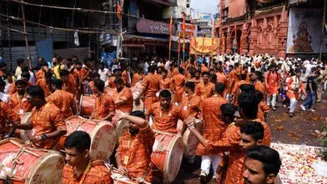
Tilak in 1893. Unlike Mumbai's focus on size and spectacle, Pune's celebration is about discipline, tradition, and community pride. The processions are grand yet orderly, with dhol-tasha pathaks (drum troupes) creating an electrifying atmosphere. Visiting pandals like Kasba Ganpati, the city's presiding deity, or Kesariwada Ganpati, which is closely associated with Tilak, offers a glimpse into the festival's origins as a platform for social and cultural unity. It's a more historical and culturally immersive experience.
Hyderabad: A Monumental Display of Devotion
In Hyderabad, the celebration is defined by one word: scale. The city is home to the legendary Khairatabad Ganesh, one of India's tallest and most spectacular idols. This tradition began in 1954 with a humble one-foot idol and has since grown into a monumental event, with the idol's height often reaching over 60 feet. Millions of devotees flock to Khairatabad for a darshan during the 10-day festival. The sheer size and intricate craftsmanship of this single idol make Hyderabad's celebration a unique focal point, contrasting with the thousands of pandals in Mumbai. The grand immersion procession towards Hussain Sagar Lake is a spectacle in itself, drawing the entire city together.
Goa: A Homecoming Rooted in Nature
In Goa, Ganesh Chaturthi, or 'Chavath' as it's locally known, is less about public pandals and more about family, community, and nature. Many families return to their ancestral homes for the festival, making it a time for reunion. A standout tradition is the 'Matoli', a wooden canopy decorated with local, seasonal fruits, flowers, and vegetables, hung above the Ganesha idol. This practice transforms the celebration into a tribute to nature's bounty. The festival here also connects to the harvest, with the first paddy of the season, called 'Nave', offered to the deity. The celebrations are more intimate and eco-conscious, reflecting Goa's deep connection to its land.
Bengaluru: The Eco-Conscious Innovator
Bengaluru has emerged as a leader in celebrating Ganesh Chaturthi with an environmental conscience. The city has a strong movement towards using eco-friendly idols made from clay, cow dung, and other biodegradable materials, a necessity given the strain on its many lakes. Beyond this, Bengaluru's pandals are known for their creativity and innovative themes. Apartment complexes and community groups often take the lead, creating unique idols from unconventional materials like Rudraksha beads or even sugarcane, with the latter being distributed as prasad after the festival. The celebration here is preceded by Gowri Habba, a festival honouring Ganesha's mother, adding another layer of cultural richness.
Chennai: A Fusion of Art and Devotion
In Tamil Nadu, the festival, known as Vinayagar Chaturthi, combines devotion with incredible artistic expression. Chennai, in particular, has gained a reputation for its uniquely crafted idols that are marvels of artistry. In recent years, the city has seen gigantic idols made from thousands of banana flowers, brass lamps, and even biscuit packets. While the celebrations might be more restrained than in Maharashtra, the focus on creativity is immense. The local flavour is distinct, with offerings of 'kozhukattai', a steamed rice flour dumpling similar to the modak. This artistic approach provides a visually stunning and culturally different experience of the festival.
Delhi: A Melting Pot of Traditions
Ganesh Chaturthi in Delhi is a vibrant example of the festival's growing national appeal, largely driven by migrant communities. The celebrations here are a fascinating blend of Maharashtrian, South Indian, and local traditions. Pandals across the city, from Dwarka to Laxmi Nagar, showcase this diversity. One pandal might feature traditional bhajans, while another might have patriotic themes, complete with replicas of missiles or tributes to space missions. The 'Dilli Ka Maharaja' in Pitampura is one of the city's most well-known celebrations. These pandals serve as cultural hubs, bringing together people from different backgrounds to celebrate with a unique North Indian energy.
Kanipakam, Andhra Pradesh: The Ever-Growing Idol
For a celebration steeped in legend, one must look to the Varasidhi Vinayaka Swamy Temple in Kanipakam, Andhra Pradesh. The main idol here is a 'swayambhu' (self-manifested) Ganesha that is believed to be continuously growing in size. The temple celebrates a 21-day annual Brahmotsavam starting from Ganesh Chaturthi, attracting pilgrims from across the country. The festival here is less about temporary pandals and more about the worship of a permanent, miraculous idol. The rituals and traditions are temple-centric, offering a deeply spiritual experience that contrasts with the community-based public celebrations elsewhere. The legend of the growing idol adds a layer of mystery and profound faith to the festivities.