
More Than Just Sunshine
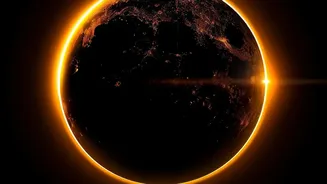
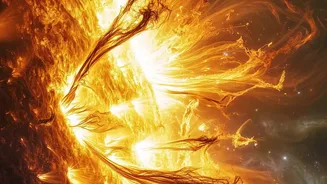
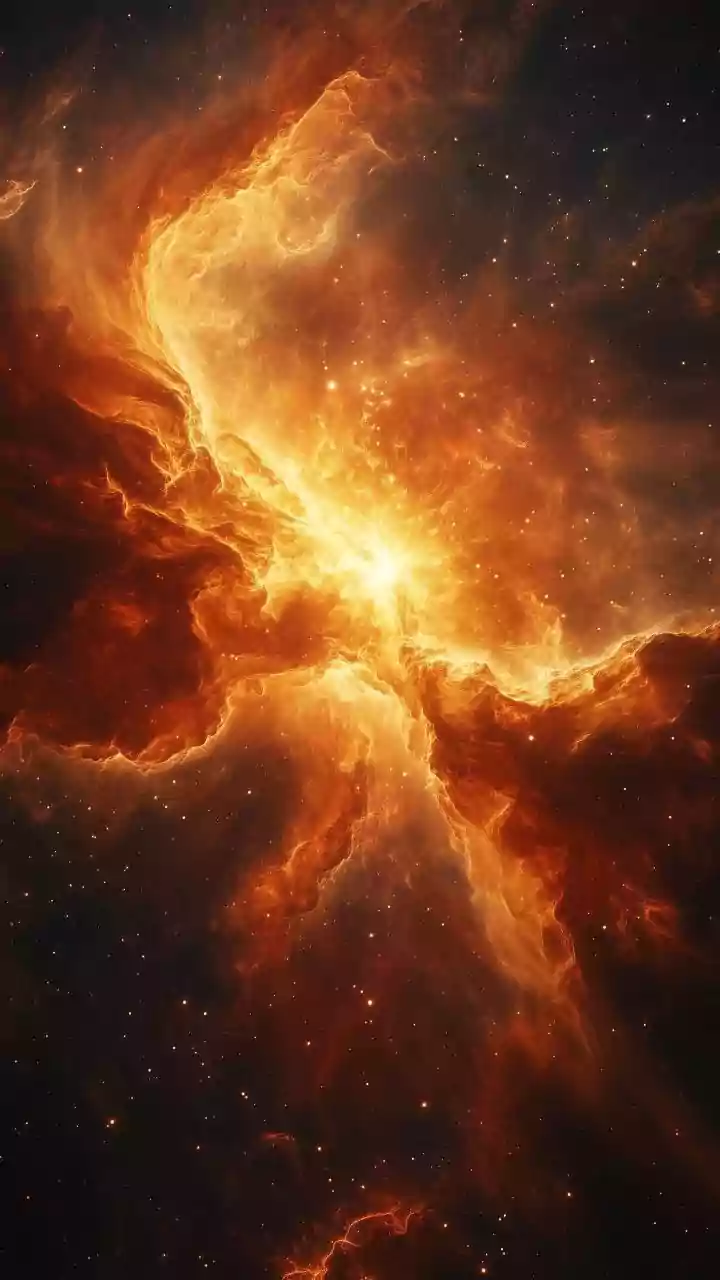
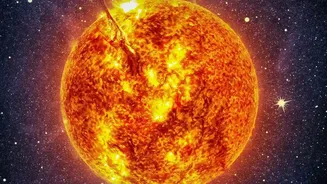
A solar storm is a catch-all term for the powerful eruptions of energy from the Sun. These events come in a few flavours. Solar flares are intense bursts of radiation that reach Earth at the speed of light, arriving in about eight minutes. Coronal Mass
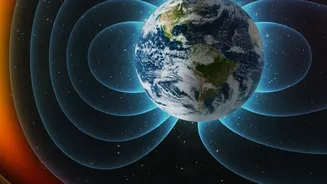
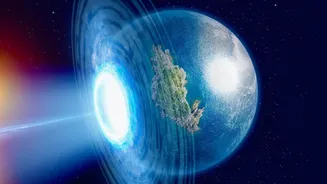
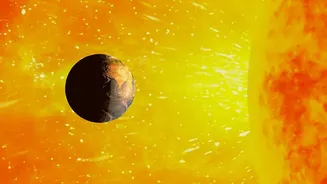
Ejections (CMEs), on the other hand, are giant clouds of magnetised plasma and particles that get blasted from the Sun’s outer atmosphere, the corona. These are the true heavy-hitters. While not all of these eruptions are aimed at Earth, the ones that are can interact with our planet's magnetic field, creating what's known as a geomagnetic storm.
The High-Tech Domino Effect
While Earth’s atmosphere protects humans on the ground from direct harm, our technology is extremely vulnerable. A powerful geomagnetic storm can induce powerful electrical currents in long conductors on the ground. This could overload and damage transformers in our power grids, potentially causing widespread and long-lasting blackouts. In 1989, a moderate solar storm knocked out power for six million people in Quebec, Canada, for nine hours. Beyond the grid, these storms can disrupt high-frequency radio communications used by aircraft, damage the electronics on orbiting satellites, and degrade GPS signals, affecting everything from navigation to financial transactions. Even astronauts in orbit face increased radiation risks.
Our Eyes on the Sun
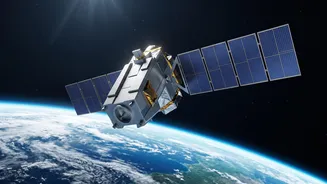
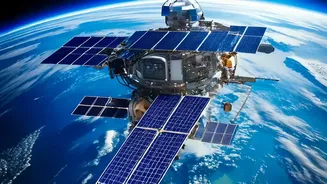
To prevent a technological catastrophe, space agencies like NASA, the European Space Agency (ESA), and the Indian Space Research Organisation (ISRO) operate a fleet of solar observatories. These satellites are our advance warning system. Missions such as NASA's Solar Dynamics Observatory (SDO) and the joint NASA/ESA Solar and Heliospheric Observatory (SOHO) constantly monitor the Sun's surface for signs of an impending eruption, like the twisting of magnetic fields near sunspots. India's Aditya-L1 mission, stationed 1.5 million kilometres from Earth, provides a continuous, uninterrupted view of the Sun. Its unique position at a gravitationally stable spot called Lagrange Point 1 allows it to detect solar storms before they head toward our planet.
A Race Against Time
The warning provided by these missions is crucial. While the radiation from a solar flare arrives in minutes, the more dangerous CMEs take anywhere from one to four days to cross the 150 million kilometres to Earth. This window gives authorities time to act. Based on forecasts from agencies like NOAA's Space Weather Prediction Center, power grid operators can take preventative measures to protect their transformers, satellite operators can put their spacecraft into a protective safe mode, and airlines can reroute flights away from polar regions where radiation effects are strongest. It’s a race to mitigate damage before the storm arrives.
The Ghost of Storms Past
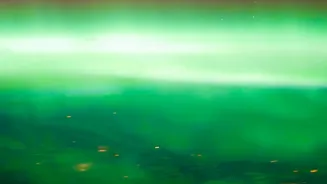
The need for this vigilance is underscored by history. In 1859, the most powerful geomagnetic storm ever recorded, known as the Carrington Event, struck Earth. It was so intense that it set telegraph systems—the high-tech of the day—on fire and caused aurorae to be seen as far south as the Caribbean. If an event of that magnitude were to happen today, the impact would be catastrophic. It could lead to trillions of dollars in economic damage and cause cascading failures across our interconnected global infrastructure, from banking to water supplies. The 1859 storm serves as a stark reminder of what the Sun is capable of and why we can't afford to look away.