




The Sun's Hidden Engine Room
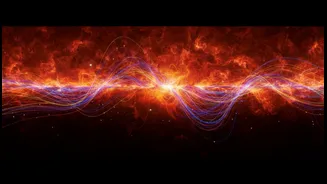
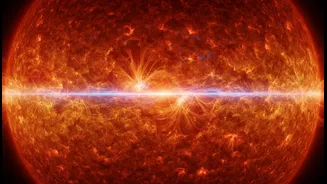
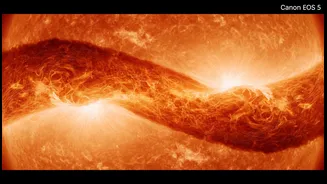
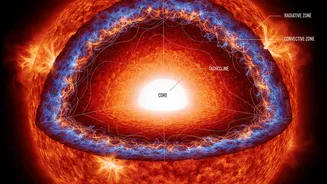
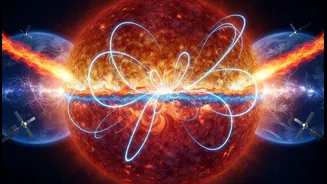
Deep beneath the Sun's visible surface lies a turbulent, pivotal boundary layer called the tachocline. It's a relatively thin region, about 200,000 kilometres below the surface, separating two distinct zones of the solar interior. Below it is the radiative
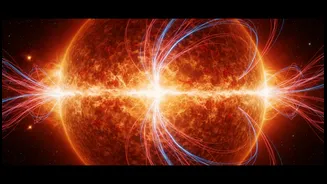
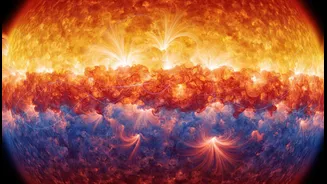
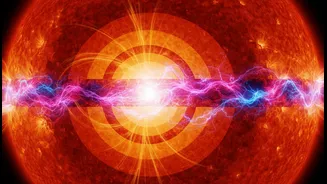
zone, where energy from the core radiates outward and the Sun rotates like a solid, unified ball. Above it is the convection zone, a chaotic area of boiling plasma that rotates differentially—faster at its equator than at its poles. The tachocline is the shear layer where these two different rotational speeds meet. Scientists have long believed this region plays a crucial role in generating the Sun's massive magnetic field, a process known as the solar dynamo. The intense shearing action is thought to stretch and amplify magnetic fields, making it a prime candidate for the source of solar activity.
Solar Storms: A Surface-Level Story?
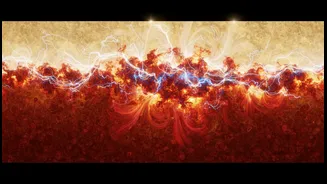
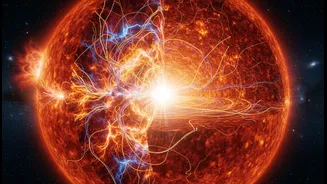
The conventional understanding of solar flares and coronal mass ejections (CMEs) has been that they are surface phenomena. Flares are intense bursts of radiation, while CMEs are enormous explosions of plasma and magnetic fields from the Sun's outer atmosphere, the corona. Both are born from the complex tangling and snapping of magnetic field lines in active regions on the Sun's surface, often marked by sunspots. In this model, the energy build-up and explosive release happen in the corona, driven by magnetic fields breaking through the photosphere, or visible surface. This theory has guided space weather forecasting for years, focusing on observing surface features to predict when the Sun might throw a tantrum.
A Deeper Origin Story
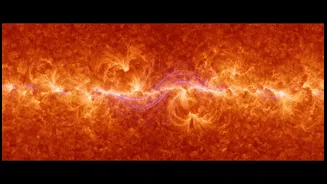
Recent research is challenging this surface-centric view. Studies using helioseismology—the study of sound waves reverberating through the Sun's interior—suggest that the origins of these violent events lie much deeper, within the tachocline itself. In early 2026, researchers from the New Jersey Institute of Technology published findings providing direct evidence that the Sun's magnetic dynamo is generated in the tachocline. By analysing nearly three decades of data, they found that rotating bands of magnetic plasma in the tachocline form a pattern that mirrors the 11-year sunspot cycle on the surface. This suggests the magnetic structures that cause flares and CMEs don't just form near the surface; they are generated deep within the Sun and take years to rise. Instead of being localised accidents, solar storms may be the culmination of a long journey from the Sun's interior.
Rethinking Solar Physics
This shift in understanding—from a surface-level trigger to a deep-seated engine—is profound. It implies that the entire process of solar activity, from the 11-year cycle to individual storms, is governed by dynamics occurring far beneath the surface we can see. If the magnetic fields responsible for flares are born in the tachocline, it means their fundamental properties are determined long before they become visible as sunspots. This could explain long-standing mysteries about why some active regions produce massive flares while others remain quiet. The new model suggests the tachocline's powerful shearing motions are what organises and energises the magnetic fields that eventually erupt. This changes the focus of study from just the final, explosive moment to the entire lifecycle of magnetic flux as it journeys through the convection zone.
Why This Matters for Earth
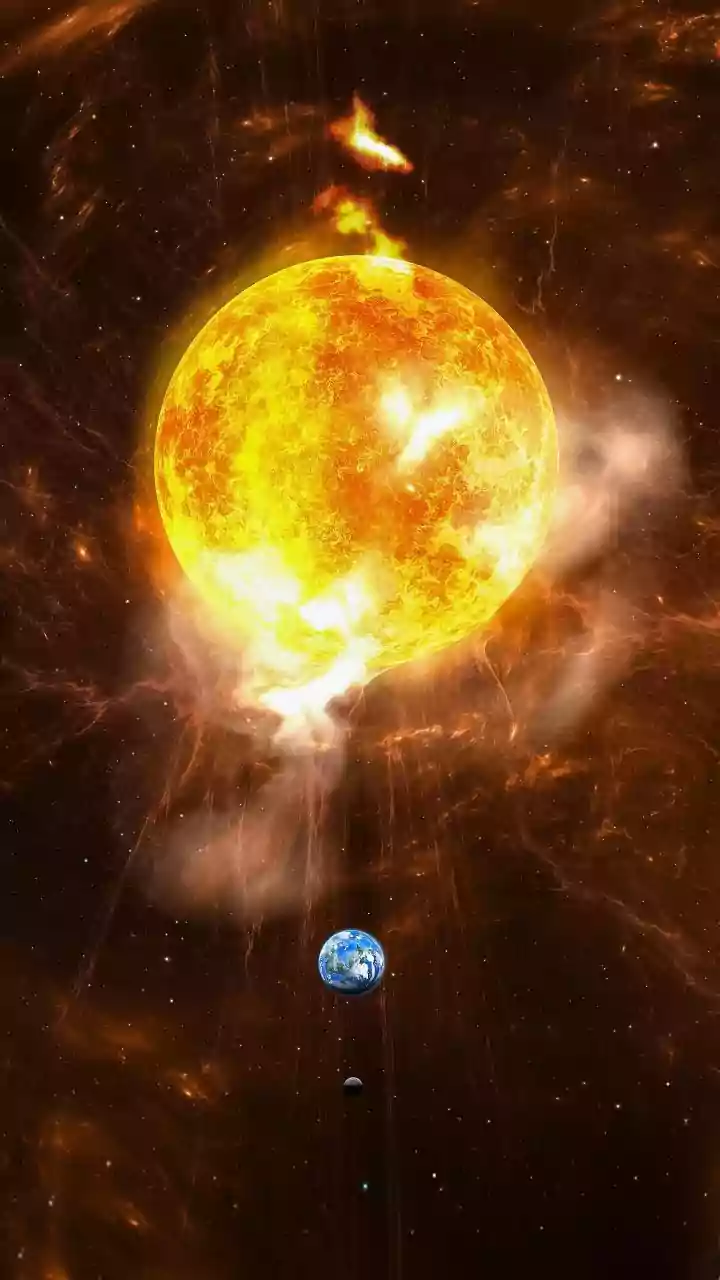
Understanding the true source of solar storms isn't just an academic exercise. Space weather has real-world consequences. Powerful CMEs can slam into Earth's magnetosphere, triggering geomagnetic storms that can disrupt and damage power grids, knock out satellites, and interfere with GPS and radio communications. Flares can cause radio blackouts on the sunlit side of Earth within minutes of erupting. Current forecasting models rely heavily on observing the Sun's surface, giving us limited warning time. If activity truly begins in the tachocline, tracking these deep internal changes could provide a much earlier warning system. By monitoring the magnetic patterns deep inside the Sun, scientists might one day be able to predict the emergence of dangerous active regions and forecast major solar storms with days or even weeks of lead time, offering a new era of protection for our technology-dependent society.