



What is Agrivoltaics?
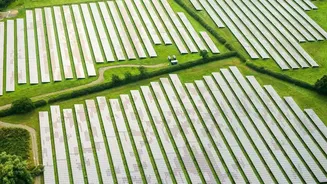
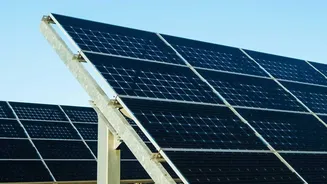
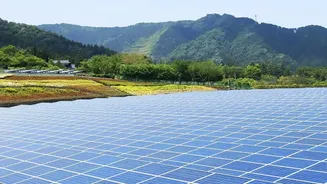
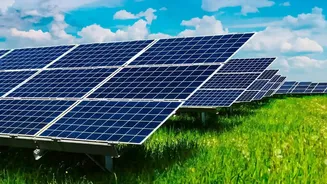
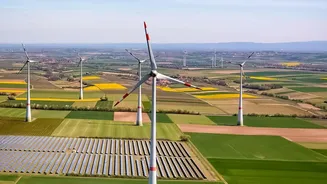
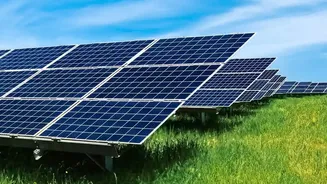
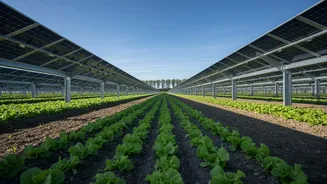
At its core, agrivoltaics is the practice of co-locating agricultural activities and solar power generation on the same land. Instead of choosing between a farm and a solar park, this model installs solar panels on structures elevated high enough to allow
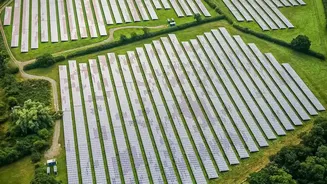
crops to grow underneath. This dual-use approach is designed to tackle one of India’s biggest challenges: land availability. With a growing population and ambitious renewable energy targets, the competition for land is fierce. Agrivoltaics presents a way to get more value from every acre, turning farmland into a powerhouse for both food and electricity.
A Natural Shield for Crops
One of the most immediate benefits for farmers is the microclimate created by the solar panels. The partial shade they provide acts as a protective shield against India's increasingly extreme weather. For many crops, especially leafy greens and certain vegetables, the shade reduces heat stress during scorching summer days. This regulated temperature can lead to improved plant growth. Furthermore, the panels offer physical protection from heavy rainfall and hailstorms, which can otherwise devastate a harvest. This added layer of climate resilience is a significant advantage in an era of unpredictable weather patterns.
More Crop Per Drop
Water conservation is another crucial victory for agrivoltaics. The shade from the overhead panels significantly reduces soil moisture evaporation, a major benefit in a country grappling with water scarcity. Studies have shown that this can lead to water savings of up to 30%, as the soil retains moisture for longer periods. This means crops require less irrigation, reducing the strain on local water sources and cutting down on the pumping costs for farmers. By combining techniques like drip irrigation with the natural shade cover, agrivoltaics offers a powerful strategy for sustainable water management in agriculture.
Boosting Farm Income
Perhaps the most compelling argument for many farmers is the economic one. Agrivoltaics provides a dual-income stream from a single plot of land. Farmers continue to earn money from their agricultural produce while generating a second, stable income from the electricity produced by the solar panels. This electricity can be used to power on-farm equipment, reducing diesel and grid electricity costs, or sold to the local distribution company (DISCOM) for a fixed tariff. This turns farmers from just food producers ('Annadata') into energy producers ('Urjadaata') as well, providing a reliable financial cushion against crop failures or market volatility.
India's National Push
The Indian government is actively promoting this synergy. The upcoming second phase of the Pradhan Mantri Kisan Urja Suraksha evam Utthaan Mahabhiyan (PM-KUSUM) scheme is expected to include a dedicated component for agrivoltaics. This initiative aims to encourage the co-location of solar panels and crops, turning the concept into a national strategy for decentralised renewable energy. Pilot projects are already demonstrating success. In Gujarat, some farmers have seen yield improvements of 15-20% for vegetables grown under panels, while projects in states like Maharashtra and Rajasthan are also showing promising results. Organisations like the India Agrivoltaics Alliance are working to integrate these systems into national policy.
Challenges on the Horizon
Despite its immense potential, scaling up agrivoltaics is not without hurdles. The primary challenge is the high upfront cost; the elevated structures required for farming underneath make these systems more expensive than traditional ground-mounted solar plants. Access to affordable finance, especially for small and marginal farmers, remains a significant barrier. Furthermore, not all crops thrive in shade, so careful, region-specific research is needed to determine the right combination of crops and panel configurations. Overcoming these economic and technical challenges will be crucial for widespread adoption.