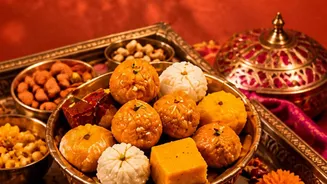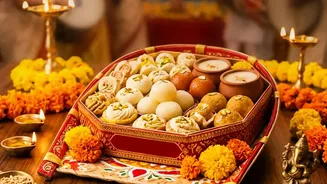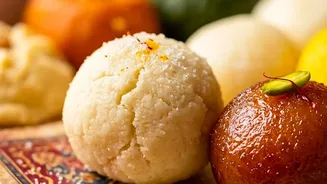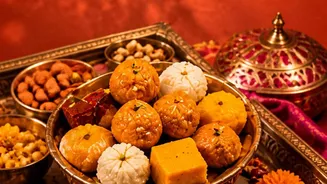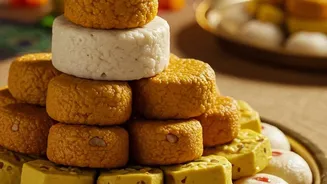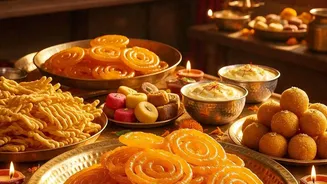

The aroma of freshly made mithai is the essence of Diwali. But you don't need specialty shops or complex ingredients. This year, discover the joy of creating beloved sweets using simple, familiar staples from your own kitchen pantry.
The Magic of Besan (Gram Flour)
Besan, or gram flour,
is a powerhouse ingredient found in most Indian kitchens, and it's the star of one of Diwali's most iconic sweets: Besan Ladoo. The process is a lesson in patience and transformation. All it requires is slowly roasting the besan in ghee over a low flame. This crucial step can take time, but it's what develops the deep, nutty aroma that makes these ladoos irresistible. Once the flour is fragrant and golden, it’s cooled and mixed with powdered sugar and a hint of cardamom. A small amount of coarse semolina (rava) can be added during roasting to give the ladoos a pleasant, grainy texture. With just three main ingredients—besan, ghee, and sugar—you can create a melt-in-your-mouth sweet that embodies the spirit of the festival.
Simple Semolina (Suji) Delights
Suji, also known as rava or semolina, is another humble pantry staple that shines in festive preparations. Rava Ladoo is one of the quickest and easiest sweets to make, perfect for last-minute preparations. The method involves roasting the suji in ghee until it becomes aromatic. Often, desiccated or fresh coconut is toasted along with it, adding another layer of flavour. The roasted mixture is then combined with powdered sugar, cardamom, and fried nuts and raisins. Some recipes call for a simple sugar syrup to bind the ladoos, while others use milk or even more ghee to bring the mixture together. Regardless of the method, the result is a delightfully sweet and slightly crunchy ladoo that comes together in under 30 minutes.
Whole Wheat Flour (Atta) Wonders
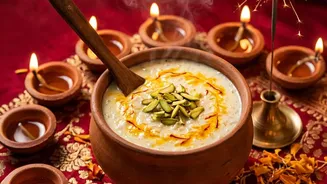
The same atta used for daily rotis can be transformed into a rich, comforting sweet known as Atta Halwa or Kada Prasad. This dessert is deceptively simple, relying on the magic of roasting whole wheat flour in a generous amount of ghee until it turns a deep golden brown and releases a wonderfully nutty fragrance. A simple syrup made of sugar and water is then poured into the roasted flour, and the mixture is stirred continuously until it thickens into a glossy, smooth halwa. Flavoured with cardamom, this sweet proves that you don't need fancy flours to create something truly special and delicious for your festive offerings. It's a testament to how basic ingredients can yield extraordinary results.
Coconut and Milk Powder Creations
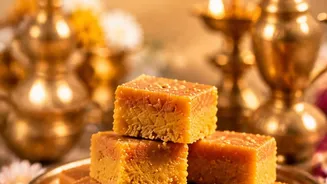
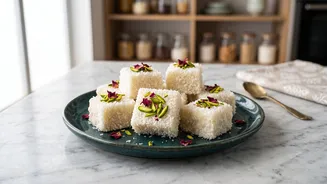
If you have coconut (fresh, frozen, or desiccated) and sugar, you are moments away from making Coconut Barfi. One of the simplest versions involves cooking grated coconut with sugar and perhaps a splash of milk until the mixture thickens. Another popular and incredibly fast method uses desiccated coconut and sweetened condensed milk, which come together in minutes to form a soft, fudgy barfi. Similarly, milk powder, a common pantry item, is a fantastic shortcut for making milk-based sweets that would traditionally require hours of reducing milk. Milk Barfi can be made by cooking milk powder with milk, sugar, and ghee until it forms a thick mass, which is then set and cut into squares. These quick recipes deliver rich, creamy mithai without the need for complex ingredients like khoya.
The Essential Binders and Aromatics
Beyond the flours, the true soul of homemade mithai comes from a few other key pantry players. Ghee is non-negotiable; it's not just a cooking medium but a primary source of flavour and richness in sweets like Besan Ladoo and Atta Halwa. Sugar provides the sweetness, and whether it's granulated or powdered depends on the recipe. For flavour, a small box of cardamom pods goes a long way, its fragrant powder infusing sweets with a classic Indian aroma. Finally, look to your stash of nuts—almonds, cashews, and pistachios—for garnish. Lightly toasting them in ghee before adding them enhances their crunch and flavour, providing the perfect finishing touch to your homemade creations.