
The Balcony Gardener’s Curse
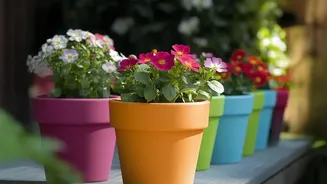
There’s a universal heartbreak familiar to anyone tending to plants on a balcony or windowsill: the slow, sad decline of a plant sitting in soggy soil. Overwatering is the most common mistake for even the most well-intentioned gardeners. The symptoms—wilting,
yellowing leaves, and dropping foliage—confusingly mimic those of an underwatered plant, often leading us to add even more water. This is especially true for container gardening, where plants don't have the benefit of a larger patch of earth to wick away excess moisture. Every pot is a delicate ecosystem, and tipping the balance with too much water suffocates the roots, leading to root rot and inviting fungal diseases that can quickly kill a cherished plant. It’s a frustrating cycle of trying to do the right thing, only to realise you’ve killed your green companion with kindness.
Going Beyond Simple Moisture Meters
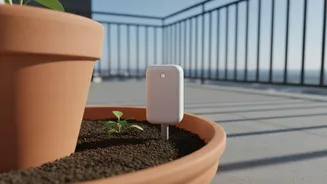
For years, the go-to solution has been a standard moisture meter. You stick a probe in the soil, and a dial tells you if it’s ‘Dry,’ ‘Moist,’ or ‘Wet.’ While helpful, these tools have their limits. They primarily measure electrical resistance, which can be inconsistent and doesn’t always give a complete picture of what's happening at the root level. They tell you the condition right now but don't offer predictive insights or track patterns over time. Smart sensors have improved on this, connecting to apps to log moisture, light, and temperature. These are a big step up, helping you see how quickly soil dries out. But even these sensors are just measuring physical properties. The next frontier in plant care is about listening to the biology of the soil itself.
How Microbial Sensors Work
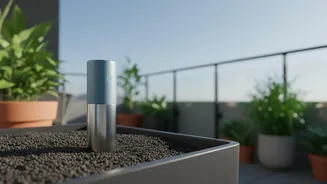
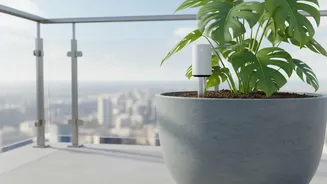
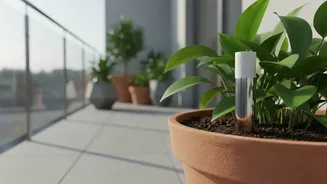
Enter the microbial soil sensor. This technology is based on a fascinating natural process. Soil is teeming with billions of bacteria and other microbes that are constantly breaking down organic matter. As they do this, they release tiny amounts of energy in the form of electrons. A microbial fuel cell (MFC) is a device that harnesses this natural electrical current. Researchers have discovered that the strength of this current changes based on the soil's conditions, including its moisture level. When the soil is perfectly moist, the microbes are active and produce a steady electrical signal. When the soil becomes waterlogged or too dry, their activity changes, altering the electrical output. The sensor reads these subtle changes, interpreting the language of the microbes to understand the soil's health and, most importantly, its water content.
The Promise of a Living Alert System
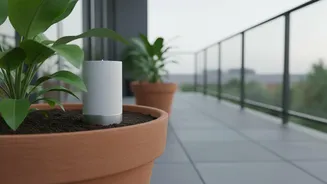
What makes this technology so revolutionary for a home gardener is that it’s a living system monitoring a living system. Instead of just measuring a physical property, it’s using the soil's own inhabitants as tiny, hyper-local informants. These sensors can detect the very beginning of a shift toward unhealthy conditions, long before a plant shows visible signs of stress like wilting. Research from institutions like Northwestern University has shown that these dirt-powered fuel cells are reliable in both very dry and flooded conditions, providing continuous, low-level power to the sensor itself without needing batteries. This means you get an alert on your phone that says your basil plant will need water soon, or that you should hold off because the soil is still too saturated deep down, preventing the dreaded root rot before it ever starts.
Are They Ready for Your Balcony Today?
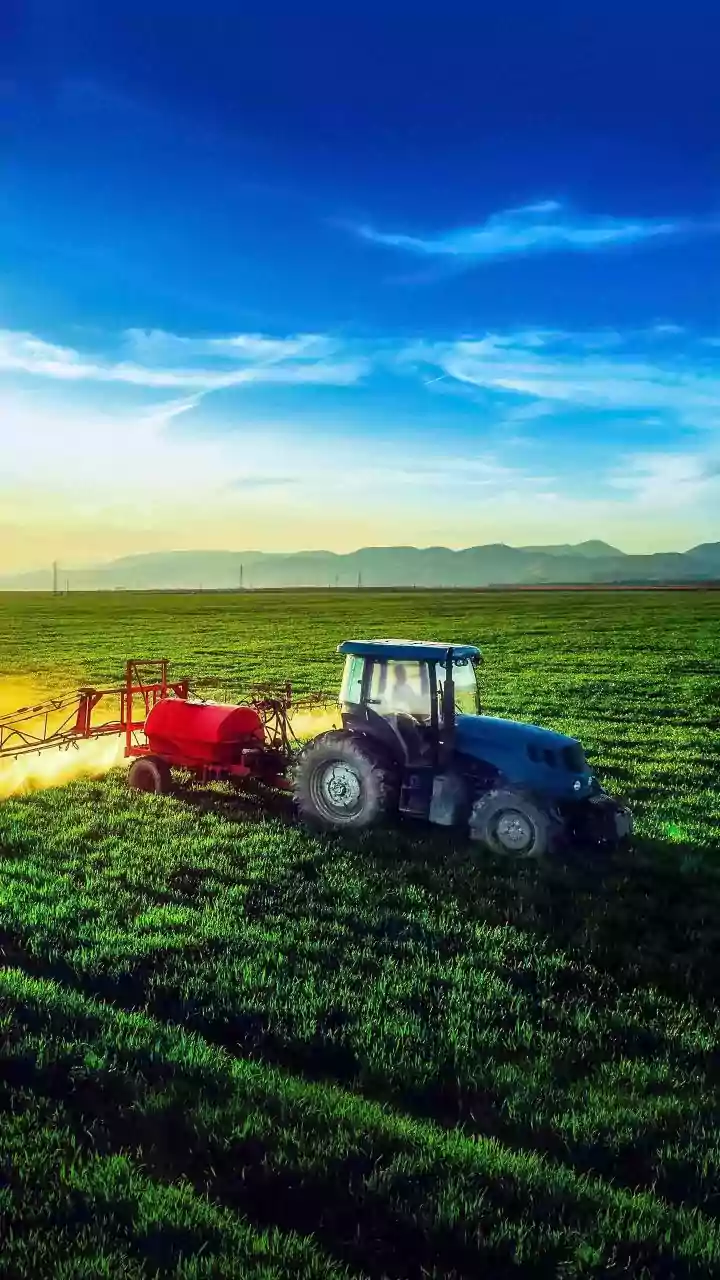
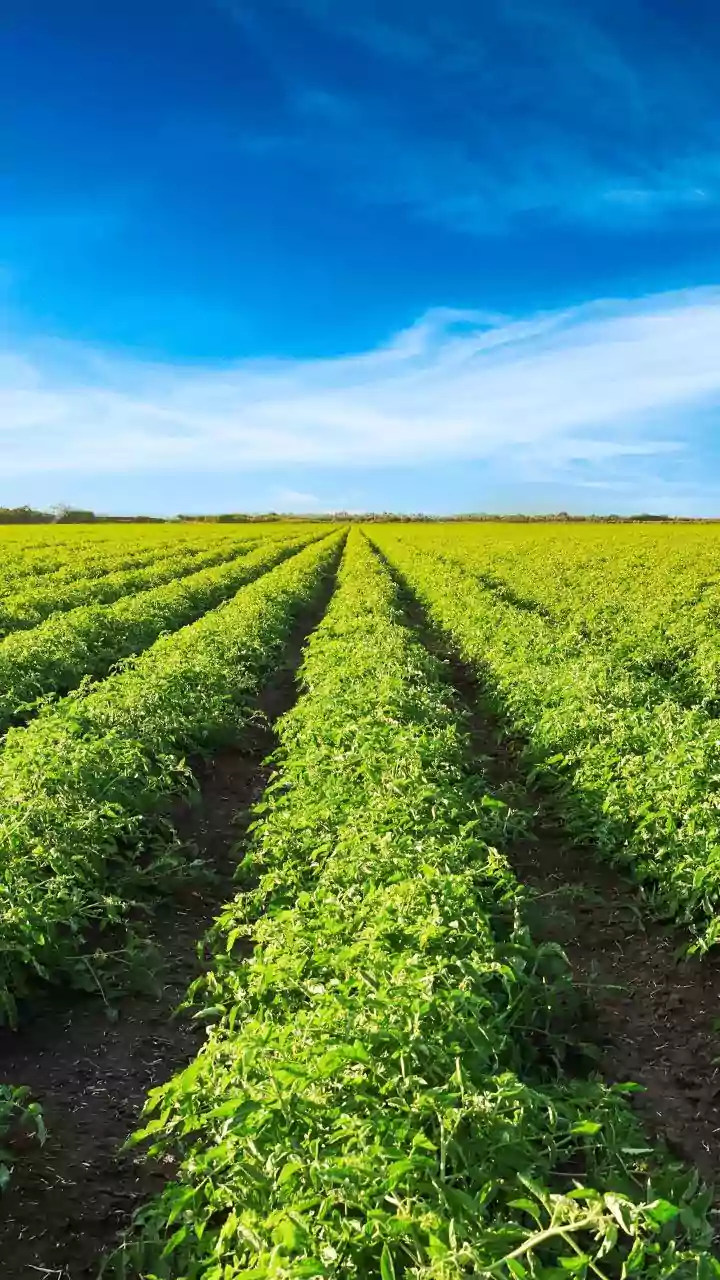
While the technology is proven and incredibly promising, it is still in its early stages for the consumer market. Most current applications are focused on large-scale precision agriculture, helping farmers manage irrigation over vast fields to conserve water and improve crop yields. Companies are developing prototypes and a few specialised products exist, but you likely won't find a microbial sensor at your local garden centre just yet. However, the rapid advancement in the Internet of Things (IoT) and smart farming technology suggests that affordable, consumer-friendly versions are on the horizon. For now, it represents the future of plant care—a shift from guessing to knowing, powered by the very soil you’re cultivating.