







Lagaan (2001): Cricket as Colonial Defiance
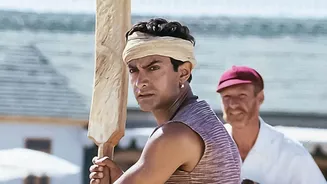
More than two decades after its release, Lagaan remains the undisputed benchmark for patriotic sports films. Set in 1893, the film tells the story of a small village in colonial India, crippled by drought and a burdensome land tax (lagaan). In an act
of audacious defiance, a young farmer, Bhuvan, accepts a British officer's wager: a high-stakes cricket match to decide the fate of their tax. The film masterfully uses the quintessentially British game of cricket as a tool of anti-colonial resistance. The genius of Lagaan lies in how it builds a team from a diverse, fractured village community—uniting Hindus, Muslims, and even a Dalit against a common oppressor, creating a powerful metaphor for national unity. It’s a story of how a shared purpose can turn underdogs into world-beaters, making it an epic tale of pride, resilience, and collective victory.
Chak De! India (2007): We Are All Team India
“Mujhe states ke naam na sunai dete hain, na dikhai dete hain. Sirf ek mulk ka naam sunai deta hai: I-N-D-I-A.” This one dialogue perfectly captures the essence of Chak De! India. Shah Rukh Khan stars as Kabir Khan, a disgraced former captain of the men's hockey team who is given a chance at redemption by coaching the Indian women's national team. He inherits a team of 16 talented but deeply divided players, each representing their regional identities more than their national one. The film brilliantly tackles sexism, regional prejudice, and religious bias as Khan molds these disparate individuals into a cohesive unit. His simple yet powerful message—that they are not players from Punjab or Haryana, but players for India—resonates deeply. The film's climax, mirroring the real-life Indian women's team's victory at the 2002 Commonwealth Games, became a moment of catharsis for the nation.
Bhaag Milkha Bhaag (2013): Running From a Traumatic Past
This powerful biopic chronicles the life of Milkha Singh, the “Flying Sikh,” an athlete whose story is inextricably linked to the birth of modern India. The film unflinchingly portrays the horrors of the 1947 Partition, where a young Milkha witnesses the massacre of his family, and his father’s last words to him are “Bhaag, Milkha, Bhaag!” (Run, Milkha, Run!). These words become a haunting refrain, propelling him first to survive and later to run for the glory of his nation. The film is not just about athletic achievement; it's about a man confronting his traumatic past. When Milkha refuses to compete in Pakistan, Prime Minister Jawaharlal Nehru convinces him that it is a matter of national prestige. His eventual victory on Pakistani soil is a moment of profound personal and national healing, making it a story of overcoming unimaginable pain to become a symbol of hope for a young country.
Dangal (2016): Fighting for a Nation's Daughters
While Lagaan and Chak De! India explored themes of unity against external and internal divisions, Dangal turned the lens inward, focusing on societal reform. Based on the true story of Mahavir Singh Phogat, the film shows a father who trains his daughters, Geeta and Babita, to become world-class wrestlers in patriarchal Haryana. The film powerfully critiques gender stereotypes, showing how empowering women is not just a social issue but a national one. Mahavir’s dream is not just for his daughters to win; it’s for them to win medals for India. The narrative captured the nation's imagination, sparking widespread conversations about gender equality and the potential of India's daughters. Its massive success, both in India and internationally in markets like China, proved that a story about challenging social norms could be a powerful expression of national pride.
83 (2021): Reliving the Moment that Changed Everything
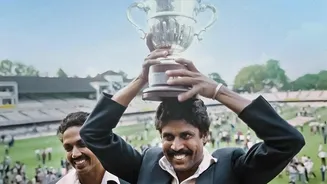
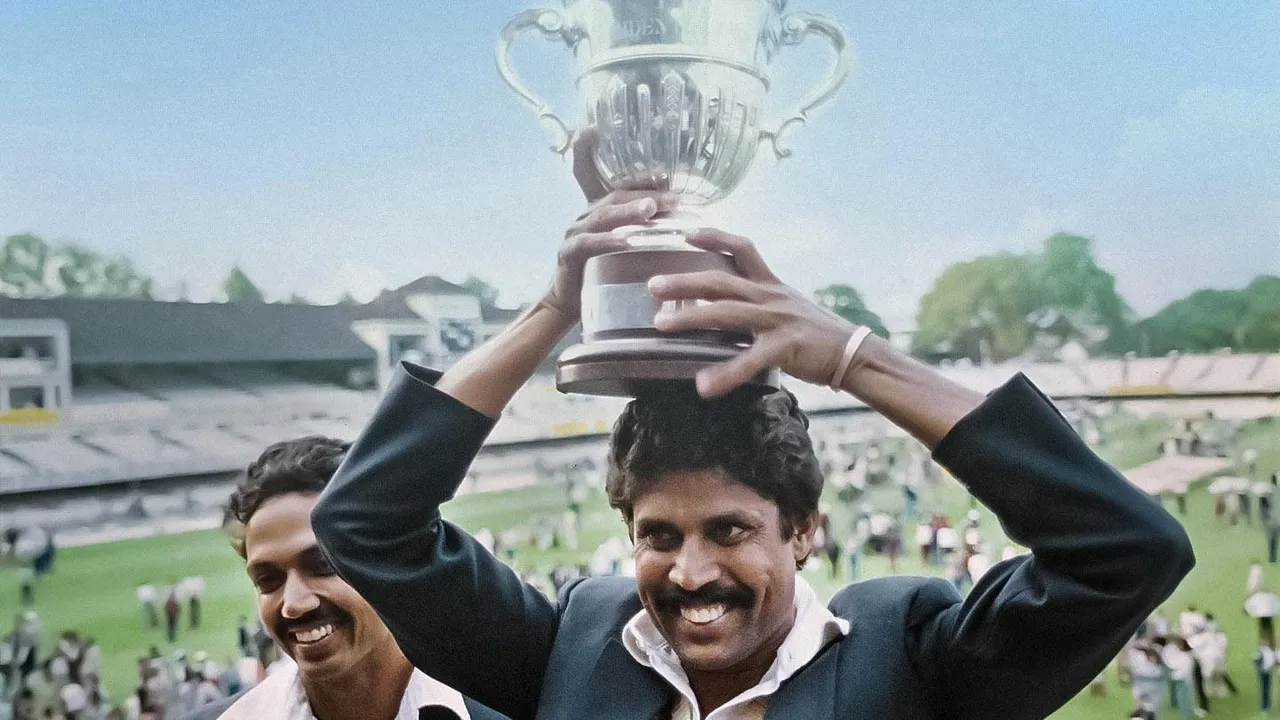
For Indians of a certain generation, the 1983 Cricket World Cup victory was a defining moment. Kabir Khan's '83' perfectly recaptures the euphoria of that historic win. The film follows the journey of Kapil Dev's underdog team, who arrive in England with no expectations and go on to defeat the seemingly invincible West Indies. More than just a sports chronicle, the film is a masterclass in recreating a moment of collective joy that bound the nation together. It highlights how the victory was a source of pride and unity at a time of social and political turmoil back home. By blending thrilling cricket action with poignant moments of patriotism, the film serves as a powerful reminder of how a sporting triumph can lift the spirit of an entire nation.