




A New Cosmic Masterpiece
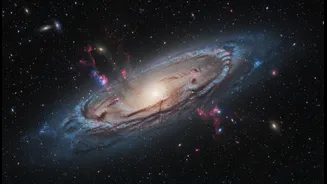
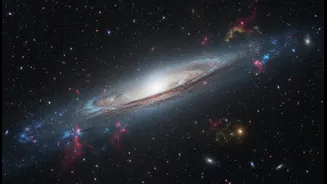
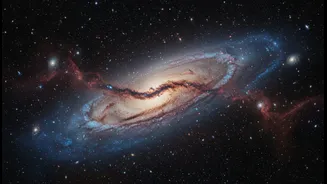
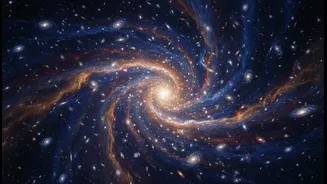
The latest image released from the James Webb Space Telescope (JWST) team is a stunning, intricate view of Centaurus A, a galaxy located a relatively close 11 million light-years from Earth. Released to mark the fourth anniversary of Webb's science operations,
the image transforms our understanding of this celestial object, revealing it in a way that is far richer and more complex than ever seen before. What was once partially obscured by thick lanes of cosmic dust is now a breathtaking tapestry of individual stars, glowing gas, and cosmic drama. The image showcases Webb's power, turning a familiar galaxy into a fresh subject of wonder.
The Target: A Galaxy Forged in Collision
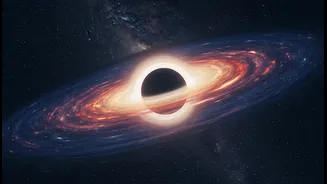
Centaurus A is not your average spiral galaxy. Astronomers classify it as a starburst galaxy, and its unusual, chaotic structure is the result of a colossal cosmic event: a collision between two separate galaxies around two billion years ago. This ancient merger is the source of its most defining features. The collision supplied the galaxy with an enormous amount of gas and dust, which now fuels an exceptionally high rate of star formation—a phenomenon known as a starburst. At its core, Centaurus A hosts a supermassive black hole that is actively feeding on the abundant material, launching powerful jets of energy that shape the entire galactic environment. This makes it a perfect natural laboratory for studying how black holes and galaxies grow and evolve together.
Seeing Through the Veil
So, why is this new image such a breakthrough? The answer lies in Webb's incredible infrared vision. Previous attempts to study Centaurus A with telescopes like Hubble were hampered because visible light is blocked by the galaxy's dense dust clouds. Other infrared observatories, like the now-retired Spitzer Space Telescope, could detect the infrared light and see the galaxy's larger structures, but they lacked the power to resolve fine details or individual stars. Webb's near- and mid-infrared instruments, NIRCam and MIRI, provide unprecedented sensitivity and sharpness. They cut through the obscuring dust with ease, revealing the millions of stars packed within and the intricate, glowing filaments of the dust itself. What once appeared as a hazy glow is now a dynamic landscape of countless stellar points of light.
Unlocking Galactic Secrets
This new, clearer view is more than just a pretty picture; it's a treasure trove of scientific data. Astronomers can now study Centaurus A star by star, allowing them to reconstruct the galaxy's turbulent history. By comparing the ages and distributions of different star populations, scientists can determine which stars existed before the galactic collision, which were born during the merger, and which have formed since. Beyond the stars, the image reveals perplexing new details in the dust structures, including a strange, S-shaped feature near the core that scientists are now working to understand. By analyzing the light with spectroscopy, researchers can also measure how gas moves within the galaxy, observing how the central black hole both triggers star formation by compressing gas and potentially limits it by blasting material away.
The Telescope That Keeps Delivering
This detailed look at Centaurus A is the latest in a long line of groundbreaking achievements for the James Webb Space Telescope. Over the past four years, it has consistently delivered images and data that have exceeded expectations, from peering back toward the dawn of time to find the earliest galaxies to analyzing the atmospheres of distant exoplanets. Each new release not only expands our photo album of the universe but fundamentally deepens our understanding of the cosmic processes that govern everything from the lifecycle of stars to the evolution of entire galaxies. The portrait of Centaurus A is a powerful reminder that even familiar objects have new stories to tell when seen through a new and more powerful set of eyes.