





The High Stakes of Human Spaceflight
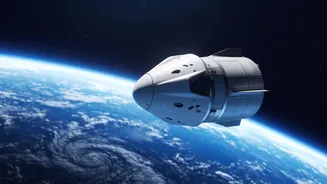
The Gaganyaan mission aims to send a three-member crew into a 400-kilometre orbit for a three-day mission and bring them back safely to Earth. This achievement would make India the fourth country in the world with independent human spaceflight capability,
after the United States, Russia, and China. However, sending humans to space is inherently risky. The entire mission architecture, from the rocket to the crew capsule and life support systems, must work perfectly. Unlike a satellite launch, where a failure results in financial and mission loss, a human mission has an unacceptable cost for failure. This is why ISRO's current focus is overwhelmingly on a series of rigorous uncrewed tests, designed to validate every system long before astronauts are on board.
The Anatomy of a Safety Test
The uncrewed flights are not just simple launches; they are specifically designed to test critical safety systems under the most challenging conditions. The cornerstone of this is the Crew Escape System (CES). The CES is an emergency escape measure designed to rapidly pull the crew module away from the main rocket in case of a malfunction during launch. ISRO has planned several tests to validate this system. These include Pad Abort Tests, which test the escape system's ability to activate on the launch pad itself, and in-flight abort tests, which simulate an emergency after liftoff. The Test Vehicle Abort Mission-1 (TV-D1), for example, was conducted to demonstrate an in-flight abort when the vehicle is traveling at its most stressful aerodynamic point.
What Recent Tests Have Achieved
Each test provides crucial data and builds confidence in the mission's hardware. The TV-D1 mission successfully demonstrated the performance of the Crew Escape System, validating the sequence of the crew module separating from the rocket, deploying parachutes, and splashing down safely. Similarly, ISRO has conducted numerous airdrop tests for the parachute system. In one recent test, a simulated crew module was dropped from an aircraft to qualify the main parachutes under maximum load conditions expected during the first full uncrewed mission, G1. These successful tests confirm that the designs are sound and that the safety mechanisms perform as intended, paving the way for more complex integrated flights.
The Role of Vyommitra and Uncrewed Missions
Before the final crewed launch, ISRO plans a series of full uncrewed orbital missions. The first of these, designated G1, is targeted for launch by the end of 2026. This flight will carry 'Vyommitra', a humanoid robot developed by ISRO. Vyommitra will simulate human functions inside the crew module, allowing ISRO to test the life-support and environmental control systems in a space environment. The data collected on factors like vibration, acoustics, and cabin pressure will be vital for ensuring the crewed capsule is perfectly safe and habitable for astronauts. Following G1, at least one more uncrewed mission is planned to demonstrate complete mission reliability.
The Road to Launch
Every successful safety test is a critical milestone on the path to India’s first human spaceflight. While delays are a natural part of developing such a complex, prototype program, as noted by Gaganyaan astronaut Group Captain Angad Pratap, each step is deliberate. The current timeline, following the uncrewed test campaigns, targets the first crewed Gaganyaan mission for 2027. The uncrewed safety flights, therefore, are not just preliminary steps; they are the very foundation of the program. They represent ISRO's commitment to crew safety above all else, ensuring that when Indian astronauts finally lift off, it is with the highest possible confidence in the technology carrying them.