




What Did Webb Actually Find?
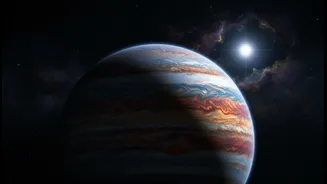
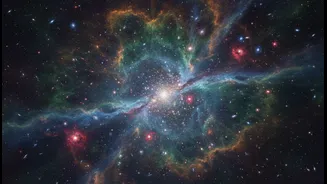
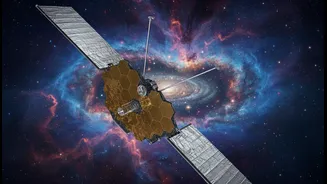
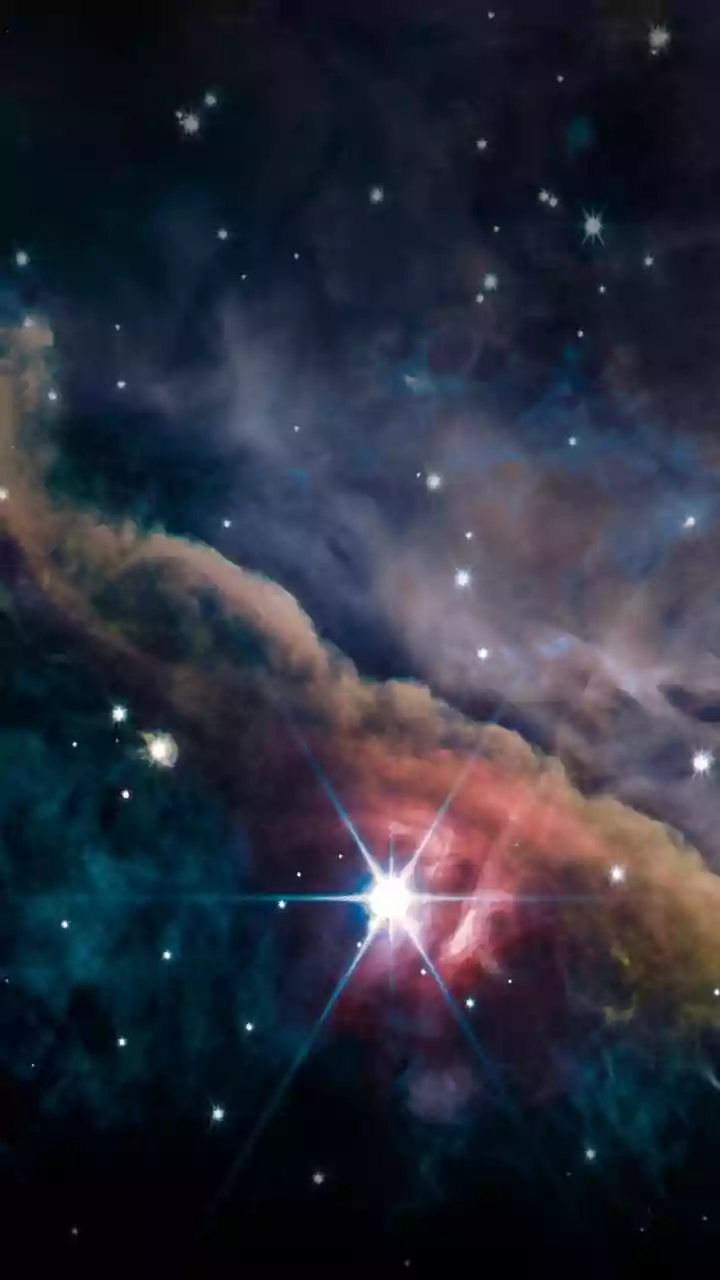
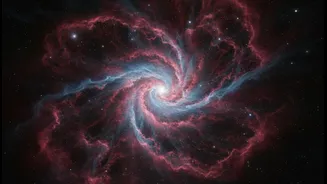
In the heart of the Orion Nebula, a sprawling star factory about 1,350 light-years away, the James Webb Space Telescope (JWST) has identified something peculiar. Astronomers have catalogued dozens of pairs of objects, each with a mass similar to Jupiter,
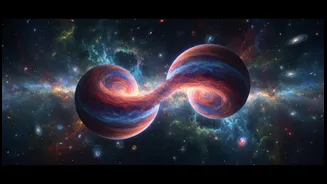
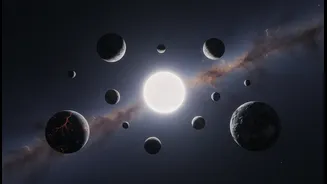
that are not orbiting a star. Instead, these objects, dubbed Jupiter-Mass Binary Objects or 'JuMBOs', drift through the nebula together, bound only by their own gravity. The telescope detected the tell-tale heat signatures and atmospheric traces of methane and steam from these young, gassy giants. While we have found lone 'rogue planets' before, finding so many paired-up wanderers was completely unexpected.
Not Planets, Not Stars: A Cosmic Mystery
The discovery of JuMBOs has puzzled scientists because these objects don't fit neatly into any existing category. They are not technically planets, as they don't orbit a parent star. But they are also too small to be stars; their mass is far below the threshold needed to ignite nuclear fusion, the engine that powers even the smallest stars, known as brown dwarfs. Our current understanding of star formation suggests that it is difficult for objects this small to form directly from a collapsing cloud of gas. The objects are also surprisingly far apart from each other, orbiting their common center at distances up to 200 times that of the Earth and Sun, making their gravitational connection a delicate one.
A New Puzzle for Formation Theories
The existence of JuMBOs throws a wrench into the established theories of both star and planet formation. One way planets form is from the leftover material in a disk surrounding a young star. Rogue planets are thought to be violently ejected from such systems. However, the forces involved in such an ejection would almost certainly be strong enough to break a binary pair apart. The fact that Webb found at least 40 of these pairs suggests this is not some rare, fluke event. This has led scientists to propose new models, including one where the objects are ejected from their home star system but manage to remain gravitationally bound. This discovery forces us to rethink the very processes that populate the universe.
The Perfect Classroom Case Study
This is where the real value for students lies. The story of JuMBOs is a perfect, real-time example of the scientific method in action. It demonstrates that science is not a dusty textbook full of settled facts, but a dynamic and evolving process of discovery, questioning, and refinement. Teachers can use this discovery to discuss how scientists form hypotheses, gather evidence, and adapt theories when faced with new, unexpected data. It is a lesson in critical thinking, showing that even our most fundamental ideas about the cosmos can be challenged. This unfolding mystery invites students to ask questions, speculate on possibilities, and engage with science as a living, breathing field of inquiry.
Inspiring India’s Next Generation of Scientists
For a nation with ambitious space goals like India, fostering a deep-seated curiosity about the universe is crucial. Following discoveries like the JuMBOs can inspire the next generation of ISRO scientists, astrophysicists, and engineers. It connects classroom learning about gravity, stars, and planets to the absolute cutting edge of human knowledge. When students see that there are still fundamental mysteries to be solved—that there are entirely new classes of objects waiting to be discovered and understood—it can ignite a passion for exploration. It frames science not as a subject to be memorised, but as an adventure to be joined, encouraging them to be the ones who might one day solve these very puzzles.