



Your Sustainable Planter: Choosing the Right Plastic
Before you start, look at the bottom of your plastic containers. Not all plastics are created equal when it comes to growing food. For safety, it's best to use food-grade plastics, which are less likely to leach chemicals into the soil. [2, 7] Look for the recycling
codes #2 (HDPE), #4 (LDPE), and #5 (PP). [7, 16] These are commonly used for milk jugs, yogurt cups, and other food packaging, making them a reliable choice for your mini herb garden. [7, 19] Avoid plastics marked with #3 (PVC) or #6 (Polystyrene) for growing edibles. [7] Thoroughly wash any container with hot, soapy water to remove residues that could attract pests or mold. [19]
Getting Started: Preparation is Everything
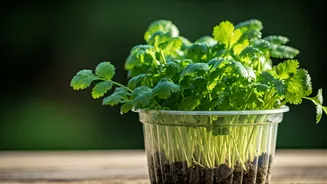
Proper preparation is crucial for success. The most important step is creating drainage. Coriander, like most herbs, hates sitting in stagnant water, which can lead to root rot. [5] Using a drill, a hammer and nail, or even a heated metal skewer, carefully punch several holes in the bottom of your plastic container. [6, 19] If you're using a plastic bottle, you can cut it in half and use the top portion as the planter. [22] Some creative gardeners even fashion self-watering systems by threading a piece of cloth through the cap to wick water from a reservoir in the bottom half of the bottle. [22, 25]
The Foundation: Soil and Sowing
Coriander needs loose, well-draining soil to thrive. [3, 5] Avoid using heavy garden soil, which can become compacted in containers. Instead, opt for a quality potting mix, preferably one enriched with organic matter like compost or cocopeat to provide nutrients and improve structure. [3, 5] Fill your prepared container, leaving about an inch of space at the top. When sowing, you can lightly crush the coriander seeds first, as each pod contains two seeds; this can speed up germination. [8, 18] Scatter the seeds evenly over the soil and cover them with a thin layer of the potting mix. Water gently but thoroughly. [20]
Care and Nurturing: Sun, Water, and Patience
Finding the right spot for your coriander is key. The herb thrives with about four to six hours of sunlight daily. [3, 5] Morning sun is often ideal, as the intense afternoon heat, especially in warmer months, can cause the plant to 'bolt'—flower prematurely and stop producing leaves. [3, 20] Keep the soil consistently moist but not waterlogged. A good rule of thumb is to water when the top inch of soil feels dry to the touch. [3] Plastic containers can dry out faster than terracotta, so you may need to check on them more frequently during hot weather. [5]
Harvesting for a Continuous Supply
In about three to four weeks, your coriander seedlings should be ready for their first harvest. [20] The secret to a long-lasting supply is to harvest regularly. Snip the outer leaves and stems first, leaving the inner shoots to continue growing. [5] This encourages the plant to become bushier and more productive. [15] Avoid pulling out the entire plant until it has finished its life cycle. With regular harvesting, a single plant can provide fresh coriander for several weeks. [5] For a year-round supply, consider succession planting by sowing a new batch of seeds every few weeks. [15, 20]