



First, Let's Define Our Terms
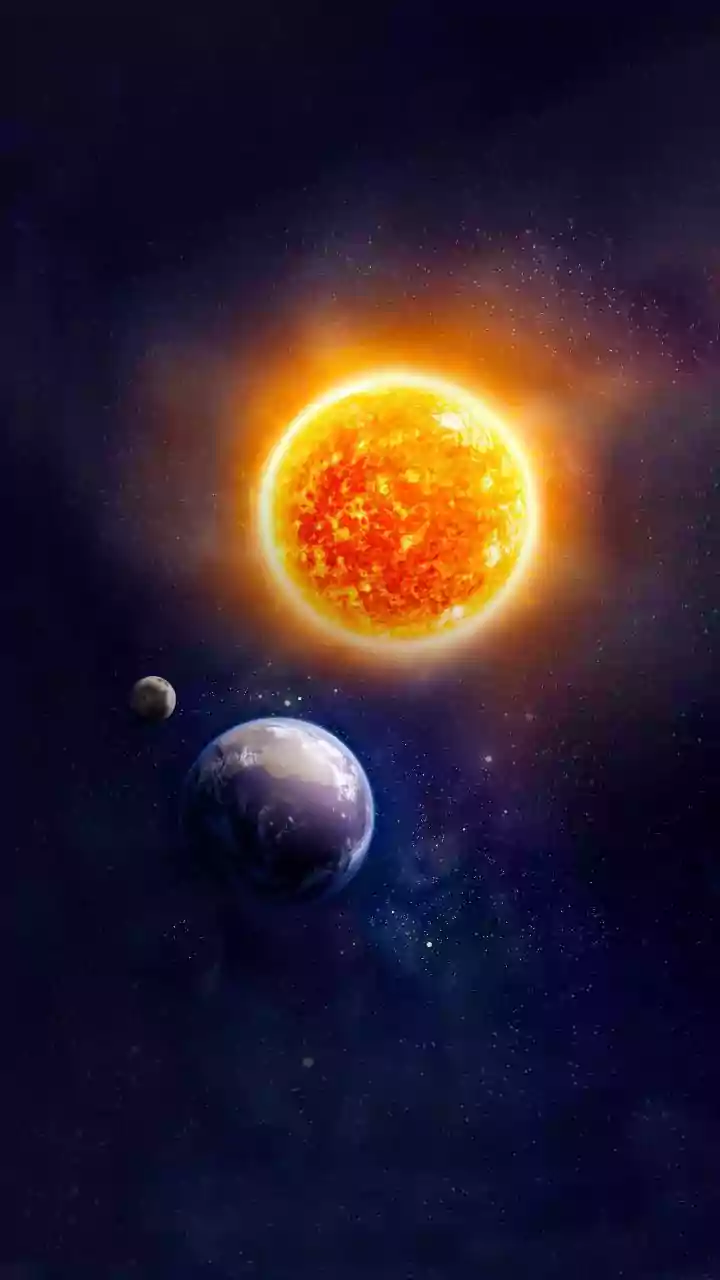
On Earth, the concepts of a 'day' and a 'year' are simple and distinct. A year is the time it takes our planet to complete one full orbit around the Sun—about 365 days. A day is the time it takes Earth to complete one full rotation on its axis—about 24
hours. This rhythm is the foundation of our lives. But the universe doesn't have to play by Earth's rules. When we look at Venus, these fundamental definitions get twisted into a mind-bending pretzel of orbital mechanics.
Venus by the Bizarre Numbers
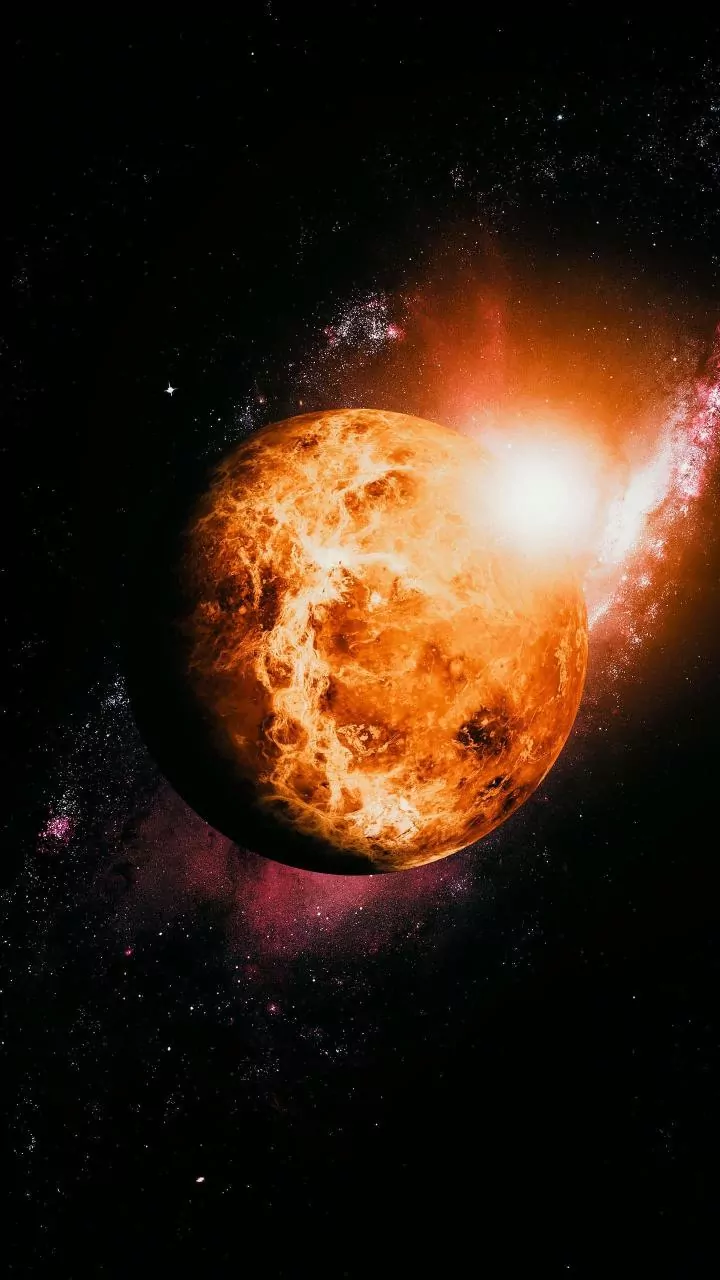
Here's where reality starts to feel strange. A year on Venus—its journey around the Sun—takes approximately 225 Earth days. This is shorter than our own year, which makes sense as it's closer to the Sun. The shock comes when we look at its 'day'. A single, full rotation of Venus on its axis, known as a sidereal day, takes an astonishing 243 Earth days. Read that again: it takes longer for Venus to spin around once (243 days) than it does for it to travel all the way around the Sun (225 days). This is the cosmic reality behind the headline. Its day is literally longer than its year.
The Secret: A Slow, Backward Spin
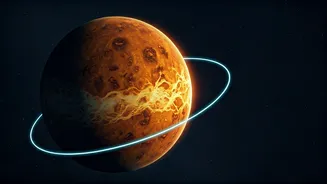
How is this possible? The main reason is Venus's incredibly slow and backward rotation. Unlike Earth and most other planets in our solar system, which spin counter-clockwise, Venus spins clockwise. This is known as retrograde rotation. Not only does it spin the 'wrong' way, but it does so at a crawl. While Earth zips around on its axis once every 24 hours, Venus takes 243 of our days to do the same. This sluggish, backward spin is the key ingredient in its temporal weirdness. If you could stand on Venus, the Sun would rise in the west and set in the east, after a very, very long time.
But What About Sunrise to Sunrise?
This is where it gets even stranger. While a rotational day (one full spin) is 243 Earth days, the time from one sunrise to the next—called a solar day—is different. Because the planet is rotating backward while it orbits the Sun, these two motions work against each other in a way that shortens the solar day. The result? A solar day on Venus is 'only' about 117 Earth days long. So, you'd wait 117 days for the Sun to return to the same spot in the sky. This means Venus has about two 'sunrises' per 'year', even though a single spin takes longer than a year. It’s a paradox only possible due to its retrograde rotation.
Why Is Venus So Weird?
Scientists aren't 100% certain why Venus is the odd one out. The leading theory suggests that billions of years ago, Venus may have suffered a colossal impact from another large celestial body. Such a cataclysmic collision could have been powerful enough to not just halt its original rotation but actually reverse it. Another theory points to its incredibly thick, heavy atmosphere. Over eons, the friction from this super-rotating atmosphere, combined with gravitational tides from the Sun, might have gradually slowed and then reversed the planet’s spin. Whatever the cause, it left Venus as a testament to the violent and unpredictable history of our solar system.