







As cities grow denser, the push for more liveable, breathable urban spaces is transforming streets worldwide. Two popular concepts lead this change: car-free zones and pedestrian-priority zones. But what sets them apart?
The Car-Free Zone: A Pedestrian Paradise
A car-free zone is exactly what
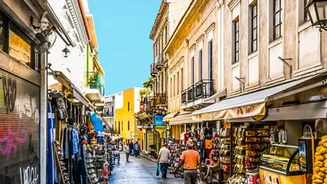
it sounds like: an area completely restricted to most or all vehicular traffic. These zones are designed to be sanctuaries for people on foot, turning former roadways into open public spaces for walking, shopping, dining, and socialising. The primary goal is to eliminate the conflict between pedestrians and cars, which enhances safety, reduces noise and air pollution, and can boost local business by creating a more pleasant environment. Access is typically limited to emergency vehicles, and sometimes delivery vehicles during specific off-peak hours. Think of these as true pedestrian paradises, where the street is reclaimed entirely for public life.
The Pedestrian-Priority Zone: A Shared Space
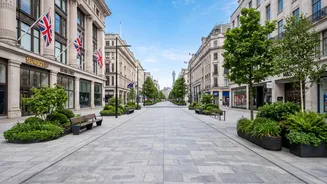
A pedestrian-priority zone, often called a 'shared street', is more of a compromise. In these areas, pedestrians are given the right-of-way and can use the full width of the street, but vehicles are still allowed, albeit under strict conditions. Cars are expected to travel at very low speeds—often just walking pace—and drivers must yield to people on foot. The design of these streets often removes traditional curbs and uses different paving materials, planters, and street furniture to signal to drivers that they are guests in a pedestrian's space. The goal is not to ban cars entirely but to calm traffic and create a safe, shared environment where multiple modes of transport can coexist peacefully.
Copenhagen, Denmark: The Pioneer of Car-Free
Copenhagen's Strøget is one of the oldest and most famous examples of a large-scale pedestrian zone in Europe. Established as a trial in 1962, this 1.1-kilometre stretch running through the heart of the city was made permanent after proving a huge success. Initially met with skepticism from shop owners who feared losing business, the move did the opposite, invigorating the area with shoppers and a new sense of public life. Today, Strøget is a bustling commercial and cultural artery, demonstrating the longterm economic and social benefits of committing to carfree design. The network has since expanded, inspiring countless cities worldwide to follow its lead.
Pontevedra, Spain: The City That Chose to Walk
The Spanish city of Pontevedra offers a radical and highly successful model of near‐total pedestrianisation. Beginning in 1999, the city's mayor began a transformation to give the streets back to the people, pedestrianising the entire 300,000‐square‐metre city centre. The model is a hybrid; while the core is largely car‐free, it functions as a pedestrian‐priority zone where car access is limited to residents, deliveries, and essential services, with extremely low speed limits. The results have been remarkable: CO2 emissions dropped by over 70%, there have been no traffic fatalities in the city centre since 2011, and the city attracted thousands of new residents. Pontevedra proves that prioritising people over cars can revitalise an entire urban centre.
The Netherlands: Home of the 'Woonerf'
The Dutch concept of the 'woonerf', which translates to 'living street', is the quintessential example of a pedestrian‐priority zone. Developed in the 1960s, a woonerf is a residential street designed to be a social space where children can play and neighbours can interact. Cars are permitted but are forced to move at a walking pace due to the street's design, which lacks curbs and uses obstacles like trees, benches, and play equipment to create a winding path. This design makes drivers behave like guests in a shared yard. With thousands of woonerfs across the Netherlands, the concept has become a defining feature of Dutch urban life and a global model for creating safer, more communal residential streets.
New York, USA : Taming Times Square
Even one of the world's busiest intersections can be made more people‐friendly. Starting in 2009, New York City began a project to transform parts of Broadway through Times Square into permanent pedestrian plazas. This move wasn't about banning all cars from the area, but about reallocating space. By closing several blocks of Broadway to traffic, the city created vast new public spaces with seating and room to gather. The project dramatically reduced pedestrian injuries, improved air quality, and was overwhelmingly popular with New Yorkers. Times Square now functions as a major car‐free haven in the heart of Manhattan, proving that even the most car‐centric cities can carve out vital spaces for people.