








A deadly high-speed train crash in Spain, a country famed for its advanced rail network, has sent shockwaves globally. The tragic incident near Toledo offers sobering lessons on the complex interplay between technology, human oversight, and safety.
A Tragedy on a High-Speed Line
On
October 28, 2026, two high-speed trains travelling from Madrid to Seville collided near Urda in the province of Toledo. A train operated by the private company Iryo had stopped on the tracks due to a signalling system failure. Shortly after, a Renfe-operated AVE train, travelling at speeds estimated between 160 and 200 km/h, slammed into its rear. The impact was catastrophic, derailing multiple carriages and resulting in 69 fatalities and over 100 injuries, marking one of the worst disasters in the history of Spain's modern rail network. The event was especially shocking as it was the second fatal accident on the same high-speed line in 2026, shattering public confidence in a system once considered a benchmark for safety.
When Automatic Systems Fail
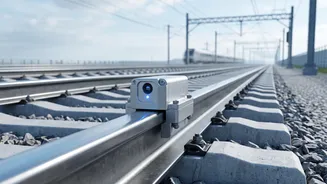
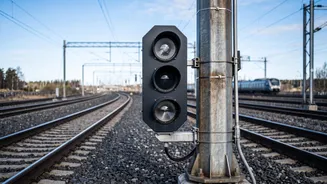
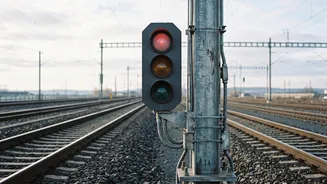
Investigations quickly pointed not just to a technical glitch, but to a subsequent human error. The Madrid-Seville line used a German-designed automatic train protection system called LZB. When a computer issue caused this primary system to fail, all trains on the section were automatically halted as a safety precaution. At this point, control reverted to manual operation, relying on dispatchers and established protocols. The preliminary findings, as stated by Spain's transport minister, suggest a control centre operator gave the Renfe train clearance to proceed at normal speed, rather than the reduced 'on-sight' speed of around 40 km/h required during such a failure. This fatal instruction sent the train hurtling towards the stationary one, with the driver having no time to prevent the collision.
Lesson 1: The Human Factor Is Critical
The Toledo collision is a stark reminder that even the most advanced automated systems need robust human-led backup procedures. The LZB system worked correctly by stopping the trains when it detected a fault. The failure occurred in the next step—the manual intervention that was meant to provide a safety net. This highlights the immense pressure and responsibility placed on human operators in control centres. The lesson here is twofold: protocols for degraded or manual modes of operation must be iron-clad and regularly drilled, and the systems themselves should ideally incorporate 'hard-coded' limits that prevent a single human error from leading to a catastrophe. Trust in technology cannot lead to complacency in human training and procedural discipline.
Lesson 2: The Importance of Fail-Safe Redundancy
Modern train control systems, like the European Train Control System (ETCS) being adopted across Europe, are designed with deeper layers of redundancy. For example, under an ETCS Level 2 system, even if a central system fails, onboard computers can enforce a strict, low-speed limit, physically preventing the train from accelerating to dangerous speeds. The Spanish incident underscores the need for a 'defence-in-depth' safety philosophy, where one failure—whether technical or human—is caught by another layer of protection. For any country building a new high_speed network, investing in the latest generation of signalling and train control technology, which prioritises such fail_safes, is non_negotiable.
Why This Matters for India's Bullet Train
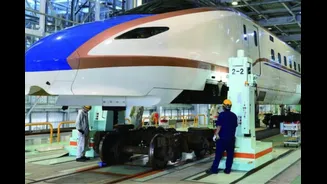
As India forges ahead with its ambitious Mumbai–Ahmedabad High–Speed Rail corridor, the events in Spain offer crucial insights. India is wisely adopting Japan's Shinkansen system, renowned for its impeccable safety record of zero fatal accidents in over 50 years of operation. This system is built on a foundation of redundancy, including early earthquake detection systems and a rigorous maintenance culture. However, the Toledo tragedy proves that world–class technology is only part of the equation. India must equally focus on building a deep–rooted safety culture that encompasses rigorous training for all personnel, from drivers to control centre staff, and strict adherence to protocol, especially during unexpected events. As India looks to localise manufacturing and develop its own trainsets, ensuring these systems integrate seamlessly and maintain the highest global safety standards will be paramount.