






1. Make Visibility Your Top Priority
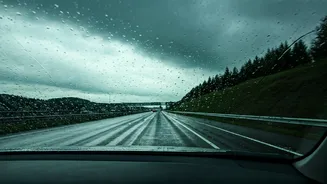
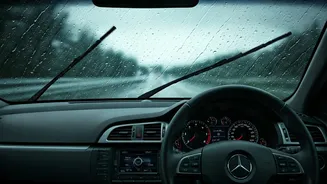
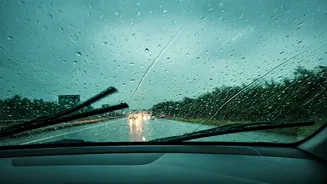
You can't avoid what you can't see. Before the monsoon truly sets in, give your wipers a thorough check. The rubber on wiper blades degrades under the hot Indian sun, becoming hard and brittle. If they leave streaks or make a screeching noise, replace
them immediately. It's a small investment for a massive safety gain. Also, top up your windshield washer fluid, perhaps with a shampoo-based solution that can cut through the oily grime that gets sprayed onto your screen from wet roads. On the inside, use your car’s defogger or air conditioner to prevent the windscreen from fogging up. A clear view is your first and best line of defence.
2. Check Your Tyres and Brakes
Your tyres are the only things connecting your car to the road, and their role is never more critical than on a wet surface. Ensure your tyres have adequate tread depth—at least 3mm is recommended for wet conditions. The grooves in your tyres are designed to channel water away and prevent skidding. You can use a one-rupee coin to check the depth; if the head of the Ashoka lion emblem is visible, your tyre tread is too low. Also, maintain the correct tyre pressure, as under-inflated tyres can increase the risk of aquaplaning. Finally, have your brakes checked. Wet brake discs and pads are less effective, so ensure your braking system is in top condition to provide the stopping power you need.
3. Understand and Avoid Aquaplaning
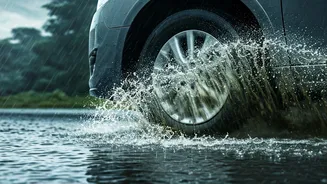
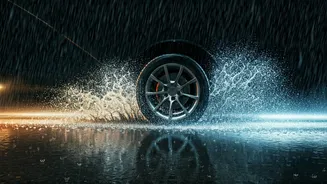
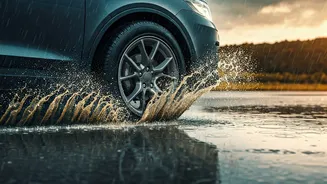
Aquaplaning (or hydroplaning) is a terrifying experience where your tyres lose contact with the road and skim over a layer of water, causing a complete loss of steering and braking control. It happens most often at higher speeds on very wet roads. The best way to handle it is to prevent it by slowing down. However, if you feel the steering suddenly go light and the car start to drift, do not panic. Do not slam the brakes or make sharp steering movements. Instead, gently ease your foot off the accelerator and keep the steering wheel pointed straight ahead. As the car slows, the tyres should regain their grip on the road.
4. See and Be Seen: Use Lights Wisely
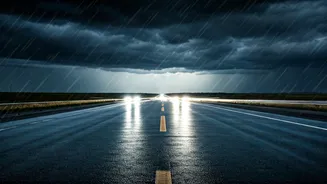
In heavy rain, visibility drops for everyone. Turn on your headlights (on low beam) even during the day. This isn't just to help you see better; it's crucial for making you more visible to other drivers, cyclists, and pedestrians. Avoid using high beams in rain or fog, as the light will reflect off the water droplets and cause glare, reducing your own visibility. Similarly, do not use your hazard lights while moving. They are meant for a stationary vehicle and can confuse other drivers, who may not be able to see your turn indicators.
5. Double Your Following Distance
The standard 'three-second rule' for following distance is not sufficient in the monsoon. On wet roads, your car's stopping distance can be double or even triple that on a dry road. To be safe, increase your following distance to at least five or six seconds. To measure this, watch the vehicle ahead of you pass a fixed object like a lamp post or a sign. Then, count the seconds it takes for your vehicle to reach the same spot. This buffer gives you more time to react to sudden braking or hazards, which are common in monsoon traffic.
6. Navigate Waterlogged Roads with Care
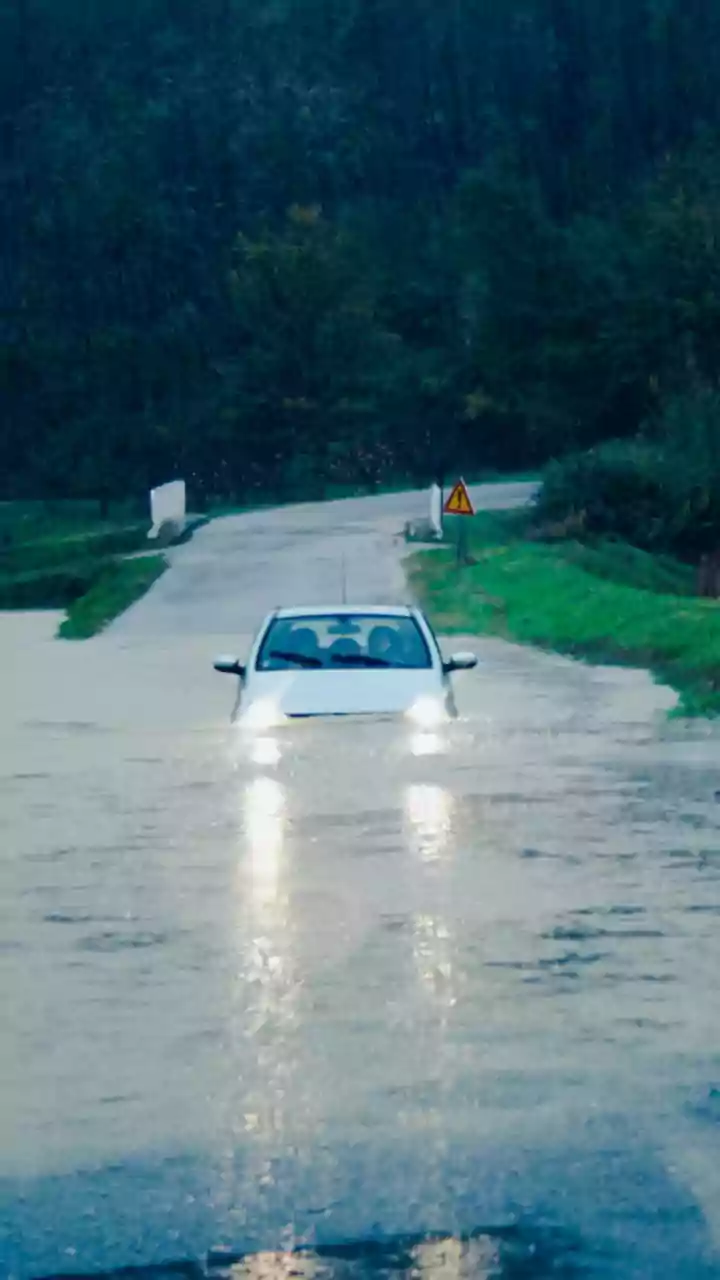
The golden rule is to avoid waterlogged streets whenever possible. You never know how deep the water is or what hazards (like open manholes) lie beneath. If you absolutely must cross a flooded patch, watch other cars to gauge the depth. Drive through slowly in a low gear (first gear is best), keeping the engine revs high to prevent water from entering the exhaust pipe. Avoid splashing and creating a 'bow wave' that can flood your engine's air intake. After clearing the water, tap your brakes gently a few times to dry them out and ensure they are working properly.
7. Keep a Monsoon Emergency Kit
Being prepared can turn a crisis into a mere inconvenience. Keep a small emergency kit in your car during the monsoon. This should include a tow rope, a torch with extra batteries, a basic toolkit, a first-aid kit, and a reflective warning triangle. It’s also wise to keep a dry cloth for wiping foggy interiors and to ensure your phone is fully charged before you start your journey. These simple items can be lifesavers if you get stranded in a downpour.