





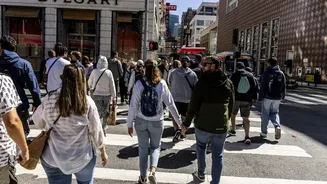
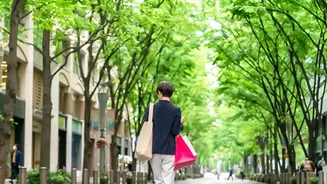
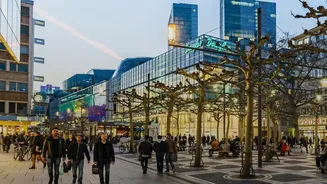
In a world once dominated by the car, a quiet revolution is taking place. Cities are reclaiming their streets for people, creating vibrant, walkable spaces that invite us to slow down, explore, and connect with our surroundings.
Copenhagen, Denmark: The Pioneering Strøget
Often hailed as one of
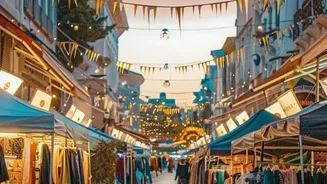
the longest and oldest pedestrian shopping areas in Europe, Copenhagen's Strøget is more than just a street; it's a network of interconnected car-free thoroughfares. Established in 1962, at a time when cities were increasing space for cars, this was a radical move. It transformed the city's heart into a bustling hub where people could stroll without dodging traffic. Stretching over a kilometre from City Hall Square to Kongens Nytorv, it's a mix of high-end brands, budget-friendly shops, and charming cafes. But its success isn't just commercial. The removal of cars led to a renaissance in public life, with street performers, musicians, and outdoor seating creating a lively, social atmosphere that has inspired hundreds of other cities around the globe.
Melbourne, Australia: A Thriving Laneway Culture
Melbourne's secret lies in its narrow laneways, once forgotten service routes from the Victorian era that have been utterly transformed. Today, these passages are the vibrant arteries of the city’s cultural life, home to world-renowned street art, hidden bars, and hole-in-the-wall cafes. Hosier Lane is perhaps the most famous, an ever-changing outdoor gallery where every surface is covered in colourful murals and graffiti. Others, like Degraves Street, are packed with European-style eateries, while historic arcades like the Block Arcade offer a more polished, 19th-century shopping experience. This organic revitalisation has turned neglected spaces into major attractions, proving that the most interesting parts of a city are often found off the main boulevards.
York, England: The Medieval Shambles
To walk down the Shambles in York is to step back in time. This exquisitely preserved medieval street, with its overhanging timber-framed buildings, was originally home to the city's butchers. The name itself derives from 'shamel', the shelves where meat was displayed. The architecture had a practical purpose: the jettied upper floors were designed to protect the meat below from direct sunlight. Today, the narrow, cobbled street is fully pedestrianised and filled with quirky independent shops and tea rooms. Its unique, almost fairy-tale character makes it one of Europe's bestndeserved medieval streets, where the design naturally prioritises the walker, making it a captivating, immersive experience.
Buenos Aires, Argentina: Reclaiming the Microcentro
Buenos Aires demonstrates that even a massive, bustling metropolis can put people first. The Plan Microcentro project has been transforming the city's dense financial and administrative heart. Historically chaotic streets, clogged with traffic, have been converted into pedestrianndpriority zones with widened sidewalks, new lighting, and dedicated cycle paths. Streets like Calle Florida and Calle Lavalle, once difficult to navigate, are now vibrant commercial and social corridors where foot traffic is paramount. This large scale effort has not only made the area safer and more pleasant for the millions who use it daily but has fundamentally improved the quality of public space in one of South America's great capitals.
The Undeniable Benefits of Walking
These examples are part of a global movement recognizing that walkable cities are better cities. The benefits are profound and interconnected. Economically, pedestrianndfriendly streets often lead to a boost in local business and rising property values. Socially, they foster a stronger sense of community by increasing chance encounters and social interactions among neighbours. And for personal wellbeing , living in walkable areas is linked to better physical and mental health , reducing stress and encouraging daily activity . By designing spaces on a human scale , cities are not only becoming more beautiful and enjoyable but also healthier , happier , and more sustainable .