






A Craving Coaxed by Clouds
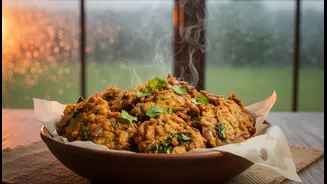
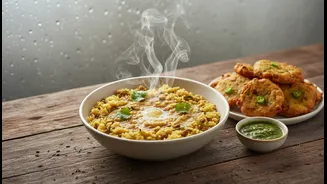
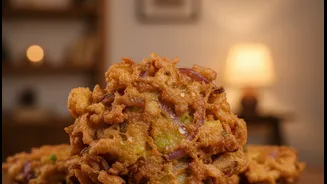
That sudden urge for a plate of pakoras or a samosa when the sky turns grey isn't just in your head; it's a biological response. The drop in ambient temperature and reduced exposure to sunlight during the monsoon can cause a dip in serotonin, the body's
'feel-good' hormone. Your brain, seeking a quick mood lift, triggers cravings for carbohydrates and energy-dense foods. Fried snacks, which are rich in carbs and fat, deliver a rapid boost, stimulating the release of both serotonin and dopamine, the pleasure-and-reward neurotransmitter. Furthermore, as the temperature drops, your body works harder to maintain its core temperature, a process called thermogenesis. This drives a demand for warm, calorie-dense foods to literally keep you warm from the inside out.
The Scent of Wet Earth and Memory
Beyond biology, our monsoon cravings are deeply entangled with memory. The sense of smell has a direct pathway to the brain's emotional and memory centres—the amygdala and hippocampus. This is why the scent of wet earth after the first rain, known as petrichor, can be such a powerful trigger. This phenomenon, often called the 'Proust Effect' after author Marcel Proust, describes how a scent or taste can unlock vivid, emotional memories from the past. For many, the smells and sounds of the monsoon are inextricably linked to childhood memories: of being safe and warm indoors, of family gatherings, and of enjoying these very snacks. Your brain doesn't just crave a pakora; it craves the feeling of comfort, safety, and happiness associated with it.
A Comforting Ritual
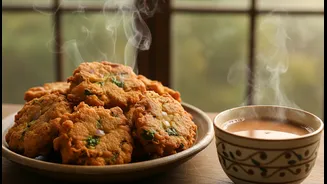
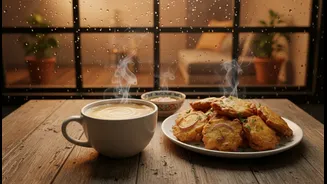
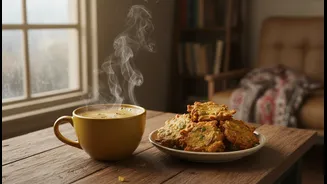
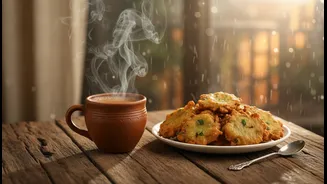
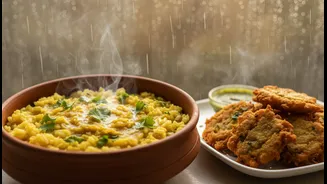
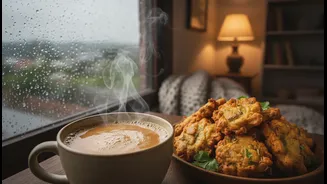
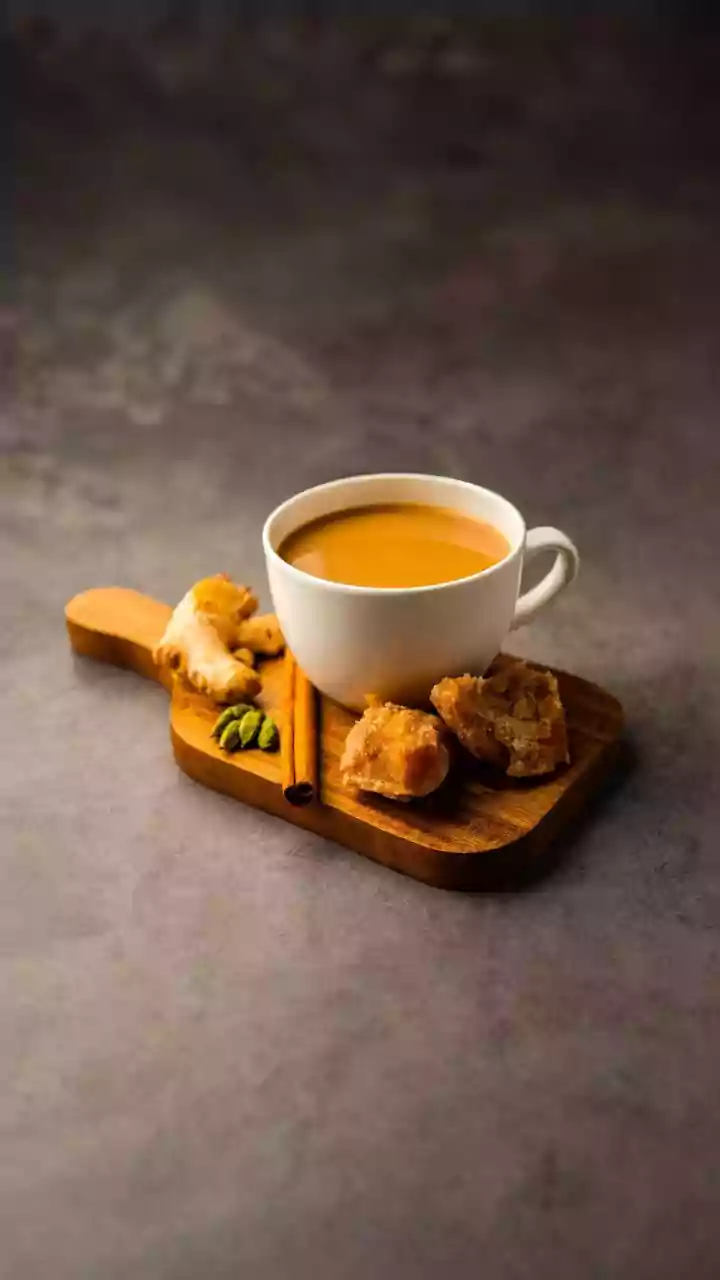
Monsoon snacking is as much about the ritual as it is about the food itself. The act of gathering with family or friends to share a plate of bhajiyas and steaming cups of chai reinforces social bonds and creates a sense of belonging. The sounds of sputtering oil, the aroma of ginger and cardamom in the tea, and the communal act of sharing food all contribute to a powerful experience of comfort that goes far beyond simple nutrition. These rituals transform a gloomy afternoon into a cherished occasion. The pairing of chai and fried snacks is a cultural phenomenon that, while seemingly timeless, became a widespread urban ritual in the mid-20th century. It’s a shared tradition that connects us, turning the simple act of eating into a meaningful experience.
It’s All in the Texture
Never underestimate the power of crunch. The sensory contrast between a hot, crispy snack and the cool, damp monsoon air is profoundly satisfying. When the environment feels sluggish and humid, the dry, crunchy texture of a pakora or samosa provides a welcome counterpoint. This contrast isn't just pleasant; it stimulates the brain's reward centres. Think about the satisfaction of biting through a crispy outer layer into a soft interior, or the comforting warmth of a cup of chai held between your hands on a cool evening. This sensory experience is a key reason why baked or 'healthier' alternatives often fail to satisfy the craving; they don't replicate the specific textural and temperature signals our brains are seeking. It’s the complete sensory package—hot, crunchy, and flavourful—that makes these snacks the perfect monsoon companions.