



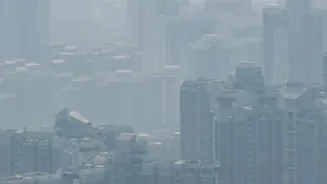
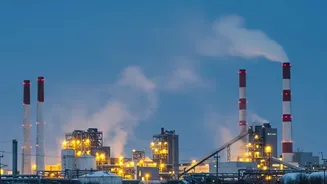

As Diwali approaches, the familiar glow of lamps is often accompanied by the sound of firecrackers. But with this tradition comes a significant, often invisible, consequence: a sharp spike in urban air pollution and the annual rollout of restrictions.
The Rules for 2026: A Balancing Act
For years, the Supreme Court of India has sought a middle path between festive traditions and public health. Following a landmark 2018 order, a general two-hour window, typically from 8 PM to 10 PM on Diwali night, has been the norm for bursting firecrackers. Ahead of the 2026 celebrations, the court reiterated this balanced approach, ruling out both a complete, nationwide ban and unrestricted, 24-hour use. The court's stance acknowledges that a total prohibition could hurt cultural sentiments, while unchecked celebrations would severely harm the environment and vulnerable populations, including children and the elderly. However, states and union territories retain the authority to issue stricter rules. Cities with historically poor air quality, most notably Delhi, often enforce a complete ban on the sale and use of all types of firecrackers, a measure that has been in place for several years.
The Science of Late-Night Smog
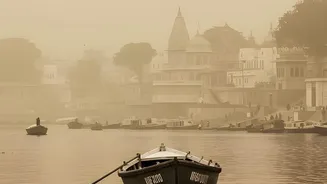
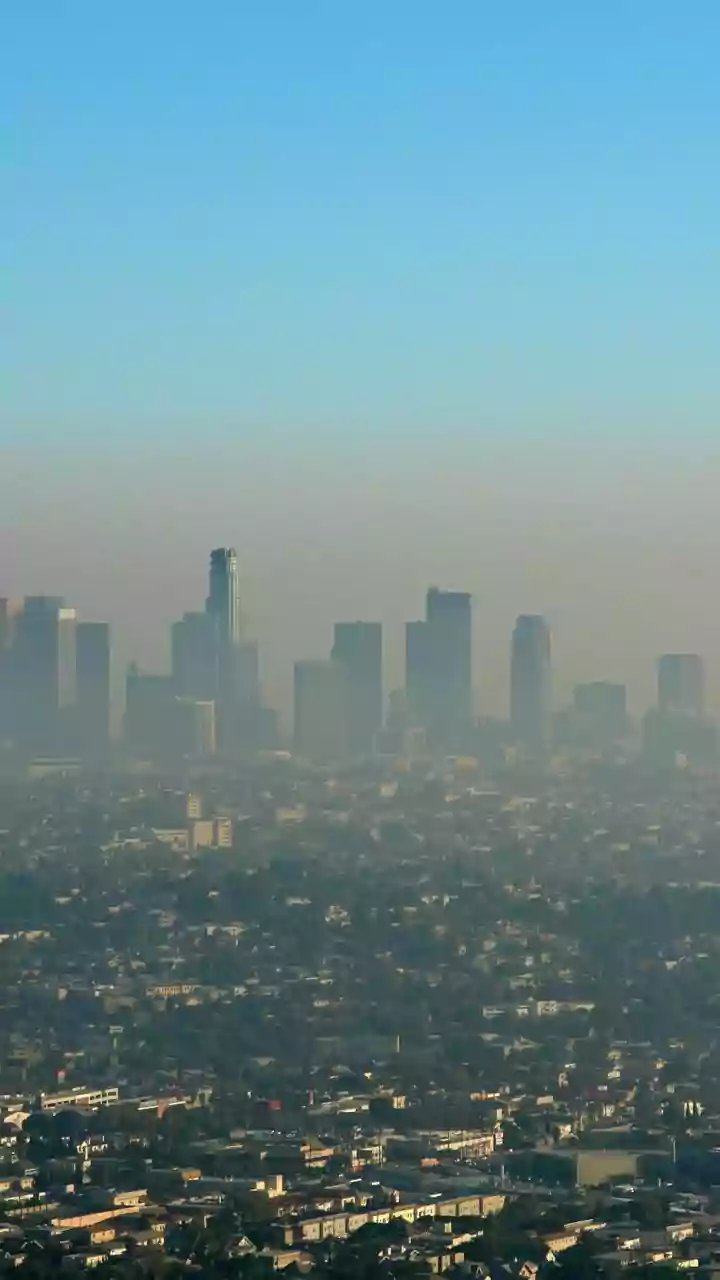
The focus on night-time restrictions is rooted in atmospheric science. Firecrackers release a cocktail of harmful pollutants, including fine particulate matter (PM2.5), sulfur dioxide, and heavy metals like aluminum and barium. During the day, warmer temperatures and winds help disperse these pollutants. However, as temperatures drop after sunset, a phenomenon known as temperature inversion occurs. A layer of cool air gets trapped under a layer of warmer air, acting like a lid over the city. Pollutants released into this stable, cool layer of air have nowhere to go and remain suspended close to the ground, dramatically increasing concentrations in the air we breathe. The period between 8 PM and 3 AM often sees the highest concentration of pollutants on Diwali night, with PM2.5 levels spiking to many times the safe limit.
From Celebration to Public Health Concern
The immediate health impacts of this pollution spike are severe. The high concentration of PM2.5 particles—so small they can penetrate deep into the lungs and enter the bloodstream—can cause breathing discomfort, trigger asthma attacks, and worsen chronic respiratory conditions. Hospitals regularly report a surge in patients with respiratory distress in the days following Diwali. Studies have shown that some firecrackers produce extremely high personal exposure levels of PM2.5, with some types generating concentrations tens of thousands of micrograms per cubic meter in their immediate vicinity. While the most acute pollution spike may be transient, often clearing within 24 to 48 hours, the repeated exposure to such hazardous air contributes to long-term health issues.
The Rise of 'Green' Alternatives
In an effort to mitigate pollution, the Council of Scientific and Industrial Research (CSIR) developed 'green crackers'. These are formulated to reduce emissions by 30-40% compared to traditional fireworks. They do not contain highly toxic chemicals like barium nitrate and are designed to release water vapor, which helps suppress dust. Authentic green crackers can be identified by a CSIR-NEERI logo and a QR code. However, the term 'green' can be misleading; they are not pollution-free, but rather less polluting. The Supreme Court has generally permitted the use of approved green crackers, and in 2026 even allowed the use of redesigned 'laris' (joined crackers) that meet green standards. Despite this, challenges with limited availability, public awareness, and the illegal sale of conventional crackers persist.
Do the Time Limits Actually Work?
The effectiveness of these time limits is a subject of ongoing debate. Data from previous years shows that despite restrictions, cities like Delhi continue to record 'Very Poor' or 'Severe' air quality on the night of Diwali and the following day. In 2025, Delhi's AQI jumped significantly post-Diwali despite a ban, with hourly PM2.5 levels reaching nearly 29 times the standard in some areas as people defied the rules. Enforcement is the primary challenge. While the time limits theoretically reduce the total volume of pollutants released, widespread violations mean pollution still spikes dramatically. The regulations, combined with other factors like stubble burning and vehicle emissions, create a complex problem where time limits on their own are only a partial, and often weakly enforced, solution. Still, experts believe that without these restrictions, the pollution peaks would be even higher.