



The Hidden Dangers of Too Much Water
For many urban gardeners, especially those in apartments, the most common plant killer isn't pests or lack of sun—it's water. Or rather, too much of it. When soil becomes oversaturated, the air pockets that roots need to breathe disappear. This leads
to root rot, a condition from which few plants recover. Symptoms often appear as yellowing leaves, which gardeners might misinterpret as a sign the plant needs more water, creating a vicious cycle. Beyond plant health, constant dampness and overflowing pots can cause significant problems for the balcony itself. Water can stain flooring, seep into concrete causing it to degrade over time, and create damp patches that encourage mould growth. In apartments, this can also lead to disputes with neighbours below.
Understanding Modular Drainage Systems
The term “modular waterproofing shields” refers to a multi-component system designed to manage water effectively within a planter. Instead of a single product, it’s a combination of materials working together. Think of it as creating a miniature green roof inside your planter box. These systems are especially useful for large or built-in balcony planters where simple pots with drainage holes aren't sufficient. The core components typically include a waterproof liner, a drainage cell layer, and a geotextile fabric. This modular approach allows for a customised setup that protects both the plant and the structure it sits on.
How the Components Work Together
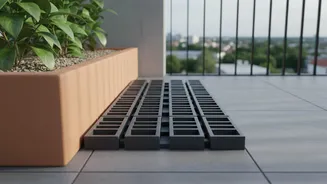
The magic of this system lies in how the layers interact. First, a waterproof liner, such as a pond liner or liquid-applied membrane, is used to make the planter itself completely watertight. This is the primary shield protecting your balcony floor from any moisture. On top of this liner sits a layer of drainage cells. These are rigid, interlocking plastic panels that create a void or gap between the liner and the soil. This gap allows excess water to flow freely towards a drainage outlet, preventing it from ever pooling at the bottom of the planter. Finally, a sheet of geotextile fabric is placed over the drainage cells. This permeable fabric allows water to pass through but stops soil particles from washing down and clogging the drainage system.
Key Benefits for Your Balcony Garden
The most immediate benefit is preventing waterlogged soil and root rot, ensuring healthier plants. By creating an air gap at the bottom of the planter, the system also improves aeration to the root zone, which is crucial for robust growth. Another major advantage is the protection of your property. By containing and directing all excess water, these systems prevent stains, water damage, and structural issues on your balcony floor. They also reduce the risk of soil and debris clogging balcony drains. Furthermore, some drainage cells are made from recycled materials, offering an environmentally friendly aspect to your gardening setup.
Assembling Your Own System
Creating your own modular drainage system is a manageable DIY project. For wooden or custom-built planters, start by ensuring the interior is clean and dry. Apply a liquid rubber sealant or install a heavy-duty pond liner, making sure all seams are sealed. Next, cover the bottom with interlocking drainage cell panels. These can be cut to fit any shape. Lay a geotextile fabric over the cells, running it up the sides of the planter a few inches. Now you can add your lightweight potting mix. It's also important to plan for an exit point for the water. This can be a simple hole drilled at the base of the planter wall, just above the waterproof liner, which directs water into a tray or toward a floor drain.
Simpler Solutions for Potted Plants
If you're not using large, built-in planters, you can still apply the same principles. Always choose pots with multiple, large drainage holes. A common mistake is adding a layer of gravel to the bottom of pots; this can actually raise the water table and worsen root rot. Instead, use a high-quality, lightweight potting mix designed for containers, which promotes better drainage. The simplest and most effective trick is to elevate your pots. Using 'pot feet' or even simple blocks creates a small gap between the pot and the floor, allowing water to escape freely and air to circulate. Never let your pots sit in a saucer full of water for extended periods.