


A Fortress Against the Void
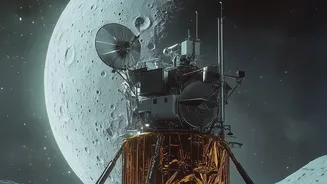
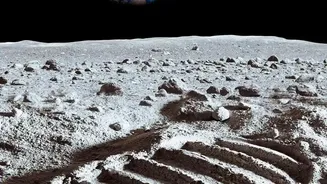
The Moon has virtually no atmosphere, leaving it exposed to harsh realities of space. The first requirement for any lunar habitat is robust protection. This means shielding against constant bombardment from solar radiation and cosmic rays, which can cause
severe health problems for astronauts. It also needs to withstand micrometeoroid impacts and extreme temperature swings that can range from a scorching 127°C in sunlight to a frigid -173°C in darkness. Early habitats may be inflatable structures covered with several feet of lunar soil, or regolith, for insulation and protection. A more permanent solution could involve building bases within natural underground lava tubes, which offer stable temperatures around -20°C and excellent natural shielding from radiation and impacts.
Finding Water in the Dust
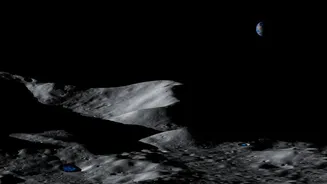
Shipping resources from Earth is incredibly expensive, so living off the land is critical. The most vital local resource is water. Recent discoveries have confirmed the presence of water ice, especially in permanently shadowed craters near the Moon’s poles. This water is a game-changer. It's not just for drinking; it can be used for growing plants, and, through a process called electrolysis, it can be split into hydrogen and oxygen. This oxygen can be used for breathable air, while both hydrogen and oxygen are key components of rocket propellant. This means a lunar base could one day become a refueling station for missions deeper into space, like Mars.
The Air We'll Breathe
While initial missions will carry oxygen supplies from Earth, a sustainable base must produce its own. Besides splitting water, another promising method involves extracting oxygen directly from the lunar regolith. The lunar soil is rich in oxides of silicon, aluminum, and iron, and scientists are developing technologies to heat the regolith and separate the oxygen from these minerals. Inside the habitat, a closed-loop life support system, much like the one on the International Space Station, will be essential. This system would recycle the air, scrubbing carbon dioxide exhaled by astronauts and replenishing oxygen, potentially with the help of plants in a greenhouse.
Powering a Lunar Society
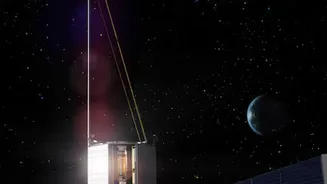
A Moon base will be power-hungry. Running life support, mining equipment, and scientific instruments requires a constant and reliable energy source. The lunar day lasts for about two Earth weeks, followed by two weeks of darkness, making solar power a challenge. At the lunar poles, however, there are 'peaks of eternal light'—crater rims that are in near-constant sunlight, making them ideal locations for solar arrays. For continuous power during the long lunar nights and in shadowed regions, NASA is also developing compact nuclear fission systems. These small reactors could provide a steady power supply for years, empowering everything from habitat operations to large-scale resource processing.
Dinner on the Moon
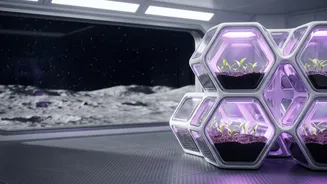
Astronauts can't live on pre-packaged meals forever. For long-term habitation, growing food on-site is a necessity. This will likely happen in enclosed, climate-controlled greenhouses or hydroponic farms. Researchers are already experimenting with growing vegetables like lettuce and radishes on the International Space Station to understand how plants behave in low gravity. The challenge on the Moon will be to create a self-sustaining agricultural system, using recycled water and nutrients. Growing crops will not only provide a fresh source of food and psychological comfort for the crew but will also contribute to the habitat's life support by producing oxygen and purifying water.