
The Challenge: A Planet Permanently Hidden
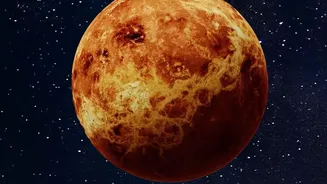
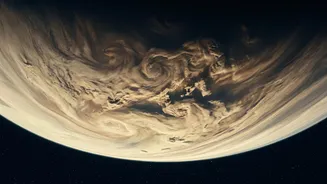
Venus is often called Earth's sister planet due to its similar size and mass, but its environment is anything but welcoming. The planet is shrouded by a dense, unbroken layer of clouds made mostly of carbon dioxide and droplets of sulfuric acid. This
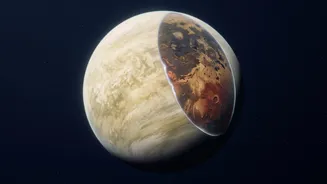
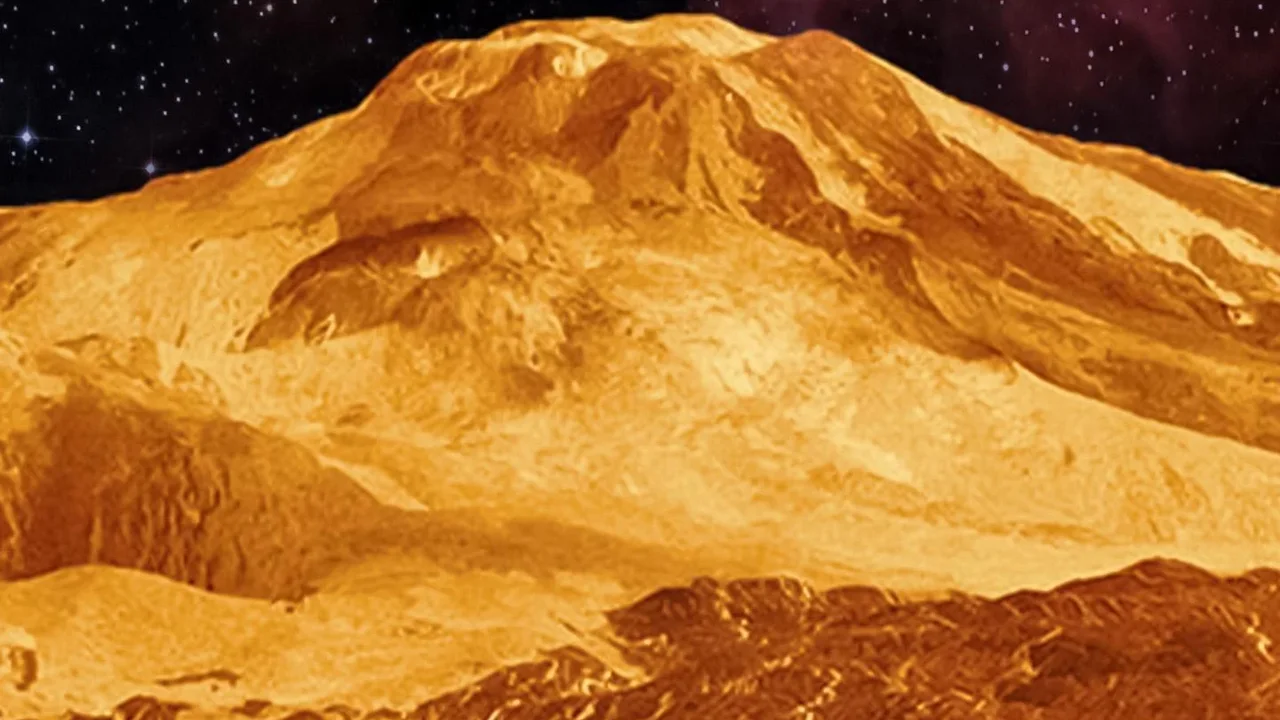
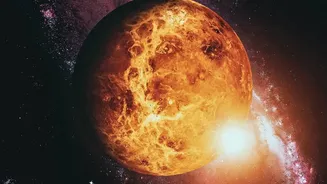
thick atmosphere creates a runaway greenhouse effect, making Venus the hottest planet in our solar system with surface temperatures that can melt lead. These clouds are so effective at reflecting sunlight that they make Venus shine brightly in our night sky, but they also completely obscure its surface from view in visible light. For decades, scientists have relied on radar technology, which can penetrate clouds, to get a rough idea of the planet's topography. But to truly understand its geology, we need to see the surface in a different light.
The Solution: Infrared 'Windows' in the Atmosphere
While the Venusian clouds block visible light, they are not completely impenetrable. On the planet's night side, the scorching hot surface radiates intense heat in the form of infrared light. Scientists discovered that there are specific, narrow wavelengths of this infrared radiation that can pass through the atmosphere and escape into space. These are known as 'atmospheric windows.' By designing sensors that are precisely tuned to these specific infrared wavelengths, a spacecraft orbiting Venus can capture the thermal glow from the surface. It’s like having a special pair of thermal goggles that can see through a thick fog. Previous missions, like Europe's Venus Express, proved this concept was possible, capturing tantalizing glimpses of the surface and paving the way for more advanced instruments.
Shukrayaan's Specialized Infrared Eyes
ISRO's planned Shukrayaan-1 mission will carry a suite of advanced instruments designed to exploit these infrared windows. One of the key instruments is expected to be a collaborative effort, the Venus Infrared Atmospheric Gases Linker (VIRAL), developed with Russia and France. This instrument and others on board will perform spectroscopy, breaking down the infrared light from the surface into its constituent wavelengths. This allows scientists to do more than just see the surface; it helps them understand what it's made of. Different rock types and minerals emit heat at slightly different infrared signatures. By analyzing this light, Shukrayaan will be able to map the composition of the Venusian surface, identifying different types of rock and potentially even spotting active lava flows.
What Scientists Hope to Discover
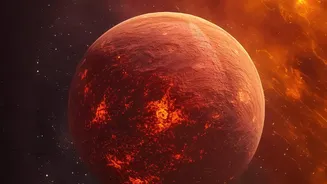
Peering through the clouds in infrared will allow Shukrayaan to create a global map of Venus's surface mineralogy for the first time. This is a primary scientific objective. The data will help answer fundamental questions about our sister planet. Is Venus still volcanically active? The infrared sensors can detect 'hot spots' on the surface that would be tell-tale signs of recent eruptions. What is the surface made of? By distinguishing between different rock types, scientists can piece together the planet's geological history and understand why its evolution diverged so dramatically from Earth's. The mission also plans to carry a ground-penetrating radar, which will be a world-first for Venus, to study the sub-surface. Combined with the infrared surface mapping, this will provide an unprecedented view of the planet's geology.