







How Weak Is the Monsoon?
The 2026 southwest monsoon has had a sluggish and concerning start. After arriving late in Kerala on June 4, the monsoon's advance has been patchy. [15] As of late June, the nationwide rainfall deficit was alarmingly high, hovering around 43% below the normal
average for this period. [5, 23] The India Meteorological Department (IMD) has forecast a 'below-normal' monsoon for the year, projecting seasonal rainfall at about 90% of the Long Period Average. [2, 12] This is largely attributed to the strengthening El Niño phenomenon in the Pacific Ocean, a climatic pattern historically linked to suppressed rainfall over India. [7, 15] With the monsoon's progress stalling for periods in mid-June, large swathes of central and western India are facing significant rainfall shortages. [13, 15]
From Rain to Rice: The Kharif Connection
The monsoon is the lifeblood of India's agriculture, especially for the Kharif (summer) crops, which are sown in June and July. [11] Nearly half of India's net sown area is rain-fed, making the timing and distribution of monsoon rains critical for crop health and yield. [9] The early deficit has already cast a shadow over Kharif sowing. According to data from the Ministry of Agriculture, the total area sown as of mid-June was slightly behind the previous year. [3, 4] While rice planting has seen a modest increase in the initial phase, the sowing of pulses, oilseeds, and particularly cotton has lagged. [2, 3] The slow start is a major concern because crops like rice, pulses, soybeans, and cotton are highly vulnerable to deficient rainfall during their crucial growth stages. [5, 9]
Which Food Prices Are at Risk?
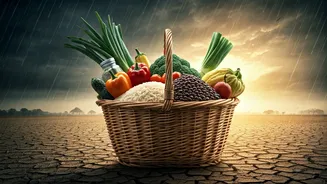
A weak monsoon directly threatens to increase food inflation. [6, 24] The most immediate impact is often seen on perishable items. Prices of vegetables like tomatoes have already seen sharp increases due to intense summer heat and supply issues. [18] If poor rains persist, delayed sowing and lower yields could exert upward pressure on the prices of pulses and edible oils, which are predominantly grown in rain-fed areas. [5, 2] While India currently has comfortable buffer stocks of staple grains like rice and wheat, which can cushion against immediate supply shocks, a prolonged dry spell could change the equation. [5] Economists warn that even with stable cereal prices, the vulnerability of vegetables, pulses, and other rain-dependent crops remains a key concern for household budgets. [6, 24]
The Broader Economic Picture
The impact of a weak monsoon extends beyond the farm gate, affecting the entire economy. The agricultural sector employs nearly half of the country's workforce, and poor rainfall can depress rural incomes and dampen consumer demand. [9] This has a knock-on effect on industries ranging from fast-moving consumer goods (FMCG) to agri-input companies like those selling seeds and fertilisers. [8] The Reserve Bank of India (RBI) has flagged the erratic monsoon as a key uncertainty for its inflation forecasts. [6, 11] While the central bank is not expected to react with immediate interest rate hikes, it is closely monitoring the situation. A sustained rise in food inflation could complicate its mandate to maintain overall price stability, which is to keep retail inflation within a 2% to 6% band. [6, 21]
What Happens Next?
The coming weeks are critical. Forecasters are watching for a potential revival of the monsoon in early July, which could help mitigate some of the damage by accelerating sowing activities. [15] The government has stated it is prepared for the situation, with contingency plans to minimise the impact on farmers and food production. [5] These measures often include ensuring the availability of seeds for alternate crops, managing water in reservoirs, and using buffer stocks to intervene in the market and control prices. [21, 23] However, with forecasters predicting El Niño could strengthen further in the coming months, the agricultural sector and the wider economy are bracing for a challenging period ahead. [13, 23]