



More Than Just a Pretty Vase
At its core, water propagation is the simple process of rooting plant cuttings in water instead of soil. While the technique has been used by gardeners for generations, its recent surge in popularity among young, urban Indians is tied to a larger cultural
shift. In a world of digital overload and concrete jungles, bringing a piece of living nature indoors has become a form of self-care. This isn't just about decoration; it's about nurturing something and watching it grow. The act of snipping a cutting, placing it in water, and checking on its root development offers a small, mindful ritual in an otherwise hectic day. It’s a low-stakes commitment that provides a tangible connection to the natural world, a welcome antidote to screen fatigue and the pressures of fast-paced city living.
The Appeal of a Living Aesthetic
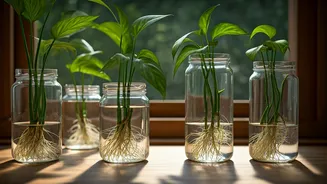
The trend’s explosion is undeniably fuelled by its visual appeal. For a generation fluent in the language of aesthetics, water propagation fits perfectly into the minimalist, clean, and Scandinavian-inspired interiors that dominate social media. Unlike traditional potted plants that hide their root systems, propagation in clear glass jars, vases, or even repurposed bottles turns the entire life cycle of the plant into a mesmerising display. Watching the delicate white roots unfurl and grow creates a dynamic, living piece of art. This 'deconstructed' view of the plant is not only beautiful but also educational, making it a conversation starter. It’s a style statement that says you appreciate nature, design, and simplicity all at once, making it incredibly photogenic and shareable.
Why Water Propagation Wins
The “low maintenance” aspect mentioned in the headline is the real game-changer. For many young people living in apartments with limited space, time, and perhaps a history of failed gardening attempts, traditional soil-based plants can feel intimidating. Water propagation strips away the complexities. There's no worrying about overwatering or underwatering, a common pitfall for beginners. There’s no messy soil to deal with, and the risk of soil-borne pests is virtually eliminated. It’s an accessible entry point into the world of plant parenthood. You don't need a balcony or a garden; a small, sunlit windowsill is all the real estate required. This simplicity makes it a sustainable hobby, both financially and in terms of effort, ensuring that the initial enthusiasm doesn't wane.
Getting Started: Your Step-by-Step Guide
Ready to create your own living art? It’s easier than you think. First, select a healthy, mature plant to take a cutting from. Using a clean, sharp pair of scissors or a knife, make a cut just below a node (the small bump on the stem where a leaf grows out). This node is where the new roots will sprout. Your cutting should be about 4-6 inches long and have at least 2-3 leaves. Gently remove the lower leaves, ensuring that no leaves will be submerged in the water, as they can rot. Place the cutting in a clean glass vessel filled with room-temperature tap water or filtered water. Make sure the node is underwater. Finally, place your jar in a spot that receives bright, indirect sunlight. A north-facing or east-facing window is often ideal.
Best Plants for Beginners
Not all plants take to water easily, but many common houseplants do. For guaranteed success, start with one of these hardy options, all widely available in India: * **Pothos (Money Plant):** The undisputed king of propagation. It roots quickly and is incredibly forgiving. * **Syngonium (Arrowhead Plant):** Another fast-rooting favourite that looks stunning in a water vase. * **Spider Plant:** Propagating its little 'spiderettes' is incredibly satisfying and easy. * **Snake Plant:** While slower to root, you can propagate cuttings of its leaves directly in water. * **Philodendron:** Heart-leaf philodendrons, in particular, are very similar to Pothos and root with ease. * **Wandering Dude (Inch Plant):** This colourful plant roots very quickly and adds a pop of purple to your collection.
Care and Common Pitfalls
Once you’ve set up your cutting, the maintenance is minimal but crucial. Change the water every 5-7 days, or whenever it starts to look cloudy. This replenishes oxygen and prevents bacterial growth that can lead to rot. While roots are developing, you don’t need to add any fertiliser. You should start to see initial root growth within one to four weeks, depending on the plant and conditions. Once a healthy root system has developed (about 2-3 inches long), you have a choice: you can either keep the plant in water indefinitely as a hydroponic feature or transfer it to a pot with soil to grow into a more mature plant.