








A Turning Point in Medical History
The primary reason July 6th resonates so strongly is due to a pivotal event that occurred in 1885. On this day, French biologist Louis Pasteur administered the first-ever vaccine for rabies to a nine-year-old boy named Joseph Meister, who had been viciously
attacked by a rabid dog. Before Pasteur's intervention, a rabies diagnosis was a virtual death sentence. The treatment, developed after years of painstaking research, was a monumental gamble. Pasteur, who was not a medical doctor, proceeded with immense anxiety but saved the boy's life, marking the beginning of the modern era of immunization and cementing his place as a giant of medicine. This single act demonstrated the power of vaccines to conquer deadly infectious diseases and laid the groundwork for public health initiatives that have saved countless lives since. The success was so profound that it led to the creation of the Pasteur Institute in 1888, a world-renowned centre for disease research that operates to this day.
The Modern Legacy: World Zoonoses Day
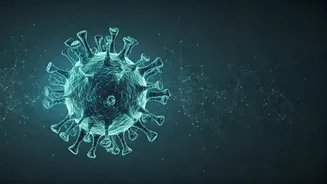
Pasteur's achievement is commemorated annually on July 6th as World Zoonoses Day. A zoonosis is any disease or infection that is naturally transmissible from animals to humans. Rabies was one of the first to be understood, but the list is long and includes modern plagues like COVID-19, Ebola, Avian Influenza, and Zika virus. An estimated 60% of known infectious diseases and up to 75% of emerging infectious diseases are zoonotic in origin. In the wake of recent global health crises, this day has taken on renewed importance, serving as a critical reminder of the interconnectedness of human, animal, and environmental health. For India, where rabies remains a significant public health challenge, this day is especially pertinent. It champions the 'One Health' approach, a global strategy that calls for collaboration across disciplines to monitor, prevent, and control diseases that spill over from animals to people.
More Than Just an Anniversary
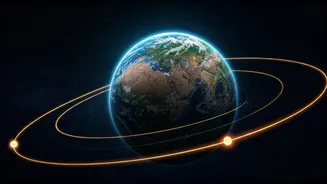
While World Zoonoses Day is the main event, other scientific happenings add to the buzz around July 6th. For astronomers, July 6, 2026, marks the aphelion—the point in Earth's elliptical orbit when it is farthest from the Sun. On this day, our planet will be over 152 million kilometres away from its star. This serves as a great science communication moment to explain that Earth's seasons are caused by its axial tilt, not its distance from the Sun. Furthermore, the scientific community is constantly in motion. For example, July 6, 2026, is also the start of the FENS Forum in Barcelona, Europe's largest international neuroscience conference, where thousands of researchers gather to discuss the latest breakthroughs in brain science. It’s a convergence of remembering the past and building the future.
A Date Steeped in Scientific Lore
Looking further back, the date holds even more significance. On July 6, 1687, Sir Isaac Newton's Philosophiae Naturalis Principia Mathematica was first published. This is arguably one of the most important single works in the history of science, laying out the laws of motion and universal gravitation. It fundamentally changed our understanding of the universe and provided the mathematical language for the scientific revolution. From the foundational laws of physics that govern the cosmos to the biological principles that save lives, July 6th seems to be a recurring landmark on the scientific timeline. These are the kinds of connections and historical touchstones that get scientists talking, sharing trivia, and reflecting on the incredible progress made over the centuries.