
As winter arrives in India, a familiar and comforting flavour combination appears in kitchens and markets: sesame and jaggery. From crunchy chikkis to soft ladoos, these treats are more than just a sweet indulgence. Why do they dominate the season?
An Ancient Answer to Winter Chills
The
tradition of consuming sesame (til) and jaggery (gur) in winter is deeply rooted in Ayurveda, India’s ancient system of wellness. Ayurveda classifies certain foods based on their inherent nature, or potency, and sesame is described as 'Ushna', meaning it has warming properties. This makes it an ideal food to consume during the cold, dry winter months to help the body generate internal heat and stay warm. Winter is a time when the body's metabolism can slow down, leading to feelings of sluggishness. The combination of sesame and jaggery is believed to counteract this by firing up the 'agni' or digestive fire, improving digestion and boosting energy levels.
A Nutritional Powerhouse Duo
Beyond traditional wisdom, modern science confirms that this combination is a nutritional powerhouse. Sesame seeds are incredibly nutrient-dense, packed with healthy fats, plant-based protein, calcium, iron, magnesium, and zinc. In fact, a quarter cup of natural sesame seeds can provide more calcium than a whole cup of milk, making them excellent for bone health, which can be particularly important when joint stiffness increases in the cold. Jaggery, an unrefined sugar, retains more nutrients than its processed counterparts. It is a good source of iron and potassium and provides a quick but sustained energy boost because it is a complex carbohydrate that digests more slowly than refined sugar. Together, the iron from both ingredients helps combat anaemia, while the rich antioxidant content helps bolster the immune system against seasonal colds and flu.
The Heartbeat of Winter Festivals
The prominence of til and gur peaks during winter harvest festivals like Makar Sankranti, Lohri, and Pongal. Both sugarcane (for jaggery) and sesame are harvested in the winter, making them seasonally abundant for these celebrations. In Maharashtra, Makar Sankranti is synonymous with the phrase 'Tilgul ghya, god god bola', which translates to 'Take this sweet of sesame and jaggery and speak sweet words'. This custom signifies burying past grievances and starting afresh, with the stickiness of jaggery binding the sesame seeds together symbolising the strengthening of relationships. Across North India, the landscape is filled with treats like Gajak and Rewari for Lohri, while in Karnataka, 'Ellu Bella'—a mixture of sesame, jaggery, and other ingredients—is exchanged. These traditions beautifully weave cultural significance with seasonal dietary wisdom.
More Than Just a Ladoo
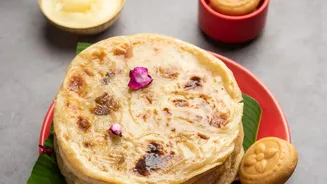
While the humble til-gur ladoo is the most famous preparation, the duo appears in various delicious forms across the country. Til Chikki or Gajak is a brittle candy that offers a satisfying crunch and is easy to store and share. Til-Patti is a thinner, more delicate version of this brittle. In Maharashtra, families also prepare Tilachi Poli, a soft flatbread stuffed with a sweet, fragrant filling of roasted sesame, jaggery, and cardamom. These diverse preparations ensure that the winter tradition is not just healthy but also consistently delicious, offering different textures and experiences. Whether it's a quick energy bite or part of a festive meal, the combination proves its versatility in the Indian kitchen. The healthy fats from sesame oil also nourish the skin from within, combating the dryness that is common in winter.