






The 'Internet of Things' on Your Street
Before we dive into flood detection, let’s quickly demystify the 'Internet of Things' or IoT. Think of it as a network of everyday objects—from home appliances to traffic lights—that are embedded with sensors and software to connect and exchange data
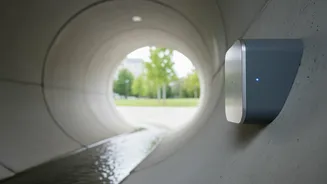
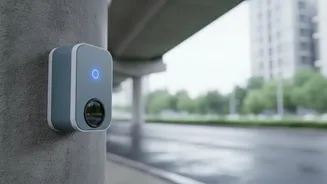
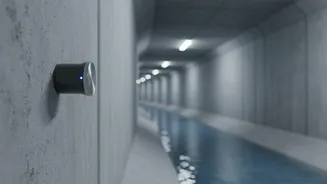
over the internet. In simple terms, it's about making regular objects 'smart'. For urban flood management, this means placing small, intelligent sensors in flood-prone areas like underpasses, low-lying roads, and near stormwater drains. These devices act as 24/7 digital watchdogs, constantly monitoring their environment for one specific threat: rising water levels.
How a Smart Flood Detector Works
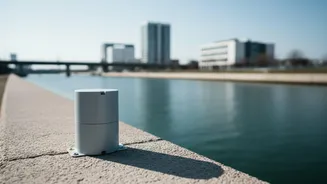
At its core, an IoT flood detection system has a few key components. First is the sensor itself. Most commonly, these are ultrasonic sensors that work by emitting a sound wave and measuring how long it takes for the echo to bounce back. As water levels rise, the distance to the water's surface decreases, and the sensor detects this change instantly. Other types include float sensors that rise with the water to trigger an alert, or pressure sensors that measure the weight of the water above them.Once the sensor detects that water has reached a predefined critical level, its job is to send out an alarm. A small, built-in communication module, often using a SIM card or a low-power wireless network, transmits this data to a central cloud server. This entire unit is typically battery-powered or solar-powered, allowing it to be placed anywhere without needing complex wiring.
From a Puddle to a Push Notification
This is where the magic happens for city dwellers. The data from hundreds of sensors across the city flows into a central command centre in real time. Here, software analyzes the incoming information, maps it, and determines the severity of the situation. Is it a single blocked drain or a widespread flooding event? When the system confirms a genuine flood risk, it automatically triggers a multi-channel alert. Civic authorities and disaster management teams receive detailed dashboards showing exactly where the flooding is occurring. Simultaneously, alerts can be pushed out to the public via dedicated mobile apps, SMS messages, and even on social media. This gives residents a crucial heads-up, allowing them to avoid certain routes, move their vehicles to higher ground, or take other necessary precautions.
Real-World Alerts in Indian Cities
This technology isn't just theoretical; it's already being deployed across India. In Bengaluru, the 'Meghasandesha' app, developed in collaboration with the Indian Institute of Science, provides residents with real-time information on rainfall and floods based on data from a network of sensors. Similarly, Mumbai has implemented 'iFLOWS-Mumbai', an integrated flood warning system that can predict inundation up to three days in advance by analyzing rainfall data, tides, and the city's topography. Cities like Kolkata and Gorakhpur are also leveraging IoT and AI to create sophisticated early warning systems. In Gorakhpur, an AI-based system has shown remarkable accuracy in predicting waterlogging 24 hours in advance.
Beyond Early Warnings: Planning Smarter Cities
The value of IoT flood detectors extends far beyond immediate alerts. The vast amounts of data collected over time create a detailed historical map of a city’s flooding patterns. Urban planners and municipal corporations can use this data to identify chronic problem spots and understand why they flood. Are drains inadequate? Is there an issue with new construction? This information is invaluable for designing better infrastructure, optimizing drainage cleaning schedules, and making more informed long-term planning decisions. By integrating this sensor data with AI and creating 'digital twins'—virtual replicas of the city—planners can even simulate the impact of future cloudbursts and test the effectiveness of proposed solutions before spending crores on construction.