



The Sun’s Violent Temper
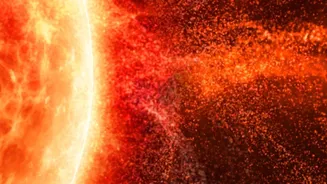
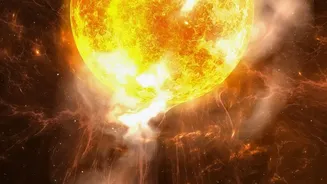
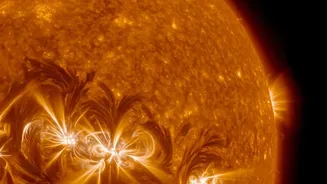
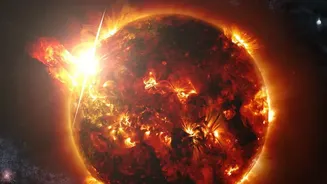
Our star is a dynamic, churning ball of hot plasma. Sometimes, immense energy from its magnetic fields is released in a sudden, intense burst of radiation. This is a solar flare. Often accompanying these flares are Coronal Mass Ejections (CMEs), which
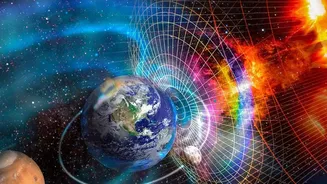
are colossal eruptions of plasma and magnetic fields hurled into space. When Earth is in the path of these events, it creates what we call space weather. While our planet's magnetic field protects us on the ground, our assets in orbit are highly exposed. These events release huge amounts of radiation and energetic particles that can be devastating for electronics.
Our Fragile Infrastructure in Orbit
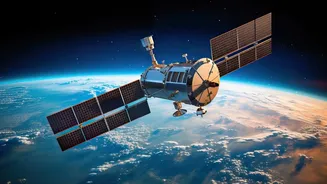
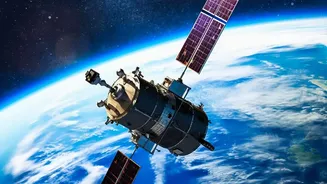
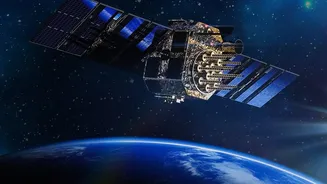
Modern life runs on satellites. From the GPS in your car and phone, to global financial transactions, television broadcasts, and weather forecasting, we rely on a delicate web of technology orbiting above us. An extreme solar storm poses a significant threat to this infrastructure. High-energy particles can damage solar panels, fry sensitive electronics, and cause phantom commands in a satellite's software. The energy can also heat and expand Earth's upper atmosphere, increasing drag on satellites in low-Earth orbit, causing them to lose altitude faster and potentially shortening their operational life. A major event could disrupt services we take for granted, with significant economic consequences.
Creating a Perpetual Eclipse
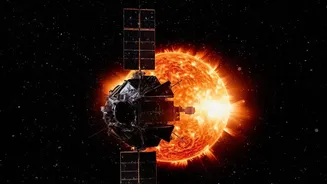
This is where the coronagraph comes in. At its core, a coronagraph is an instrument that blocks the blinding light from the Sun's main disk, much like using your thumb to block the sun. This creates an artificial eclipse, allowing scientists to see the much fainter outer atmosphere, the corona. It’s in the corona where explosive events like CMEs originate. By placing these instruments on satellites, we can get a constant, clear view without interference from Earth’s atmosphere. This continuous monitoring is the first step in building a reliable early warning system. The instrument itself doesn't stop the solar flare, but it provides the critical information needed to prepare for one.
From Detection to Protection
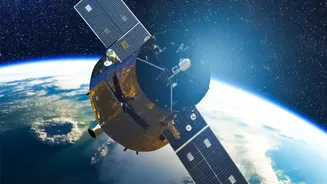
Observing a CME erupting from the sun is like getting a tornado warning for space. A coronagraph on a satellite, particularly one positioned between the Earth and Sun like at Lagrange Point 1 (L1), can spot a CME as it happens. This detection gives us crucial lead time—from hours to days—before the storm of particles arrives at Earth. With this warning, satellite operators can take protective measures. They can put spacecraft into a protective 'safe mode', where non-essential systems are shut down, vulnerable components are turned away from the incoming radiation, and the satellite hunkers down to weather the storm. This prevents permanent damage and ensures the multi-million dollar asset can be brought back online once the danger has passed.
India's Eye on the Sun
India has firmly established its presence in this critical field with the Aditya-L1 mission. Positioned at the L1 point, ISRO's solar observatory provides an uninterrupted view of the sun. Its primary payload, the Visible Emission Line Coronagraph (VELC), is specifically designed to study the solar corona and the dynamics of CMEs. By continuously monitoring the sun's outer atmosphere, Aditya-L1 contributes vital data to the global network of space weather prediction. This enhances our collective ability to forecast major solar events, providing early warnings that are essential for protecting not only India's growing satellite fleet but also critical infrastructure worldwide.